

Meet the NNL Staff and Leadership Team
Project staff directly work towards NNL’s goals by organizing workshops and summer camps, developing opportunities and products that engage neurodiverse individuals, collaborating with high school teachers and postsecondary faculty, and creating resources to promote accessible neuroscience.
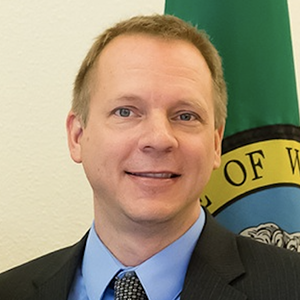 | Principal Investigator Scott Bellman currently serves as Director of the UW DO-IT Center, where he has worked for 25 years. He also serves as Director of Diversity at the UW Center for Neurotechnology. His interests include diversity in STEM education, the career development of students with disabilities, and equitable access to challenging postsecondary programs and careers. Scott is a vocational rehabilitation counselor by training. He is a licensed mental health counselor in Washington State, where he promotes the full inclusion of individuals with disabilities in all aspects of society. |
|---|---|
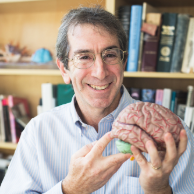 | Education Director Dr. Eric Chudler will guide neuroscience and summer study activities. He is the Executive Director/Education Director of the CNT and a Research Associate Professor in the Department of Bioengineering at the UW. Dr. Chudler has extensive experience promoting neuroscience to K-12 and postsecondary students through hands-on activities, video production, books, and other. |
 | Co-PI Rajesh P. N. Rao is the CJ and Elizabeth Hwang Professor in the Paul G. Allen School of Computer Science and Engineering and Department of Electrical and Computer Engineering at the University of Washington (UW), Seattle. He is also the co-Director of the Center for Neurotechnology (CNT), Adjunct Professor in the Bioengineering department, and faculty member in the Neuroscience Graduate Program at UW. He directs the Neural Systems Laboratory located in the Paul G. Allen Center for Computer Science and Engineering. His research interests span computational neuroscience, brain-computer interfaces, and artificial intelligence as well as the Indus script and classical Indian paintings. |
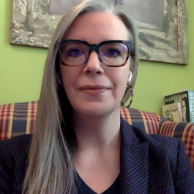 | Counselor and Project Coordinator Tami Tidwell works with high school and college students on topics like college admissions, scholarships, internships, employment, accommodations, and disclosure strategies. She enjoys working closely with students through both the DO-IT Scholars and Neuroscience for Neurodiverse Learners (NNL) programs. She has a degree in psychology from Texas Christian University. |
About The Project
Neuroscience for Neurodiverse Learners (NNL) aims to provide hands-on experiences in neuroscience disciplines, networking opportunities, and resources to high school and early postsecondary students identified as neurodiverse learners, while also engaging educators in best practices for teaching and promoting science, technology, engineering, and mathematics (STEM) to such students. NNL works with stakeholders to develop and share best practices for teaching STEM to neurodiverse learners.
Engagement of Educators and Stakeholders
Educators develop and enhance teaching neurodiverse learners and engage in activities designed to encourage neurodiverse learners to participate in STEM fields. They also participate in a variety of core activities:
- Online Community of Practice
Educators and other stakeholders explore specific strategies and challenges regarding the promotion and inclusion of neurodiverse learners in neuroscience and related STEM fields. - Capacity Building Institutes (CBIs)
CBIs at the UW focused on increasing neurodiverse learners' success in STEM courses and careers. The multi-day CBIs included information sessions, panel presentations, and group discussions. - Webinars, Conferences, and Consultation
Through webinars, conferences, and consultations, stakeholders can consult with NNL staff regarding the inclusion of neurodiverse learners in classroom settings, lab activities, field trips, and events.
Engagement of Students
Students will engage in hands-on neuroscience activities, learn about STEM fields, and practice communication skills to prepare them for college and careers. They also participate in a variety of core activities:
- Summer program
Each year twenty new student participants will engage in a neuroscience day camp at the UW. Student participants from earlier years will take the role of on-site interns and mentors. - Year-round in-person activities
Students will engage in on-site networking meetings, lab visits, and hands-on learning activities to further their exposure to neuroscience careers throughout the year. - Online engagement, mentoring, and support
Through online engagement, mentors, CNT and DO-IT staff and students, and peers will encourage neurodiverse students (a total of eighty from Summer Study events and an additional 40 from the Seattle area) to pursue neuroscience, and more broadly, STEM careers.
Impact of Our Work
Project outcomes benefit society by making STEM opportunities available to more citizens and enhancing STEM fields with the talents and perspectives of people with disabilities.
Funding
The Neuroscience for Neurodiverse Learners project is funded by the National Science Foundation (grant #DRL-1948591). Any questions, findings, and conclusions or recommendations expressed in this material are those of the author and do not necessarily reflect the views of the federal government.