DO-IT News February 2026
Volume 34, Number 1
Below are the articles of the DO-IT News February 2026 newsletter.
Welcome to DO-IT News!
Welcome to DO-IT's quarterly newsletter, DO-IT News! We’ve got a lot going on this time of year, including assistive technology information sessions for students, book clubs, expansion of our advisory board, program recruitment activities, events on the UW campus, webinars on a variety of topics, and more! We hope you enjoy our newsletter.
Please reach out to any DO-IT Center staff member to learn more about how you can be involved in activities. You can learn more about us on our staff page. If you have ideas for future newsletter content or other engagement, please send an email to doit@uw.edu.
Apply Now: Summer Camp for Neurodivergent Students
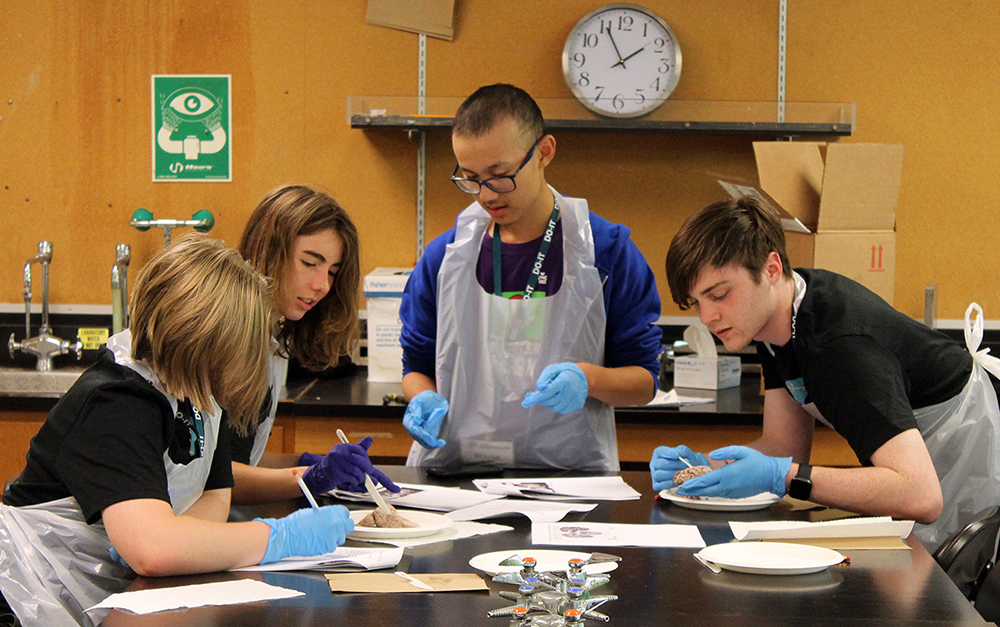
DO-IT's seventh annual summer program for neurodivergent learners is accepting applications through March 31. The camp will take place August 10-14 on the UW Seattle campus. During the Neuroscience for Neurodiverse Learners (NNL) camp, high school students will learn about the interdisciplinary field of neuroscience as they explore assistive technology, prepare for college, and work on academic skills. Examples of topics explored in previous years include how the brain functions, the portrayal of neuroscience in television and movies, the challenges that neuroscientists are trying to solve, and how students can lean into their unique strengths that may help them succeed with their academic goals.
Recently, the peer-reviewed Journal of Postsecondary Education and Disability accepted an article about what we’ve learned along the way, including tips on how others can replicate elements of the program. The article, called “Increasing College Readiness for Neurodivergent Students by Promoting STEM and Self-Advocacy” is expected in Spring 2026. For more information about lessons learned and helpful resources related to experiences of neurodivergent learners, visit the NNL website.
The NNL program is a partnership between DO-IT and the UW Center for Neurotechnology. Originally funding came from the National Science Foundation. Current programming comes from the State of Washington and individual donors such as Tracey and Jim Dunlap (in memory of Carl James Dunlap), and Donna and Sam Porritt-Bromage.
To continue this program beyond 2026, we rely on our generous community and supporters like you. To contribute, visit our online donations page.
Explore Spokane and Meet with Staff
Eastern Washington and Spokane offer a variety of activities to enjoy during the winter months. While winter in Spokane for many conjures images of skiing, ice skating, snowshoeing, and other outdoor activities, popular websites like Visit Spokane and Spokane Eats offer creative suggestions for outdoor fun as well as indoor delights.
Some popular attractions include:
- The Gaiser Conservatory in Manito Park features festive lighting displays. The greenhouses are open to the public, free of charge, throughout the year.
- The Numerica SkyRide offers a spectacular view of the Spokane river as it runs over the icy, rushing falls.
- The Numerica Skate Ribbon in Riverfront Park is a 650-foot-long pathway with a 3,500-square-foot attached pond for skaters to enjoy. You can also watch the ice antics around a cozy fire with a cup of hot cocoa!
- The Pavilion in Riverfront Park offers a weekend night light show.
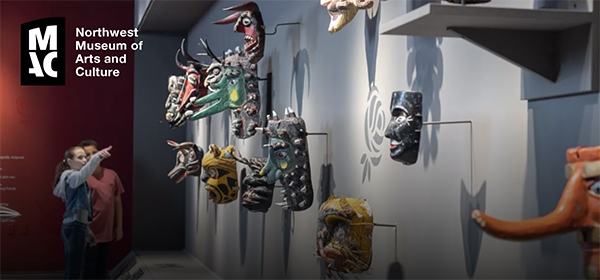
- A visit to the Northwest Museum of Arts and Culture (MAC) is a great way to learn more about regional history and culture.
And while you’re in town, think about connecting with DO-IT staff from our Eastern Washington office! Interested families can reach out by email to doit@uw.edu for an appointment.
Take Your Bookshelf to the Next Level
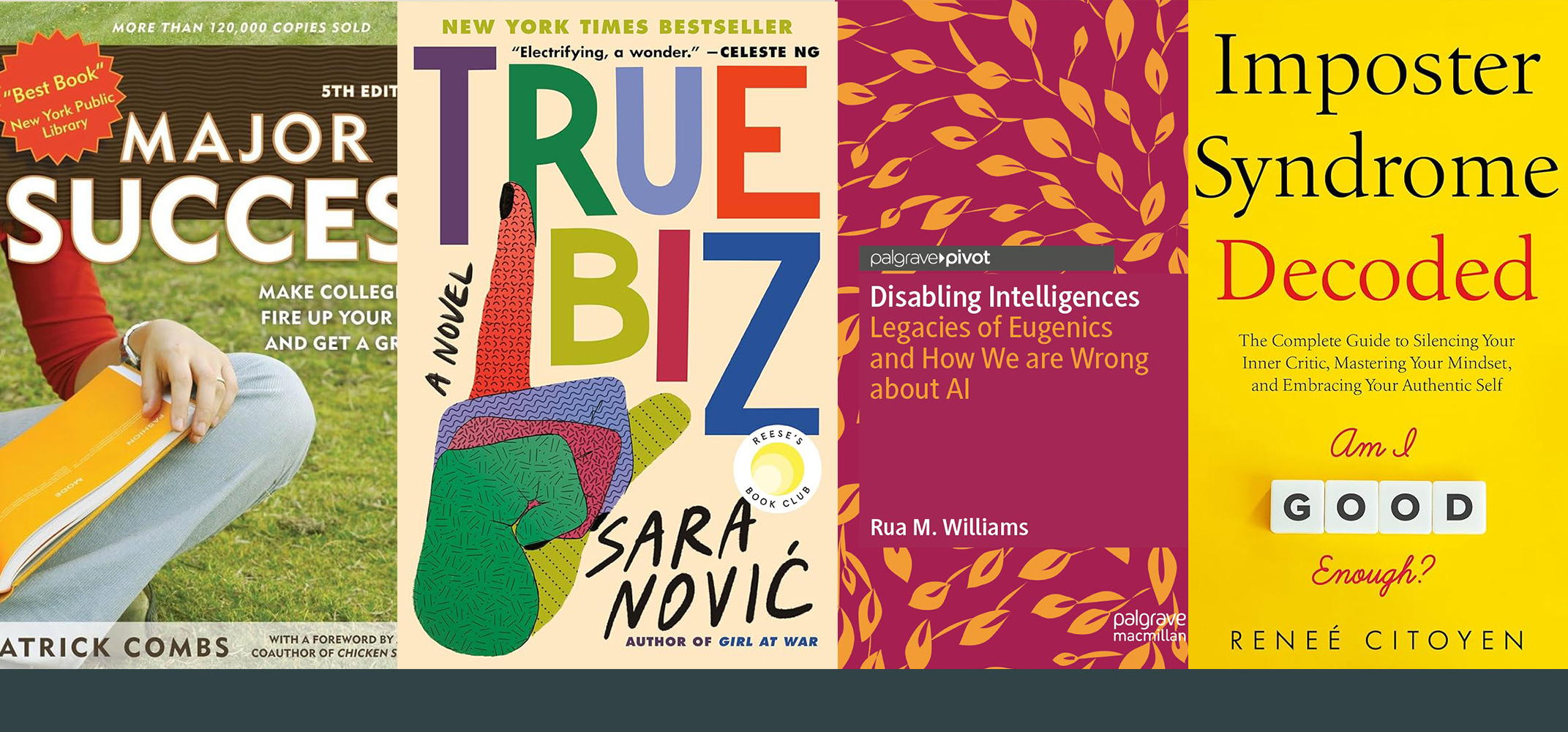
Reading is a popular hobby and topic of conversation in the DO-IT community. Over the years, staff have provided books to students such as:
- Imposter Syndrome Decoded by Renee Citoyen;
- Roadmap: The Get-It-Together Guide for Figuring Out What to do with Your Life by Roadtrip Nation;
- Major in Success: Make College Easier, Fire Up Your Dreams, and Get a Great Job by Patrick Combs; and
- The Secrets of College Success by Lynn F. Jacobs and Jeremy S. Hyman.
We have also hosted book clubs for students and faculty that highlight disabled authors, such as El Deafo by CeCe Bell, True Biz by Sara Novic, and Disabling Intelligences: Legacies of Eugenics and How We are Wrong about AI by Rua Williams.
DO-IT staff are thrilled to share that the UW Libraries are creating a “Recommended Reads for Equity” collection that engages the UW community in critical conversations, reading, critical thinking and community building; all of which are essential to lifelong learning and engaged citizenship.
Everyone can visit the Recommended Reads for Equity website and view the collection via the buttons on the left: Autobiographies, Biographies & Memoirs; Drama & Poetry; Fiction; Graphic Novels; Non-Fiction; Popular Non-Fiction; Young Adult Fiction. There is even a Top Hits Reading List.
Students Gather for January Staying Connected Hangout
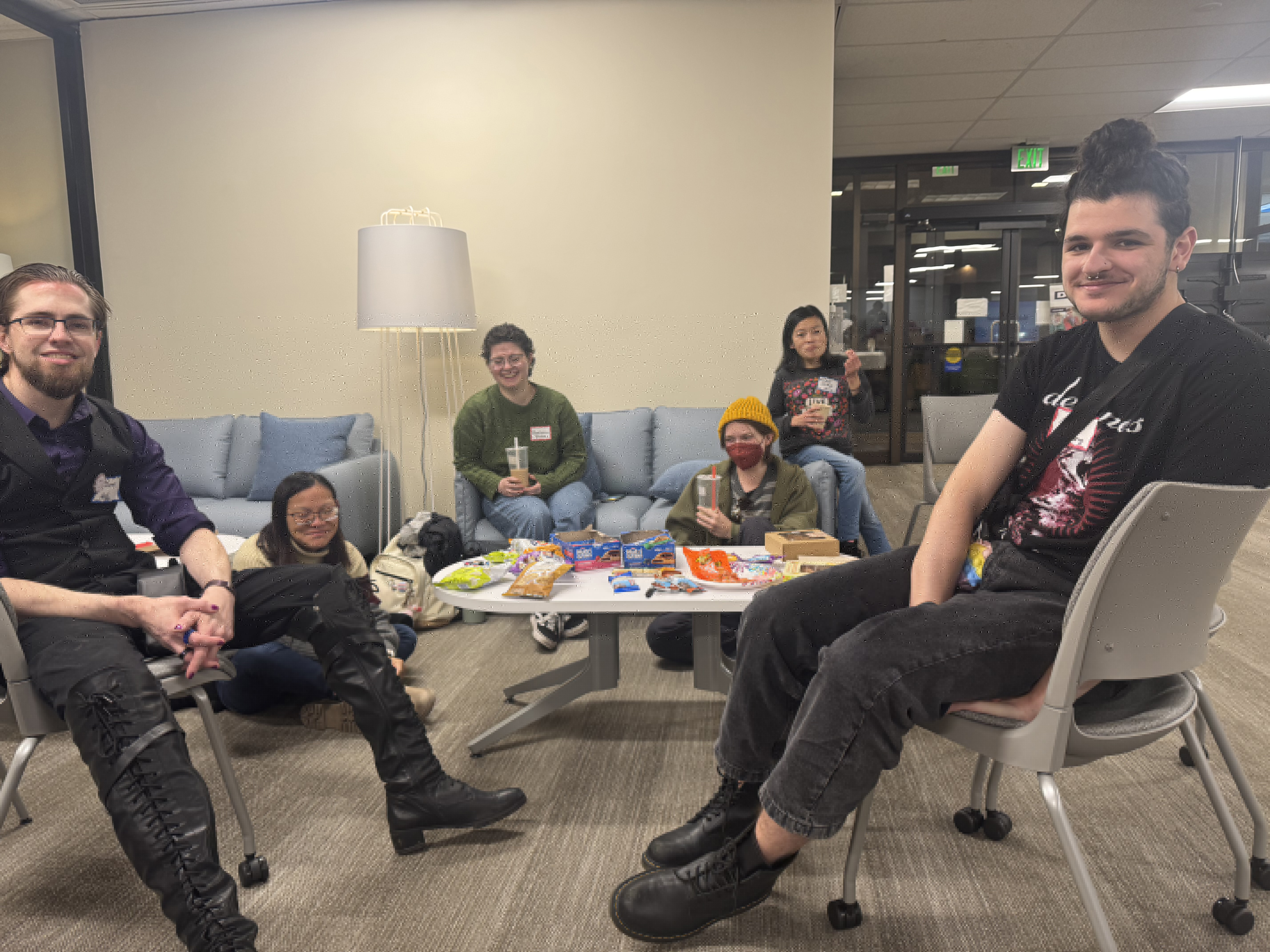
In January, 15 students came together for another UW Disability Community “Staying Connected” hangout, a monthly series hosted by the DO-IT Center that gives disabled students and allies a chance to connect, relax, and spend time together.
The space was full of conversation, laughter, and boba as students played games, met new people, and caught up with friends. DO-IT staff chatted with students about internship opportunities and set up follow-up meetings for anyone who wanted to keep those conversations going.
Staying Connected is meant to be a low-pressure, welcoming space where community comes first. Each month may look a little different, but they will all focus on building connections and supporting students across campus.
The next Staying Connected hangout is coming up in February, with more details to be shared soon. UW students who would like to join a future gathering should reach out to Kayla Brown (kayladb@uw.edu). We hope to see you for the next round of boba, games, and good conversation.
Staff Highlights from the Roots2Wings Workshop
DO-IT staff had the opportunity to attend a January 2026 workshop called “Get Stuff Done!” The workshop was coordinated by the Roots2Wings Family Group, a non-profit organization founded by a member of the DO-IT Community. The conference was held at Highline College in Federal Way, WA. Representatives from community providers and agencies shared information about assistive technology, college preparation, legal issues, advocacy, and more! Participants had the unique opportunity to attend a college class at Highline College.
The Roots2Wings Family Group offers online sessions that help families and self-advocates understand what changes as neurodiverse youth move from child services to adult systems. Each month during the school year, Roots2Wings Family Group hosts an online workshop on a variety of topics. Each quarter they bring those providers as well as others together for an in-person conference. For additional information about what staff learned at the Highline College workshop, see the article “The Exciting World of 3D printed AT.”
The Exciting World of 3D Printed Assistive Technology
Users of 3D printers have become increasingly creative as the technology becomes more user-friendly, available, and affordable. Among their many creative pursuits include home-spun assistive technology (AT) devices! This article shares some examples of 3D AT that staff learned about at a recent workshop hosted by a group called Roots2Wings.
Examples from the Washington Assistive Technology Act Program (WATAP)
WATAP provides resources and services on assistive technology (AT) for work, school, home, and leisure. They are located at the University of Washington (UW), and their work is supported by the Administration for Community Living and other funding.
In addition to lending Assistive Technology to Washington State Residents, they offer 18 different Assistive Technology items that are 3D printed. Individuals can request up to five (5) items, and they will 3D print them and ship them to you, at no cost. Staff favorites include the following.
- The Signature Guide is a Writing aid with five different sized openings that help people to write in a specific area on a print document.
- The XBox Adaptive Thumbsticks are for people who can't use the typical Xbox controller thumbstick.
- Ring Fidget Spinners are three concentric rings, just loose enough that you can move each ring individually. The outside diameter of the ring is a little bigger than a quarter and is about 1/2 inch thick. They are small so you can discreetly keep one in your hand.
- The Touch Mapper is a tactile map, typically used by a person with low vision or who is blind, that allows people to use touch to identify key elements such as sidewalks, paths, locations, and obstacles.
An example of Collaboration with the UW Employment Program
The UW's Employment Program demoed communication or sequencing bracelets made using 3D printers. They partner with WATAP and a UW student club called Woof3D to create these items for their participants. The communication bracelets use a flexible band and have square, clip-on beads with icons, representing words or phrases. The bracelets are small and more discrete than a communication board or device. The custom beads on the sequencing bracelets represent tasks. The user can then communicate and/or remind themselves about certain key tasks as they go about their day.
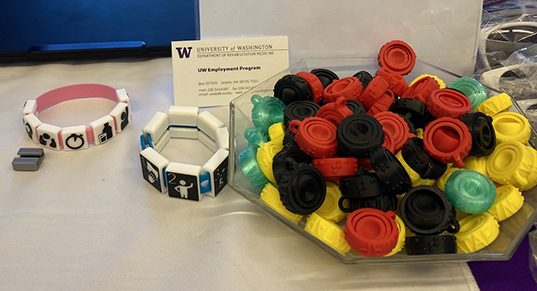
The photo above is from the Roots2Wings workshop and shows two communication bracelets as well as a bowl full of fidget rings, in either green, yellow, black and red. Some have a loop which can be used to hook them to a keyring or lanyard. There is also a business card from UW Employment Program.
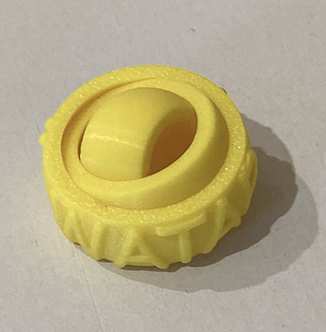
This photo above is a close-up of a yellow fidget ring. It is a spinner made up of three concentric rings, that are loose enough to rotate independently of each other. The ring has the letters WATAP engraved on the outside ring and is about the diameter of a quarter.
Recent Awards to the AccessComputing Community
We have many reasons to celebrate in the AccessComputing community as many of our members have been recognized in recent months for their professional contributions. Let’s congratulate our community members!
- AccessComputing Founder Richard Ladner will receive the 2026 Outstanding Contribution to Computer Science Education Award at the SIGCSE Conference in St Louis, MO this month for his contributions to accessible computer science education at the K-12, college, and graduate levels. Richard’s work has had a profound impact on the accessibility of CS education, the inclusion of accessibility in the computing curriculum, and the inclusion of disability in broadening participation activities.
- We are delighted to announce that the 2025 AccessComputing Capacity Building Award goes to Kate Sonka, executive director of Teach Access. This award honors AccessComputing partners who forge pathways that meaningfully advance accessibility in computing. Through her leadership, Kate has expanded how educators, technologists, and institutions integrate accessibility into computing education and practice.
- AccessComputing Team member Cynthia (Cindy) Bennett received the Computing Research Association Skip Ellis Early Career Award. The Skip Ellis Award “recognizes early career individuals in academia, industry, or government research labs who exemplify the spirit of Skip Ellis through significant research contributions and outreach that broadens participation in computing.” Cindy, a graduate of UW’s Human Centered Design and Engineering PhD program and now a staff research scientist at Google, describes her research as "involving disabled people as the experts of their own lived experiences and accessible futures for everyone." Beyond her research, Cindy is a leader in accessibility and an incredible mentor.
- AccessComputing Team member Maria Fanelle, a graduate student at Tufts University and a networking and security engineer at The MITRE Corporation, was named Lime Connect’s 2025 Leadership in Disability Awardee for her leadership in framing neurodiversity as an asset.
- AccessComputing co-PI Stacy Branham (University of California Irvine), received the Alumni Impact Award Virginia Tech Center for Human Computer Interaction. Stacy, a graduate of Virginia Tech, was honored to be celebrated by her alma mater.
- The 2009 ASSETS paper “Freedom to roam: A study of mobile device adoption and accessibility for people with visual and motor disabilities”—authored by friends of AccessComputing Shaun Kane (Google), Chandrika Jayant (Be My Eyes), former co-PI Jacob Wobbrock (University of Washington), AccessComputing founding PI Richard Ladner (University of Washington)—received the 2025 ASSETS Paper Impact Award. See separate article for more information.
- AccessComputing partner Megan Hofmann (Northwestern), who has mentored AccessComputing research experience for undergraduate participants, was highlighted in the Computing Research Association’s News article Cultivating Future Computing Researchers: The Critical Role of Mentorship in CRA-WP’s NSF DREU Program.
- AccessComputing partner Wendy Ingram, founder of Dragonfly Mental Health, was profiled by UC Berkeley’s Alumni Association in the article “Action is my coping mechanism”: Wendy Marie Ingram on building community care in academia.
- AccessComputing partner Alannah Oleson (University of Denver) received an Excellence in Undergraduate Mentoring Award from the University of Denver. In addition, with their undergraduate student Muskan Fatima, they received funding from the University of Denver to work on two accessibility-related projects and together with colleagues from the University of Glasgow (Scotland) and Uppsala University (Sweden), they secured seed funding to kickstart a longitudinal, multi-institutional collaboration investigating the “not my job” fallacy among computer students—which occurs when they believe that “someone else” will handle accessibility, ethics, and inclusion issues in their software so they don’t have to—and produce actionable strategies to support students’ ethical agency development.