
DO-IT News June 2025
Volume 33, Number 1
Below are the articles of the DO-IT News June 2025 newsletter.
DO-IT Launches New Website!
The DO-IT Center is pleased to announce the launch of our new website! We worked with our various communities to imagine and build this updated resource that offers easier navigability, an updated framework for accessibility and security, and an improved user experience.
Explore our new site today to learn about the work we do, discover newly updated resources, and find the many ways that you can get involved. All users are encouraged to send feedback and ideas to doit@uw.edu or reach out to your favorite staff member. Thanks for being on this journey with us!
Letter from the Director
Spring 2025
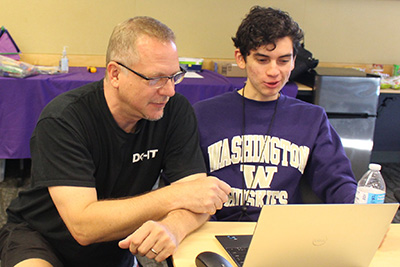
By Scott Bellman, DO-IT Director
Spring is winding down and we are approaching the end of another academic year. For many, this is a time of transition, appreciation, and reflection. Within this context, I want to share some things I’m grateful for.
I am profoundly grateful for the dedicated staff at the DO-IT Center, whose tireless efforts help ensure that disabled people have the opportunity to participate meaningfully in all aspects of society. Their work drives meaningful and lasting change toward equal access to educational environments, places of work, and community activities. I also extend my gratitude to the volunteers on our Advisory Board and Mentor network, as well a multitude of colleagues and collaborators. Their thoughtful contributions are essential to achieving our mission.
I’m appreciative of the students we work with, and am often struck by their creativity, resiliency, and courage. I’m often reminded that mentoring is a two-way street, and I’m grateful for what I’ve learned simply from slowing down and listening carefully to what students have to say.
I’m thankful for our place at the University of Washington, which is recognized as one of the most innovative public universities in the world, and the incredible leadership we have within UW-IT and the College of Engineering. Mary Mulvihill, Executive Director of Accessible Technology Services, has brought leading edge ideas and expertise to DO-IT related to information technology, policy, strategy, and resource management.
As I reflect, I am especially grateful for our founder, Sheryl Burgstahler, whose tireless work over the past 30+ years has laid a solid foundation for the DO-IT Center. As we look ahead at the years to come, we face unknown challenges and so much work yet to be accomplished. But I have unwavering faith that together we will continue to make progress toward our mission of helping empower people with disabilities through technology, advocacy, and education.
AccessUR2PhD: Supporting Women and Gender Marginalized Students with Disabilities in Computing Research
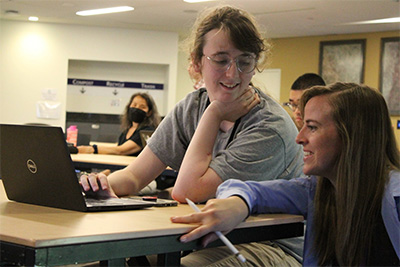
Are you interested in a career in computing research?
AccessComputing is excited to have received funding from the Computing Research Association for AccessUR2PhD which aims to support women and gender-marginalized individuals with disabilities (WGMD) on the pathway from being an undergraduate researcher to earning a PhD in a computing field. Activities will include:
- Programs for students interested in research, and
- Developing and disseminating resources to support women and gender-marginalized individuals with disabilities and their mentors.
Between now and the end of 2025, AccessComputing will run focus groups, mentoring circles, and webinars on topics such as:
- Accommodations in research
- Managing a relationship with a research mentor
- Undergraduate research opportunities
- Graduate school applications
- Transitioning to Graduate School
Funding is also available to support students attending research conferences.
To get involved, students with disabilities can join the AccessComputing Team. Educators can join a Community of Practice to stay informed.
Audio Guides Across Europe
I’m DO-IT Ambassador Rochelle Bowyer. My first year as a DO-IT Scholar was 2016. This year I moved to Spain for a few months, learned some Spanish, and traveled to new places, which included several museums. While visiting these museums, I was able to use audio guides to make my museum visit more accessible and enjoyable.
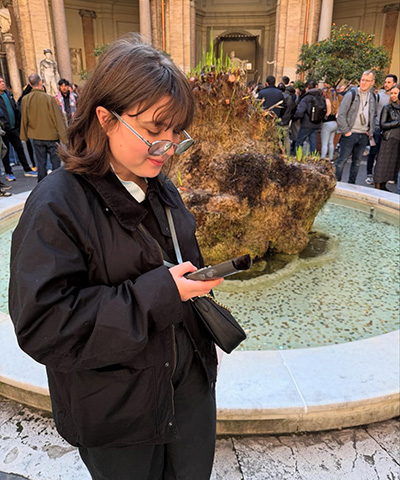
As someone who is neurodivergent, dyslexic, and has ADHD, I have a passionate love/hate relationship with museums. I love archaeology and history, fueled by the first books I successfully read on my own, like the Magic Tree House. Later in middle school, I read every biography and history-based text while everyone else was reading Harry Potter and the Warrior Cats series. So of course, I wanted to visit all the magical archaeology wonders that could be found in a museum and sparked my curiosity. But museums are not always the most manageable or accessible experiences for someone like me.
Even though I love museums and learning, it doesn’t mean that the museum experience is “easy” for me. I do not know if it is a me problem or the fact I have ADHD, but I can never follow a path. If left to my own devices, I will wander in all directions, causing me to be completely warn out before I even finish the museum. Sometimes I miss out on fun things because I got distracted by a thought that led me somewhere completely new. My other problem is that I find art museums somewhat boring, as I have never been passionate about small details of paint styles or brush strokes. However, traveling with a partner or anyone else means that you are not always going to the museums you love. This is where the importance of audio guides for my museum experience comes into play.
Audio guides are accessibility tools that I use to help combat the “chore” aspect of museums. Guides in general help ensure I stay on the correct path and not wander aimlessly. They allow my eyes to rest by giving me highlighted information for the exhibits, letting me choose if I want to dig deeper into the text or continue on to the next part of the exhibit. Lastly and most importantly, audio guides build context around things I might otherwise find uninteresting, so I can have a more enjoyable and slow-paced experience. In places like art museums, it allows my partner to take his time and enjoy his passions.
With such usefulness and effectiveness of audio guides in mind, I ranked my visits to various museums that I visited during my time in Europe. Please enjoy my commentary and rankings below, which I hope might give some guidance to others looking to plan their next museum trip.
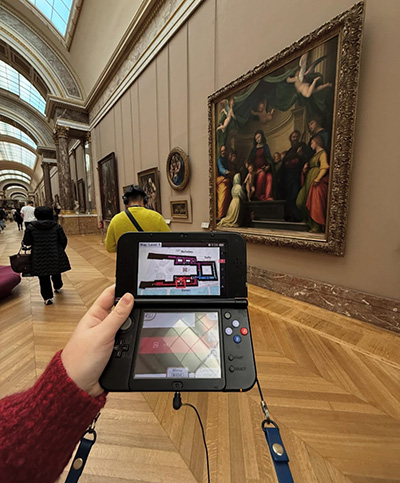
The Louvre, Paris – 4.5 stars
The Louvre earned a 4.5 because of its creativity. Their audio guide was downloadable onto a Nintendo 3D DS, which I found to be a cool and new experience. One of the best futures is that it has a location tracker. In such a giant museum, with a rather unclear museum path, this was very helpful, as the DS could tell you which audio guide numbers were nearby. The audio storytelling was done well, like a documentary; it would start in French and transition into your chosen listening language. I am taking away half a star because it had a hard learning curve to figure out how to use it, it was heavy to carry around, and I never truly got the hang of everything it could do, especially as someone who never played with a DS as a kid.
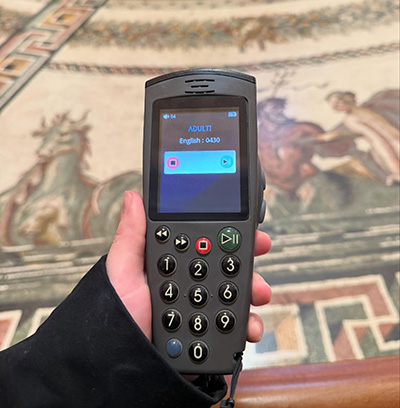
Vatican Museum, Vatican City – 3 stars
This museum’s audio guide was your classic audio guide, the one where you hold it to your ear like a phone. The learning curve on this one was very low; once you find the corresponding number you just type it in and press play. It is losing points, though, because I would rather use headphones and not hold something to my ear the entire time so l can instead focus on the piece I am observing. All in all, the Vatican Museum was not as creative as the Louvre, but was very user friendly (and had a lot of language options!).
Catacombs, Paris – 2 stars
The Catacombs also used the classic audio guide, but my user experience was a little worse than at The Vatican. It had a touch screen, which may sound like higher tech, but when you hold it up to your ear to listen, your hair or ear can sometimes accidentally tap the screen and stop the guide. When that happens, you have to re-listen to the guide, which can be annoying. This had the least amount of language options out of all the audio guides, but overall added to the experience.
Van Gogh Museum, Amsterdam – 3 stars
To be honest, I do not have much memory of this museum as my visit was two years ago, but my partner loves art while I think it is just something cool to look at for 10 seconds before I get bored and want to move to the next thing. So having an audio guide that tells me the story of the art piece and the history behind it is very helpful and makes me enjoy the experience better and for longer. I also liked that it had headphones and did not have to be held to my ear. But overall, nothing special.
La Sagrada Família, Barcelona – 5 stars
This was by far the best audio guide. Technically it was a free app you downloaded instead of physical audio guide you borrow from the museum. But it was an amazingly well-made app that was super accessible: you could use your own headphones, it was paired with photos in the app, it helped you re-center yourself if you were lost, and it had a transcript to go along with the audio. I know I already said it, but this was SO accessible and just amazing.
The Colosseum and Roman Forum – 1 star
I almost forgot about this one because of how bad the audio guide was. I was originally super excited because I found out it was an app and I loved the app-based audio guide in Barcelona. But it was not even close to being as good. The app was confusing to follow and once you had it downloaded you had to download extra content within the app for your “route” even though it was not clear which route you were even on. Since you needed to download the route, if you have bad reception, you are out of luck. I spent 30 minutes trying to get this app to work. Just because of my great experience in Barcelona, I once even tried deleting the app and redownloading it. In the end, I gave up, and experienced the Colosseum without one. To be honest, even though I read archaeology books for four years straight and was super excited to see something I had read so much about, it was kind of underwhelming and I wonder if it would have been different if I had a good audio guide. But the Roman forum was beautiful, audio guide or not. I could have spent hours there, if I was not so sleep deprived. Especially if I brought a book, a snack, and a reusable water bottle... it was so beautiful and peaceful. I did not see if there was a different guide for the Roman forum, but I loved it nonetheless.
Celebrating the Carl James Dunlap Memorial Student Award
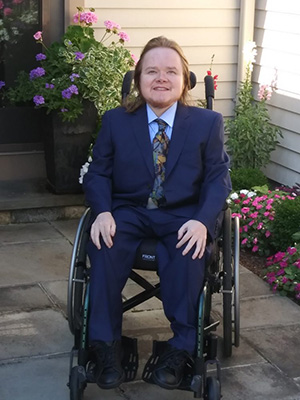
The University of Washington DO-IT Center is proud to announce that we have disbursed 6 awards to the 2025 recipients of the Carl James Dunlap Memorial Student Award. The award is a scholarship fund established by the Dunlap family in memory of Carl Dunlap, a former UW student. This year, six outstanding students were selected to receive the award, which supports UW students with physical disabilities in achieving their academic goals.
Each award, ranging from $1,000 to $2,500, is intended to help cover tuition or school-related expenses, including personal care assistants (PCAs). The fund prioritizes students who, like Carl, use wheelchairs and/or rely on PCAs as part of their daily lives and academic journey.
The DO-IT Center is honored to distribute this scholarship on behalf of the Dunlap family and celebrate the legacy of Carl James Dunlap by supporting students who continue to break barriers in pursuit of higher education.
Welcome the 2025 DO-IT Scholars!
This summer, DO-IT will welcome it’s thirty-third cohort of DO-IT Scholars to Summer Study. During the first week, Scholars connect with us from across the state via Zoom and Canvas. We get to spend time together exploring the transition to college, disability history, and building our community. We welcome the Phase 1, Phase 2 and interns to campus for the second week. Scholars get to experience life on a large college campus, participate in experiential learning, and continue building their networking community. DO-IT strives to build a fun, safe and inclusive experience.

Our 2025 DO-IT Scholars come from across Washington state, including Colville, Yakima, Thorp, Puyallup, Olympia, Tacoma, Edmonds, Sammamish, Bellevue, Redmond, and Issaquah. They have interests in computer science, chemistry, fire science, English, biology, history, math, physics, science, writing, band, leadership, culinary arts, education, robotics, engineering, zoology, law, environmental science, public policy, acting, language arts and psychology.
For students, the DO-IT Scholars Program initially spans three years (Phase 1, Phase 2, and Intern Year) and offers exploration of college programs and support for Scholars as they apply for and pursue post-secondary education. Students are encouraged to stay involved throughout their lifetime as mentors. Primary funding for the Scholars program is provided by Washington State. To learn more, visit the DO-IT Scholars website, or review the DO-IT 30th Anniversary Retrospective magazine.
DO-IT Student Receives CRA Outstanding Undergraduate Researcher Award
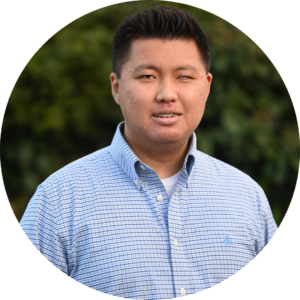
AccessComputing Team member Gene Kim has received the Computing Research Association’s (CRA’s) prestigious Outstanding Undergraduate Research Award for 2025. Through this award, CRA recognizes eight undergraduate students in North American colleges and universities who show outstanding research potential in an area of computing research. The CRA Outstanding Undergraduate Researcher Award is meant to recognize and foster emerging talent and excellence in computing research.
Gene is a senior at Stanford University, majoring in Symbolic Systems, with concentrations in Human-Computer Interaction (HCI) and Accessibility. Gene has been active in research throughout his undergraduate career. He already has more than 160 citations on Google Scholar and has six published papers and four conference posters to his credit. He’s worked with a number of noted HCI researchers at Stanford, the University of Washington, Northeastern University, and the University of Chicago to design, engineer, and evaluate new approaches to support blind users (like himself) in tasks such as interpreting data visualizations, 3D modeling, and designing circuits. Broadly, he is passionate about making STEM, especially computing, more accessible to people with disabilities. To this end, he conducts mixed methods research, applies human-centered design frameworks, and leverages cutting-edge technologies to engineer new accessibility tools.
Outside of his research activities, Gene has served as an undergraduate teaching assistant for introductory computer science courses. He is also a passionate disability advocate and served for three years on the National Association of Blind Students (a division of the National Federation of the Blind) board of directors. During his tenure, Gene traveled extensively to host blind student empowerment seminars, help teach non-visual STEM and college readiness skills, and to give motivational speeches about his journey as a person with a disability. Gene co-founded and is director of Systemic Access, an international mentorship program for young blind professionals in STEM.
Gene plans to continue his research and advocacy as a PhD student starting Fall 2025 with the hope of becoming a computer science faculty afterward. He is also open to opportunities in industry. Congratulations to Gene!
Learn about the SEEN Tech Professionals Project
DO-IT has been collaborating with the UW Initiative for Neurodiversity and Employment (Hala Annabi, PI) and UW CREATE (Jen Mankoff, Co-PI) on a new project called Success Enablers that Empower Neurodivergent Technology Professionals (SEEN Tech Professionals). I’m acting as Co-PI, and we’re also lucky to be working with Graduate Research Assistant Anushka Bhagchandani.

The project will be carried out in three phases over three years. In Phase 1, we will identify success enablers in the workplace by conducting semi-structured interviews and focus groups. Findings from Phase 1 will inform Phase 2 when we verify success enablers by conducting nationwide surveys of neurodivergent advocates, managers, employers, and providers. Informed by the first two phases, in Phase 3 we will identify and co-design interventions and facilitators that make success enablers more easily discoverable, usable, and normalized to support neurodivergent professionals and their managers.
We will conduct participatory design sessions in three workshops with key stakeholders to create high-impact interventions organized in a comprehensive Neuroinclusive Success Enablers Toolkit designed for technology employers and neurodivergent professionals. For more information, visit the SEEN Tech Professionals website.
What a Gift! Funding our 2025 NNL Summer Camp
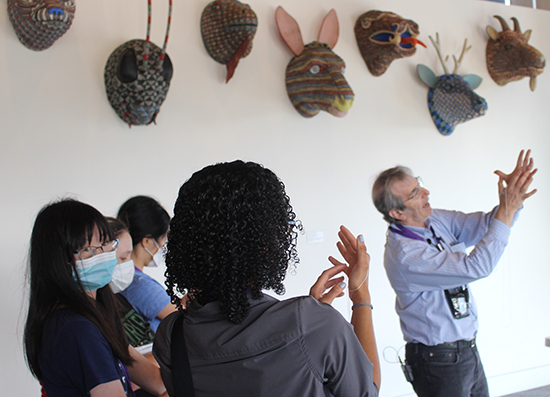
We can hardly believe it ourselves, but DO-IT is getting ready for our sixth annual Neuroscience for Neurodiverse Learners (NNL) summer camp! Because our federal funding was winding down as planned, we thought 2024 would be the final camp with our amazing partners at the UW Center for Neurotechnology (CNT).
The camp in 2024, which was hosted at no cost to campers identifying as having one or more neurodivergent characteristics, was packed with learning opportunities. Dr. Eric Chudler, Associate Director and Director of Education at the CNT, offered several classes on neuroscience and related topics. DO-IT staff hosted sessions on mentoring, college preparation, useful technology, and more. It was an amazing year, and we were pleased that our “final camp” was such a good one. But then, something unexpected happened…
The program received a sizable donation from the leadership team at the Carl James Dunlap Memorial Fund, allowing us to offer the camp in 2025! The Fund provides scholarships to help students with disabilities achieve their educational goals. Carl’s parents and godparents wanted to make a special gift this year to recognize how important DO-IT was to Carl and his success at UW.
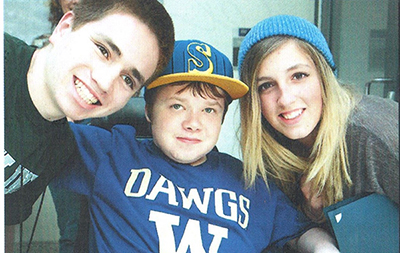
Now we’re planning our schedule, ordering supplies, and finalizing the recruitment of campers and instructors- all thanks to this generous gift. We will carry forward our policy of offering this experience at no cost to campers.
If you’re curious about the NNL summer program, check out this article in Seattle’s Child magazine and visit the NNL project website.
The Carl James Dunlap Memorial Fund also continues to fund student scholarships, disbursing six awards this year. The DO-IT Center is honored that we can continue to provide much needed programs, distribute scholarships on behalf of the Dunlap family, and celebrate the legacy of Carl James Dunlap by supporting students who continue to break barriers in pursuit of higher education.
What does DO-IT’s Eastern Washington Office Do?
In 1997, DO-IT expanded its reach throughout Washington State by establishing an office in Spokane. The dedicated staff in this office provide support to students, parents, and stakeholders in the region. They organize networking events for students and are available for meetings with DO-IT participants, parents, educators, and other stakeholders, both in-person and online.

The staff foster partnerships and collaborations with community organizations, as well as local and state agencies, to enhance the participation of students with disabilities in rigorous academic programs and career paths. These relationships enable the team to share program information, recruit participants, and provide resources and training to high school faculty, staff, students, and their parents on various topics, including inclusion, transition issues, academic and career skill development, and self-advocacy.
By actively participating in statewide organizations such as the Washington Science Teachers Association (WSTA) and the Washington Association of Postsecondary Education and Disability (WAPED), the staff from both DO-IT offices can engage in professional development opportunities. They offer concurrent sessions, pre-conference workshops, poster presentations, and full-day training sessions tailored to meet the needs of the members of each organization. Furthermore, staff members belong to national organizations and attend national conferences, where they share insights, promote DO-IT initiatives, and report on research findings.
If you know of any individuals or groups in Eastern Washington interested in learning more about DO-IT programs and activities, please reach out to Lyla Crawford at lylac@uw.edu.
The DO-IT Center Receives 2025 WAPED Achievement Award!
On April 23, 2025, the Washington Association on Postsecondary Education and Disability (WAPED) presented a 2025 Achievement Award to the DO-IT Center. This is an award for technical and/or professional achievement in promoting awareness and development in issues of education of persons with disabilities. This award may be presented to a person or organization that has, in preceding years, made a major contribution to increasing knowledge and awareness of disability issues in education or has developed techniques or methods in the application of such knowledge in higher education.
The nominator cited the important work done through DO-IT’s various programs, and praised the center’s significant contributions over several decades to “increasing knowledge around disability access and inclusion through cutting-edge research, training, and direct support.” The nominator also commended DO-IT for the crucial resources and trainings it makes available to educators, disability service professionals, and administrators. They concluded that the “DO-IT Center exemplifies the spirit of the Achievement Award through their ongoing technical and professional leadership in the field. Their contributions have had a profound and measurable impact on raising awareness, building capacity, and advancing educational equity for students with disabilities.”
We are honored to have received this award. DO-IT staff want to share this recognition with the mentors, students, educators, advisory board members, and others who have made crucial contributions to our shared success.