
DO-IT News November 2025
Volume 33, Number 2
Below are the articles of the DO-IT News November 2025 newsletter.
Wonderful Unexpected Things: A Letter from the Director
By Scott Bellman
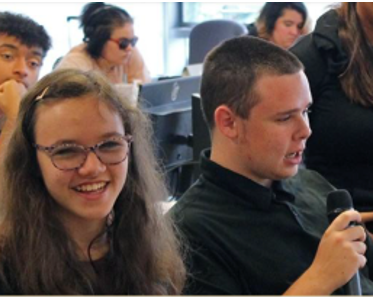
Elizabeth George Speare, acclaimed American author of children’s historical fiction, famously said “In October any wonderful, unexpected thing might be possible.” Here at the DO-IT Center, October marks settling into a new academic year at the UW and at the schools of DO-IT participants from all across the country.
October is also recognized by the US Department of Labor as National Disability Employment Awareness Month. Our Center firmly believes that disabled Americans deserve every opportunity for full inclusion in the American workforce, which is a foundational element of many of our projects and activities. We’re dedicated to helping improve access in all types of settings to maximize the potential of individuals with disabilities and make our communities more vibrant, diverse, and inclusive.
We’ve got a lot going on this fall, including assistive technology training sessions for students, book clubs for faculty, expansion of our advisory board, recruitment activities, events on the UW campus, national webinars, focus groups, mentoring circles, and more!
Please reach out to any DO-IT Center staff member to learn about how you can be involved, and most importantly, be ready to embrace wonderful, unexpected things!
Refer a Student to DO-IT Scholars
By Tami Tidwell
We’re seeking applicants! Since 1993, the DO-IT Scholars program has helped hundreds of students with a variety of disabilities successfully transition to higher education and meaningful careers. The program fosters an inclusive community where students can build confidence, network with peers, and learn the skills needed to thrive in college and beyond. Scholars attend intensive Summer Study sessions at the UW Seattle campus to experience college life, participate in academic lectures, and develop independence and self-advocacy skills.
Interested students and educators can view the brief video How to Apply for the DO-IT Scholars Program. They may also be interested in learning about DO-IT Scholars from the perspective of past Scholars (current Ambassadors for the program), such as Dustine or Anita. Applications are accepted throughout the school year, but priority is given to those received by January 30.
Students are encouraged to start the application process early to ensure they meet the deadline. For more information and to access the application materials, visit the DO-IT Scholars website.
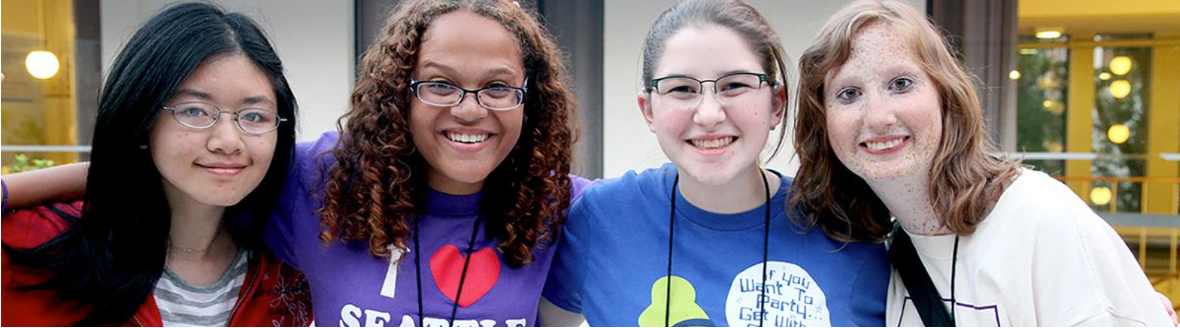
How Can You Support DO-IT Spokane and Our Efforts in Eastern Washington?
By Lyla Crawford
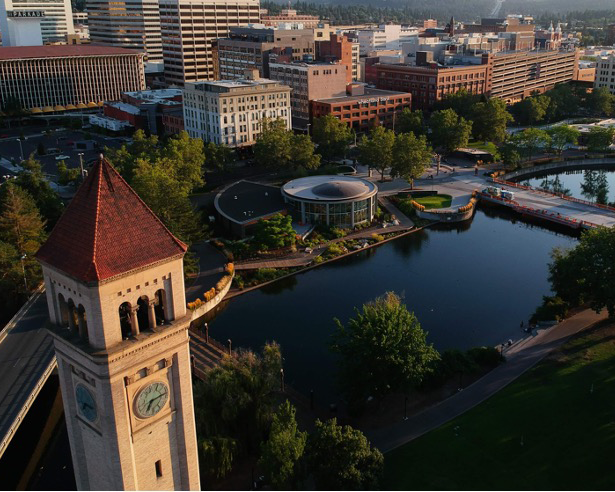
DO-IT is now recruiting for our 2026 Scholars program! If you’re an Eastern Washington Scholar or Ambassador, we’d greatly appreciate your help with recruitment. The Spokane office is continuously looking for ways to grow our Eastern Washington cohort. If you know a high school sophomore or junior with a disability who would benefit from our program, please encourage them to apply. They can find all application information on the DO-IT Scholars Program page
Additionally, DO-IT will be hosting a Winter Zoom meeting for all Scholars and Ambassadors this December. It’s a fantastic opportunity to reconnect with fellow participants and welcome newer Scholars!
Our Spokane office staff are always happy to meet with DO-IT participants, parents, educators, and other stakeholders, both in person and online. For any questions, thoughts, or ideas, please contact Lyla Crawford at lylac@uw.edu.
Neuroscience for Neurodiverse Learners’ Sixth Year
By Andrea Mano
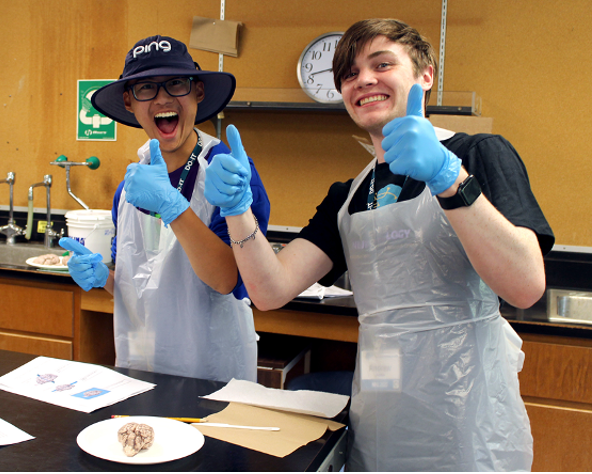
DO-IT's inaugural program focusing on neurodivergent learners completed its sixth summer camp in August! A group of about 20 local high school students learned about the interdisciplinary field of neuroscience as they explored assistive technology, prepared for college, and worked on academic skills.
The NNL program is a partnership between DO-IT and the UW Center for Neurotechnology. Original funding came from the National Science Foundation (#DRL-1948591), while funds for sustainability have been provided by the State of Washington and individual donors such as Tracey and Jim Dunlap, and Donna and Sam Porritt-Bromage.
Recently, the peer-reviewed Journal of Postsecondary Education and Disability accepted an article about what we have learned along the way, including tips on how others can replicate elements of the program. The article, called “Increasing College Readiness for Neurodivergent Students by Promoting STEM and Self-Advocacy” is expected in early 2026. For more information about what we have learned and for helpful resources related to experiences of neurodivergent learners, visit the NNL website.
Staying Connected: UW Disability Community Kicks Off Monthly Hangouts with October Gathering
By Kayla Brown
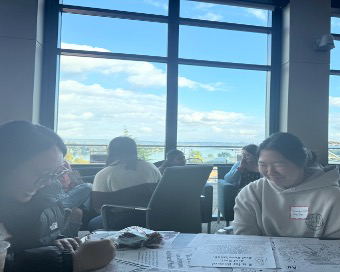
More than 20 students and allies came together in October for the first UW Disability Community Staying Connected, a new monthly series sponsored by the DO-IT Center that brings students together to connect, relax, and build community.
The event filled the space with laughter, conversation, and plenty of boba milk tea. Attendees mingled over games, met new friends, and caught up with familiar faces. DO-IT staff also hosted optional activities such as LinkedIn profile advice and resume reviews, creating a fun mix of social and professional opportunities.
The gathering marked the start of what will now be a monthly hangout series for the UW disability community and allies. Each session will offer a welcoming, low-pressure environment to connect with peers across campus, and share experiences.
The next hangout is planned for November, with details coming soon. Keep an eye on announcements or reach out to Kayla Brown (kayladb@uw.edu) to join the growing UW student community and be part of the next round of boba, games, and good conversation.
Upcoming Assistive Technology Trainings with DO-IT
By Andrea Mano
So many of us use technology every day, including features that make us more efficient, such as speaking to a cell phone to create a text message. Similarly, technology can provide tools to give efficient and equal access to curriculum for students with disabilities.
How are these technologies defined and provided for our students?
The Center for Applied Special Technology (CAST) was founded in 1984, and today continues to provide information, training and community "to harness new technologies for improving education for students with disabilities." In their informational video, "The What and Why of Inclusive Technology", they describe Assistive Technology (AT) as one type of inclusive technology.
Assistive Technology Industry Association (ATIA), describes Assistive Technology (AT) and lists possible funding sources. AT includes products, equipment, and systems that enhance learning, working, and daily living for persons with disabilities. Schools (K-12 as well as colleges) may provide these technologies. At a workplace, employers may provide AT as a worksite accommodation.
During their summer programs, participants in two DO-IT programs (Scholars and NNL) are introduced to different AT, primarily related to laptops and Chromebooks. Low tech solutions include changing the color contrast or font choices on the laptop screen. Higher tech solutions include software that reads the screen out loud, assists with notetaking, mind-mapping, or grammar.
Over the next several months, DO-IT will be hosting AT Trainings for participants. These trainings, held over Zoom, will review different AT solutions.
Upcoming trainings will cover:
- Grammarly and Grammar Check in Microsoft Word
- Notetaking, Study Skills and AT
- Software that Read the Screen Out loud (Text-to-speech)
- Mindmapping
Reach out to DO-IT to be notified of these AT training events or with questions about AT.
Apply for an AccessComputing Minigrant
By Brianna Blaser
Did you know that AccessComputing has to support your projects related to accessibility in computing education? Community members can apply for minigrants to support activities related to teaching about accessibility in computing education or to increase the accessibility of computing education. We expect most requests to be for $4,000-5,000. Proposals can be submitted any time, but limited funding is available.
Recent minigrants have supported a variety of projects, with examples listed here:
- A workshop related to best practices in accessible makerspace design
- A workshop to increase faculty’s knowledge and skills in making courses accessible and universally designed
- A meet-up for individuals interested in accessibility at a computing conferences
- An online webinar series related to accessibility in research
Scholars Share About DO-IT Summer Study 2025
This year, DO‑IT Phase I Scholars participated in a Summer Study with the first half online and the second half in person. They learned about college life; explored campus resources; interacted with peers, staff, and mentors; and had fun. The DO‑IT Scholars program started in 1993 as an experimental project for teens with disabilities nationwide. It is currently open to Washington State teens and is supported by the State of Washington. The DO-IT Scholars program is supported by all DO-IT staff and led by Tami Tidwell, Kayla Brown, and Andrea Mano.
My Favorites From the DO-IT Scholars Program
By Damon, 2025 Scholar
During the Scholars program, we got to experience a variety of engaging science and math-related classes on the University of Washington campus. My top favorite was getting to tour the UW seismology lab. I really liked this class because I got to learn about the “behind the scenes” of the Pacific Northwest’s earthquake early warning system. I think this class helps students with disabilities because the tour guides were great at explaining these complex topics and used a lot of hands-on activities and demonstrations. I also really enjoyed many of the other classes during Summer Study; these include learning about triangular numbers (they’re really cool!), how to build a tetrahedral kite (and subsequently crash it in a ditch), and about the hero’s journey story archetype.
Other than classes, if I was going to give advice for future Scholars, I’d recommend exploring all your food options each meal! Most of your meals include a variety of stations and dishes, and if you grab the first thing that looks good, you’ll end up missing out on a number of delicious choices!
Connecting Over Number Patterns and Kites
By Kai, 2025 Scholar
Having the Math Guy, Art Mabbot, join us at Summer Study was quite the ride! I really enjoyed learning about number patterns and how they can be used to build kites. I worked with my fellow Scholars Regan and Juniper to build the bulk of our kite, with Damon popping in to help with an integral part of getting the kite together. A highlight was that we also got to fly the kites outside with all the Scholars and Interns present.
Enjoying STEM Classes on Campus
By Juniper, 2025 Scholar
I love that Summer Study provided a cool sampling of different subjects we might want to pursue in college and beyond. My favorite was our class on geometry with “The Math Guy.” I really liked this class because it was very hands-on and interesting; it provided higher level math concepts that we were immediately able to apply to real life by building kites. This class was particularly accessible because the teacher was engaging, offering multiple prompts and problem-solving methods, as well as encouraging us to work in teams.
I also really enjoyed these other classes:
- Seismology Lab Tour, where we learned how earthquakes are detected
- Technology Accommodations, where we were shown a variety of software and hardware that can help our computers be more functional for us
- Biology in the Greenhouse, where I discovered a bunch of cool facts about plants
- Storytelling and Writing, where I learned how to use a structured outline to build a captivating story
I recommend this program for any students interested in attending college and getting ahead in learning about accommodations, technology, and a wide variety of other topics. My biggest advice for other Scholars is to have fun while also being respectful and paying attention. Take care of yourself and your needs while you are on campus.
Accessible Data Science
By Samuel, 2025 Scholar
The DO-IT Scholars program offered many great classes; my favorite was Accessible Data Science, where I also got to learn more about penguins! I really liked this class because I like coding and using technology, and I learned how I could use data science skills and different software options to build upon those topics. We also learned about technology that can make these subjects more accessible to students with a wide variety of abilities.
My advice for other Scholars is to push through it even if you are scared and worried at the start. Things get easier once you get over the first anxieties!
Connecting and Creating at Summer Study
By Addy, 2025 Scholar
When I first came to the DO-IT Scholars Summer Study program, I was nervous; however, as time went on, I met nice people who made me feel welcomed. From other Scholars to staff to instructors, the more people I connected with, the more I felt comfortable.
During the week, we had many great classes, but the one that stood out to me was visiting the makerspace on campus. We got to move around a big workshop, explore a variety of different tools and machines, and create bracelets and stickers. It was exciting to learn all the different crafts that could be made in one room!
I enjoyed my time at Summer Study, especially making new friends and learning about all the different technologies available that help people.
Making Friends and Learning at Summer Study
By Chloe, 2025 Scholar
The best part of Summer Study was the connections and memories I got to make. My favorite part was meeting new people and making new friends, such as Addy and Meklit. We three clicked instantly and got along the whole week we were on campus.
I also enjoyed learning from the Phase II Scholars. Each of them had a presentation on a topic of their choice. It was cool to learn more about their interests and learn more about their hobbies and activities beyond Summer Study. It also got me started thinking about what I would want to present on for my second year on campus.
Lastly, my favorite class to attend was the Seismology Lab with the Pacific Northwest Seismic Network. We got to see how the technology they use works and learned how the devices spread out across Washington State detect earthquakes. It showcased a topic I hadn’t thought about studying before!
Overall, it has been a great experience, and I can’t wait to see what next school year holds!
Architecture on Campus
By Nick, 2025 Scholar
This summer, I was a Phase One Scholar at DO-IT Summer Study. We got to tour a variety of areas on campus, including the Suzzallo and Allen libraries, the seismology lab, and the UW greenhouse. It was cool to see the different architecture around campus.
My favorite activity was touring the Suzzallo and Allen library because the building designs were over a hundred years old. The architecture of the buildings is based on older European designs and follows the collegiate gothic style. The best part of the tour was visiting the Suzallo Reading Room, which is colloquially known as the Harry Potter room. It looks like it was designed for the movie, with beautiful tall architecture and hanging décor that almost looks like it is floating. The tour guide led such an informative and educational tour. The tour taught me so much about the library that I didn’t know about before.
I hope future Scholars will enjoy exploring the campus; my advice is to spend time enjoying all the fun moments of Summer Study and really take everything in so that you can go to college with a confident mindset.
A Phase I Perspective on the DO-IT Scholars Summer Study Program
By Boon, 2025 Scholar
The DO-IT Scholars (also known as DO-IT Summer Study) program was, from the perspective of one first-year participant, not nearly as scary as it might appear based on the introductory meetings. These meetings offer a distilled taste of the program's ideology, but they are only a small fraction of what the program offers. The vast majority of the in-person portion, the meat and inner-sauce of the program, is far more open to explore a variety of topics in classes and dorm life. In addition, although there are several restrictions on student activities, students do not appear to be constantly managed; there can be plenty of opportunities for one to exercise high-level cognitive processing, such as daily-planning, task prioritization, and health management; for example, we managed our own morning and evening routines, chose between some activities, had options for what we ate at each meal, and could advocate for more breaks or classroom accommodations.
The enjoyable aspects of the program mainly center around the activities. Although we shared long days (needing to be ready by 8:30am and sometimes not back to the dorms until after 9:00pm) that can be tiring, there were only three full days and thus not that much time to accumulate too much tiredness, assuming sleep is at least almost enough. These activities are meant to cater to a variety of interests (as well as the overarching one of educating people about skills important for college), with subject-matters including assistive technology, basic computer maintenance, life and earth sciences, exercise and movement, physical and electronic game-playing, singing and dancing, and mathematics. There was something for everyone, and we were provided with opportunities to explore some activities we hadn’t ever done before. In addition, you will likely have a close-to-authentic college dining experience, as at least two dining facilities are used, complete with college staff that work there and with whom one may need to interact.
For those who have not lived in dormitories before, the program also offers a somewhat life-like, though safer, more comfortable, and more managed, living experience at night. One may either stay alone or with a roommate, and roommates must share their room and negotiate how they will occupy it together. Roommates are matched by interests, which is similar to how colleges try to determine roommates.
Hopefully, this gives a more helpful idea of what the DO-IT Scholars program is like. To learn more about Summer Study, I encourage you to read some of the other newsletter articles or visit the Scholars website.
My Great Experiences at Summer Study
By Regan, 2025 Scholar
The DO-IT Scholars Summer Study for Phase 1 Scholars had several classes and activities with a variety of topics provided, ranging from disability to technology to science.
My favorite class was called The Math Guy. In this class, we learned about the math behind tetrahedrons and tetrahedron numbers. After this we built and flew a tetrahedron kite as a class. I enjoyed this class because I like math and numbers and because it was a group activity where we got to work together and create something. I learned about tetrahedrons and how to fly a kite in the same class!
My favorite daytime activity was called Living the Life: College Life! In this activity, a group of Ambassadors (former Scholars), came into the classroom and we got the opportunity to talk to them and ask questions about college life and accommodations, as well as any other questions we had. I learned a lot about college from people who have personal experience navigating college with similar needs as me. It was also great to discuss some shared experiences that people in the group had!
My favorite evening activity was Bowling and Game Night in the HUB. There was a bowling alley and video games, as well as games such as air hockey! I enjoyed this activity the most because it was the last night of Summer Study and there were so many options to choose from. I played a game of bowling, a few rounds of air hockey and foosball, and even sat down to play Uno with my friends.
Overall, Phase 1 Summer Study was a very fun experience where I got the opportunity to meet new people and learn a lot about college and other topics.
2024 Scholars Share Their Experiences at DO-IT Summer Study
This article features quotes from many of the 2024 Scholars. Some of the 2024 Scholars are not featured in this article because they shared longer, more in-depth personal stories that fit better as stand-alone articles.
Last year, 2024 Scholars got the opportunity to share about their experiences on campus. Many of them loved the same classes and activities, but there were also many unique perspectives shared about students’ time on campus. Ivy described how the Scholars program makes it easy to share opinions. “DO-IT Scholars is a program for people with disabilities of all different kinds. DO-IT is an environment where you aren't judged for who you are; everyone encourages each other and enjoys being themselves,” Ivy said.
The Greenhouse
One of the most enjoyed activities was the tour of the University of Washington greenhouse. “Plants are very important to the environment and preserving them is important,” said Ana. “You can learn about and take care of plants regardless of disability, which is why the class stood out to me. Plants are an important part of the environment and something everyone can take an interest in.” Oscar agreed with this sentiment. “I really liked this class because it taught me about the different types of plants. Even though I'm not a plant person, I found it fascinating,” said Oscar.
The greenhouse offered the opportunity to engage with science and the environment in- and outside of the typical classroom. Touring the greenhouse is a way to make learning interactive. Ana shared, “I personally found several new plant species in the greenhouse I really enjoyed, and it was nice being back in nature while being in the heart of a big city.” AJ agreed, saying “It showed a different vibe to campus.”
The Seismology Lab
Another highly-rated class was at the seismology lab, where Scholars learned about earthquake science, “including the geography involved, the technology used to measure seismic activity, and the methods that we ourselves can use to stay safe during an earthquake,” shared Alex. Nick agreed, adding “I really liked this class because it taught me more about earthquakes, such as the earthquake stations, the technology of earthquakes, and about fault lines.”
“Learning about earthquakes was very interesting, and I particularly enjoyed that the lead staff member answered all the doubts I had had for years,” Jesus recounted. Alex continued to discuss how the class affected him and others. “This class provided an opportunity to explore something new and interesting, and it also teaches everyone with and without a disability how to stay safe during an earthquake.”
Accessible Technology
Many of the Scholars shared that they enjoyed learning about accessible technology, including both specific assistive technologies and overall accessible practices in technology. “Accessible technology provides the tools to people who need it,” AJ said. “Web accessibility helps kids with disabilities use technology such as laptops, computers, and keyboards,” Oscar shared.
In accessible web design, Vi loved learning about how so many of our modern technology was originally designed for people with disabilities. “It’s cool how something like the ergonomic computer mice, something that I already had been using, was actually originally intended for use as adaptive interfaces,” Vi shared. “This experience can also expose [students with disabilities] to types of accommodations that they didn't previously know existed—such as when I learned about the FM device or the technology tips and tricks for working with ADHD.”
The Scholars also got to work with actual staff at the University of Washington to make their departmental websites more accessible. Eliot stated, “Helping an institution make its site more accessible to all is a tremendous and essential experience for all who partake. During my time here, the most impactful experience was when we were helping the institution with its site accessibility. It was really fun messing around with a lot of sophisticated software to find issues with the site and feel almost like an expert!” Jesus also shared similar sentiments, enjoying his time exploring web accessibility. “It was very interesting to see if you can use websites only with a keyboard. I’m also colorblind so learning about color contrasts was very helpful,” Jesus said.
Aspen and Ramona also teamed up to share all they had learned about the accessibility built into Google products (particularly Docs and Slides), such as “very accurate speech-to-text recognition,” “built in website screen reader,” “braille support with third-party braille software,” and “easy to use keyboard tabbing and focus indicators that are easy to see.” Google products also have a lot “of features within the toolbar that are all clear and have well-designed images… and It’s also easy to add extensions with other accessibility tools you might want to use.”
Other DO-IT Experiences on Campus
Miles described how much fun it was to learn math in a hands-on way. “I loved when the Math Guy came to teach us how we can use math in creative ways. The class was super interesting and fun. We built kites by creating tetrahedrons and tying them together with ribbon, and it was cool that we got to fly them outside after we built them.”
Owen shared that he had only ever learned about disability history in passing and never in school. “It raised awareness to me of how important the intersectionality of disabilities with other identity constructs is,” Owen said. “This class can be connected to issues today, and it encouraged me to think about how I and other people treat those different from us. It also did a great job of reinforcing that it's good to have diversity and differences in any community.”
Scarlett enjoyed how much DO-IT encouraged expressing your own style and opinions. “Expression is a natural aspect of life and can come in many forms… In this similar focus of expression is disability; if understood, the need for being different is extreme. Biodiversity is the major trait of all organisms on Earth and, like biodiversity, all artists have different styles. My style is all over the place; ADHD taking the wheel.”
Ari loved evening times together in the dorms, where Scholars could connect with each other over shared hobbies and passions. “I brought my ukulele to DO-IT Summer Study when we stayed on-campus. I didn’t think I’d play it much, but I ended up jamming out with fellow musicians and music lovers in the lounge every day after classes. During that time, I got to finish writing three mini-songs. On Wednesday, my new friends from the program and I even recorded one of the songs. It’s called 'Spider on the Ceiling' because I wrote it based on a spider we saw on the ceiling. It was a really fun experience to record together.”
Meals and Snacks
Scholars also shared their positive experiences about the food on campus. “Snack time is important, if not essential at any summer camp,” Mira noted. Ivy also shared that mealtimes went above and beyond just sustenance. “Scholars each have a food card so everyone can learn how to budget too.”
Pretzel, rainbow, and standard Goldfish crackers; Vanilla Wafers; Chips Ahoy; apple juice; That’s It bars; applesauce; and Honey Nut Cheerios were among some of the snack choices. “Biting into a [Goldfish] cracker is a collection of nostalgia and preservatives. Very comforting, but also not too exciting,” Mira shared. However, vanilla wafers “melt easily in your mouth and have a subtle hint of vanilla in the background.” Mira rated vanilla wafers as the best snack, right next to Go-Go Squeeze Cinnamon applesauce packs, which she mentions her bias towards. “Go-Go Squeezes seemed to be made for my homesickness.”
Summer Study Advice for Future Scholars and Kudos to DO-IT
2024 Scholars shared a variety of advice for future Scholars and their passion for DO-IT’s mission:
- “DO-IT is a great place to meet and make new friends that understand you and may potentially share a variety of your interests.” - Ari
- “Talk to as many people and participate in as many social activities as you can. Even though I have social anxiety I overall learned a lot from talking to others.” - Owen
- “DO-IT helped me realize that I could reasonably ask for more accommodations in my own school, whereas before, I was too scared to inconvenience the teachers to get accommodations that would greatly benefit me.” - Vi
- “I’ve learned during Summer Study how to respect myself and how to focus on myself more. This camp has made me feel more independent in my life. My advice for other scholars is to take this as an opportunity to be more independent.” - Nick
- “DO-IT is an amazing program that is inclusive of everyone and that provides a safe space where people can learn and have a lot of fun while experiencing different aspects of college life. Be yourself and have fun!” - Alex
- “In this fantastic Summer Study, you can accomplish a lot in a short period of time. The experience felt especially important to me because I was considering going into computer science in college, and this gave me a feel for what that might be like. Overall, this experience impacted us all in countless ways. Thank you for this program and thank you to all the staff who run it; we appreciate you.” - Eliot
- “You should consider trying the DO-IT program or helping them because they are a massive part of my life now and have helped me through lots of challenges that I have dealt with for years. Thank you for everything DO-IT, and I hope you help millions of other kids like me.” - Ivy
- “Be bold! Do weird things, do funny things, and have fun! Don't be embarrassed to ask a whole bunch of questions!” - Vi
- “I am proud of giving input to the multitude of opportunities that DO-IT has given me, and I believe this program is one everyone with a disability should experience.” - Scarlett
AccessUR2PhD Representation at the 2025 CMD-IT/ACM Richard Tapia Celebration of Diversity in Computing Conference
By Kayla Brown
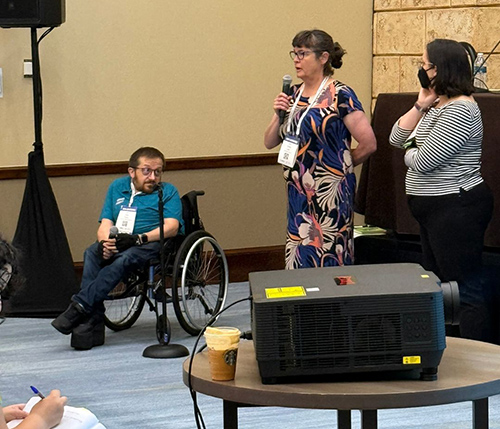
AccessUR2PhD was delighted to participate in the 2025 CMD-IT/ACM Richard Tapia Celebration of Diversity in Computing Conference in Dallas, Texas this September. At the conference, we hosted a workshop on Accessibility in Computer Science featuring faculty, researchers, and PhD mentors sharing their work and experiences, and organized networking opportunities for participants to build connections in the accessibility community. We also helped fund a group of students to attend; some presented research, others engaged in networking, and all attended sessions designed to support their computing trajectories.
In addition, we hosted a Birds of a Feather session titled Diversity Includes Disability, led by Brianna Blaser (University of Washington), Rob Parke (USC), and Cathy Law (Oregon State University). The session convened people with disabilities and allies to share experiences, strategies, and resources for achieving success in computing fields. Through introductions, discussion of internships, mentoring, career development, and best practices for educators and employers, the session fostered community, resilience, and actionable ideas at a moment when inclusive practices are under pressure.
New Webinar Recordings
By Brianna Blaser
There are multiple new recordings available from DO-IT projects that offer opportunities to learn about accessibility and disability inclusion. Check them out:
- GitHub's pledge to help improve the accessibility of open source software at scale with Ed Summers and Maria Lamardo of GitHub
Given that technology is a ubiquitous and essential part of modern life, and approximately 16% of the human population have a disability, it is critical that people with disabilities are able to contribute to the development of the technology that is used by all. The challenge is that proprietary Assistive Technology products can be very expensive, and people with disabilities are unemployed or under-employed at higher levels than the general population so open-source assistive technology is imperative. This webinar will share information on how GitHub is working to make that happen. - Seven practical moves toward disability justice in computing education - with Amy J. Ko, University of Washington
Amy will discuss how—employing a disability justice lens and embracing its intersections with other systems of oppression around race, gender, and class—she strives to apply a Universal Design in Learning (UDL) framework to her teaching. She'll share her philosophy on UDL and share 7 heuristics she has developed for accessible teaching in computing. - Generative AI and Accessibility Benefits, Trade-offs and Impacts of Intersectionality with Kate Glazko, University of Washington; Jun Cha, University of Wisconsin; and Sev Huffman, Gallaudet University & University of Washington, funded by AiiCE
Researchers present findings on the the benefits, trades offs and impacts of using Generative AI for accessibility by members of the Deaf/HoH communities and Neurodivergent individuals. In the first, Glazko & Cha, et. al., discuss how neurodivergent people, often left out by existing accessibility technologies, develop their own ways of navigating normative expectations. GAI offers new opportunities for access, but it is important to understand how neurodivergent “power users”—successful early adopters—engage with it and the challenges they face. In the second one, Huffman, et. al., discuss Generative AI tools, particularly those utilizing large language models (LLMs), and how they are increasingly used in everyday contexts. While these tools enhance productivity and accessibility, little is known about how Deaf and Hard of Hearing (DHH) individuals engage with them or the challenges they face when using them.