
Making Math, Science, and Technology Instruction Accessible to Students with Disabilities
Making Math, Science, and Technology Instruction Accessible to Students with Disabilities is available in HTML and PDF versions. For the HTML version, follow the table of contents below. For the PDF version, go to Making Math, Science, and Technology Instruction Accessible to Students with Disabilities - PDFs.
© 2009 University of Washington. Permission is granted to copy these materials for educational, noncommercial purposes provided the source is acknowledged.
Creation of these materials was funded by the Dwight D. Eisenhower Professional Development Program through the Washington State Office of the Superintendent of Public Instruction (grant #GR-91915), the National Science Foundation (cooperative agreement #HRD-0227995, grant #CNS-0540615, grant #9800324), the Telecommunications Funding Partnership (TFP95-113), the U.S. Department of Education (#P333A020044, and NIDRR #H133D010306), and Qwest Communications. Distribution of these materials was funded by the National Science Foundation (cooperative agreement #HRD-0227995 and grant #HRD-0833504). The 2009 edition of this publication is based upon work supported by the National Science Foundation under grant #HRD-0833504. Any opinions, findings, and conclusions or recommendations expressed in this material are those of the author and do not necessarily reflect the views of the National Science Foundation (NSF).
About the Editor

Dr. Sheryl Burgstahler founded and now directs the DO-IT (Disabilities, Opportunities, Internetworking, and Technology) Center at the University of Washington (UW). DO-IT promotes the success of students with disabilities in postsecondary education and careers, employing technology as an empowering tool. DO-IT sponsors programs that increase the use of assistive technology and promote the development of accessible facilities, computer labs, electronic resources in libraries, web pages, educational multimedia, and Internet-based distance learning programs.
Dr. Burgstahler has published dozens of articles and book chapters and delivered presentations at national and international conferences that focus on universal design of distance learning, websites, computer labs, instruction, student services, and other applications in education, and the management of electronic communities, work-based learning activities, and transition programs for youth with disabilities.
She is the author or co-author of eight books on using the Internet with pre-college students and directing e-mentoring and transition programs. She is the lead editor and author of the book Universal Design in Higher Education: From Principles to Practice. Information about purchasing this book can be found here.
Dr. Burgstahler is an affiliate associate professor in the College of Education at the UW. More about Dr. Burgstahler can be found on her website.
About the Contributors
A team of professionals, representing postsecondary institutions from twenty states throughout the United States, gathered in collaborative meetings and online and telephone conferences to help develop and test the professional development content and strategies included in these materials. Their continuous involvement in the AccessCollege project assured that project products have applicability nationwide. AccessCollege is funded by the U.S. Department of Education (grant #P333A050064), through DO-IT (Disabilities, Opportunities, Internetworking, and Technology) at the University of Washington.

AccessCollege staff and team members:
- develop and deliver professional development and technical assistance using multiple delivery systems
- validate campus accessibility indicators and use pre-post checklists to document institutional changes in policies, procedures, and practices that lend to campuses that are more inclusive of students with disabilities
- prepare content to be published in a book on universal design in postsecondary education, as well as distribute training videos, publications, and web resources to train faculty and staff on applications of universal design
- improve the accessibility of activities and products of professional organizations
Project methods will result in postsecondary institutions and professional organizations that are more inclusive of people with disabilities. Ultimately, AccessCollege will increase the success of individuals with disabilities in postsecondary education and careers.
AccessCollege Staff
DO-IT staff members who work on the AccessCollege project include:
Sheryl Burgstahler, Director
Michael Richardson, Manager
Rebecca C. Cory, Evaluation/Research Coordinator
Marvin Crippen, Technology Specialist
Elizabeth Moore, External Evaluator
Rebekah Peterson, Publications Coordinator
Lisa Stewart, Project Coordinator
Linda Tofle, Editor
AccessCollege Team
AccessCollege team members are listed below.
Alice Anderson
Technology Access Program Coordinator
Division of Information Technology
University of Wisconsin–Madison
Madison, WI
Partner: Madison Area Technical College,
Madison, WI
Beatrice Awoniyi
Assistant Dean of Students
Director of Student Disability Resource Center
Florida State University
Tallahassee, FL
Partner: Tallahassee Community College and Florida A&M University, Tallahassee, FL
Meryl Berstein
Director, The Center for Academic Support
Johnson and Wales University
Providence, RI
Partner: Community College of Rhode Island, Warwick, RI
Sharon Bittner
Director, Academic Support Services
Des Moines Area Community College
Ankeny, IA
Partner: Iowa State University, Ames, IA
Barbara Brown
Academic Counselor
Kodiak College
Kodiak, AK
Partner: University of Alaska, Anchorage
Deborah Casey-Powell
Assistant Dean of Student Services
Green River Community College
Auburn, WA
Adele Darr
Director, Disability Resource Center
Arizona State University
Tempe, AZ
Partner: South Mountain Community College, Phoenix, AZ
Tim Dailey
Director of Disability Services for Students
Southwestern Oregon Community College
Coos Bay, OR
Partner: University of Oregon, Eugene, OR
Jim Gorske
Assistant Dean of Students/Director of Disability Resource Center
University of Florida
Gainesville, FL
Partner: Greenville Technical College,
Greenville, SC
Pam Griffin
General Disability Services Coordinator, Disability Services & Resources
University of Minnesota–Duluth
Duluth, MN
Partner: Fond Du Lac Tribal and Community College, Cloquet, MN
Grace T. Hanson
Director of Disabled Student Services
Mt. San Antonio College
Walnut, CA
Partner: California State University–Long Beach, Long Beach, CA
Dyane Haynes
Director of Disability Resources for Students
University of Washington
Seattle, WA
Partner: Seattle University, Seattle, WA
Elaine High
Learning Disabilities Specialist
Virginia Walker
Cognitive Disabilities and Brain Injury/ Student-Athlete Liaison
Resource Center for Persons with Disabilities
Michigan State University
East Lansing, MI
Partner: Kalamazoo Valley Community College, Kalamazoo, MI
Melissa Locher
Coordinator for Disability Services
Missouri Southern State University
Joplin, MO
Partner: Crowder Community College,
Neosho, MO
Rodney Pennamon
Director of Disability Services
The Margaret A. Staton Office of Disability Services
Georgia State University
Atlanta, GA
Partner: Georgia Perimeter College,
Clarkston, GA
Patricia Richter
Coordinator, Services for Americans with Disabilities
Office of Human Diversity
Kutztown University
Kutztown, PA
Partner: Lehigh Carbon Community College, Schnecksville, PA
Sharon Robertson
Assistant Director of Student Success Center
University of Tennessee at Martin
Martin, TN
Partner: Middle Tennessee State University, Murfreesboro, TN
Rosezelia Roy
Coordinator, Students with Disabilities Program
Virginia State University
Petersburg, VA
Partner: J. Sargeant Reynolds Community
College, Richmond, VA
Audrey Annette Smelser
Counselor/Disability Specialist
Student Support Services
National Park Community College
Hot Springs, AR
Partner: Henderson State University,
Arkadelphia, AR
Al Souma
Counselor, Disability Support Services
Seattle Central Community College
Seattle, WA
Partner: Seattle University, Seattle, WA
Suzanne Tucker
Coordinator, Disability Resource Office
Southern Connecticut State University
New Haven, CT
Partner: Gateway Community College,
New Haven, CT
Linda Walter
Director, Disability Support Services
Seton Hall University
South Orange, NJ
Partner: Raritan Valley Community College, Somerville, NJ
Introduction
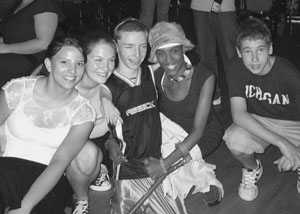
Success stories prove that some people with disabilities overcome multiple barriers to college and careers. However, this group continues to be underrepresented in challenging academic and career fields, such as science, technology, and engineering. The DO-IT Scholars program integrates activities for young people who have disabilities that, together, promote positive postschool outcomes. The disabilities of participants include sensory impairments, mobility impairments, health impairments, attention deficits, Asperger's Syndrome, and learning disabilities.
DO-IT (Disabilities, Opportunities, Internetworking, and Technology) serves to increase the participation of individuals with disabilities in challenging academic programs and careers. It was founded and continues to be directed by co-author Sheryl Burgstahler, Ph.D., at the University of Washington in Seattle. DO-IT promotes the use of computer and networking technologies to maximize independence, productivity, and participation in education and employment. Since 1992, the DO-IT Scholars program has provided students with disabilities with the tools and skills needed for postsecondary and career success through interventions that include technology access, live-in summer programs, peer and mentor support, college preparation activities, and work-based learning.
Repeated funding from the National Science Foundation has resulted in DO-IT strengths in the fields of science, technology, engineering, and mathematics (STEM). DO-IT's Alliance for Access to STEM (AccessSTEM) promotes the participation of people with disabilities, including the DO-IT Scholars, in STEM fields. For more information on AccessSTEM and for a searchable Knowledge Base of questions and answers, case studies, and promising practices, consult the AccesssSTEM page.
DO-IT has evolved into a collection of projects and programs to increase the number of people with disabilities who:
- use technology as an empowering tool
- communicate with peers and mentors in a supportive electronic community
- develop self-determination skills
- succeed in postsecondary education and employment
- pursue careers that were once considered unavailable to them, such as science and engineering
- have opportunities to participate and contribute in all aspects of life
This manual was developed to help you create summer study, work-based learning, and e-mentoring programs for youth. Although DO-IT focuses efforts on college-based teens with disabilities, activities, forms, and publications can be adapted for other groups. Chapter One provides an overview of research that supports DO-IT practices. The chapters that follow share how DO-IT employs evidence-based practices in a cohesive set of programs and activities for students who have disabilities. Within those chapters you will see how we've put research into practice to promote the success of students with disabilities as they transition from high school to college and careers. The last chapter shares information on resources that include websites, references, and a collection of DO-IT publications and video presentations, such as How DO-IT Does It, DO-IT Pals, and Opening Doors: Mentoring on the Internet. Appendices include ready-made forms and other documents that can be adapted for use in your program.
Organizational details shared in this book have been implemented for more than fourteen years at the University of Washington in Seattle. Applying these practices can promote the development of self-determination and technology skills that contribute to success in college, careers, and independent living. Please note that including content in sections and on documents and forms in this book does in no way suggest that they are applicable to any other program. Administrators should seek counsel from attorneys and decision-makers of sponsoring organizations to determine the appropriate policies and procedures for their transition programs.
Much of the content of this book is duplicated in other publications, training materials, and web pages published by DO-IT at the University of Washington, most of which can be found within the comprehensive website at https://doit.uw.edu/. Permission is granted to modify and duplicate these materials for noncommercial purposes provided the source is acknowledged.
An electronic version of this book is available at Creating a Transition Program for Teens: How DO-IT does it, and how you can do it too. Related videos and brochures are available on the Resources page. For additional information and resources on technology, education, and employment for people with disabilities, visit the DO-IT website at https://doit.uw.edu/.
How to Use These Materials
The enclosed videos, written materials, and handout templates were developed for those providing professional development to help faculty and administrators in postsecondary institutions become more aware of:
- the rights, responsibilities, potential contributions, and needs of students with disabilities
- the rights and responsibilities of postsecondary institutions
- reasonable accommodations and instructional strategies for working with students who have disabilities
- campus resources that help provide equitable educational opportunities for all students
These materials are for use in departmental and campus-wide presentations to stimulate discussion and action. Each presentation option can be tailored for meetings of administrators, departmental chairs, advisors, faculty, teaching assistants, and support staff. The presentations are intended for use in public and private; large and small; and two-year, four-year, and technical postsecondary institutions. Presentation lengths vary from 20 minutes to several days. The materials were tested nationwide and refined based on faculty and staff evaluations.
In addition to the presentations themselves, a synthesis of research, implementation and institutionalization strategies, presentation tips, frequently asked questions, and resources are included. The following paragraphs describe the content of this handbook.
Synthesis of Research
The content included in this handbook is based on research in a number of relevant areas. These include experiences of students with disabilities, reported postsecondary faculty training needs, adult learning, learning styles, types of learning, universal design of instruction, and systemic change. This section describes the underlying theory and research that supports the practices suggested in these materials.
Institutionalization Strategies
Setting up one training session for a department is not difficult; however, developing strategies to institutionalize faculty and administrator training requires more thought and planning. This section provides suggestions that can result in long-term improvements on your campus. Implementing institutionalization strategies will help ensure that students with disabilities have equal access to your academic programs and resources.
Presentation Tips
This section provides suggestions for making engaging and informative presentations to faculty, administrators, and staff. You will also find case studies to use in your presentations.
Presentations
Several presentation options are outlined in this section:
- 20-30 minute overview to introduce participants to basic legal issues, accommodation strategies, and resources specific to their campus;
- 1-2 hour presentation with a special focus on providing accommodations to students with a variety of disabilities and introducing participants to legal issues and campus resources; and
- 10 tailored workshops for in-depth training on topics of special interest to faculty and administrators.
For each presentation option, a sample script is included to minimize the preparation that might otherwise be required. The presenter may use the script verbatim or extract ideas to customize a presentation.
The videos included in this notebook can be used in specific presentations or broadcast on public television. Handout and overhead projection templates are provided in the Presentation Tools section for easy duplication and use.
A web-based instructional option is also available for faculty and administrators. To access web-based instruction, visit The Faculty Room. A distance learning course that can be delivered via email to faculty and administrators on your campus can be found in The Faculty Room at https://doit.uw.edu/brief/academic-accommodations-for-students-with-learning-disabilities/.
Frequently Asked Questions
Frequently asked questions (FAQs) and their answers provide a useful reference for presenters. They represent a small sample of the articles available in the searchable Knowledge Base at https://doit.uw.edu/programs/accesscollege/. If reviewed before delivering a presentation, the FAQs can help the presenter prepare responses to questions commonly asked by faculty and administrators.
Resources
A glossary of disability-related terms, a list of resources, and references are included.
Presentation Tools
The presenter will find ready-to-use presentation tools included in this section.
Overhead Projection Templates
Templates that can be developed into presentation slides are included for use in the presentations. There are many templates included to optimize custom presentations. In addition, slides are provided on The Faculty Room website.
Handouts
Reproducible, camera-ready handouts for presentations are inserted in the plastic pouch in the back of the binder.
Final Evaluation Tools
One of two evaluations can be selected for use with participants at the end of the session. They are found on pages 188-190 of this notebook.
Videos
Videos referenced throughout this handbook are collected on eight DVDs (located in the back of this binder) and are also freely available online at https://doit.uw.edu/videos/.
Their titles follow.COLLEGE 1
- Working Together: Faculty and Students with Disabilities. Successful students with disabilities tell about techniques and accommodations that contributed to their success, emphasizing the importance of the faculty-student relationship. (9 minutes)
- Building the Team: Faculty, Staff, and Students Working Together. Learn how to create an inclusive postsecondary learning environment. (16 minutes)
- Equal Access: Universal Design of Instruction. Learn to make instruction in a classroom or tutoring center accessible to all students. (13 minutes)
- Equal Access: Student Services. Learn how to apply universal design principles to make postsecondary student services accessible to all students. (15 minutes)
COLLEGE 2
- Invisible Disabilities and Postsecondary Education. Learn strategies to help students with learning disabilities, attention deficits, and other invisible disabilities achieve success in college. (19 minutes)
- Self-Examination: How Accessible Is Your Campus? Learn issues to address to make a postsecondary institution welcoming and accessible to students with disabilities. (10 minutes)
- Equal Access: Campus Libraries. How to apply universal design principles to make libraries accessible to all visitors. (10 minutes)
TECHNOLOGY 1
- Working Together: People with Disabilities and Computer Technology. Individuals with disabilities demonstrate adaptive technology for people with mobility impairments, blindness, low vision, hearing or speech impairments, and learning disabilities. (13 minutes)
- Working Together: Computers and People with Mobility Impairments. People with mobility impairments demonstrate computer access technology. (14 minutes)
- Working Together: Computers and People with Sensory Impairments. People with visual and hearing impairments demonstrate computer technology for school and work. (10 minutes)
- Working Together: Computers and People with Learning Disabilities. Students and workers with learning disabilities demonstrate computer- based tools and strategies. (12 minutes)
- Computer Access: In Our Own Words. Students with disabilities demonstrate adaptive technology and computer applications. (10 minutes)
TECHNOLOGY 2
- Equal Access: Universal Design of Computer Labs. Learn how computer labs can be designed to be accessible to students with disabilities. (11 minutes)
- World Wide Access: Accessible Web Design. People with disabilities describe roadblocks they encounter and examples of accessible web design. (11 minutes)
- Real Connections: Making Distance Learning Accessible to Everyone. Learn issues to consider when designing courses to fully include students with disabilities. (12 minutes)
- Access to Technology in the Workplace: In Our Own Words. Employees show how to make technology accessible. (13 minutes)
- Camp: Beyond Summer. Learn how to add Internet experiences to summer camp programs for children and youth with disabilities. (10 minutes)
DO-IT STEM 1
- Working Together: Science Teachers and Students with Disabilities. Successful science students with disabilities suggest ways to make science activities accessible. (13 minutes)
- Equal Access: Science and Students with Sensory Impairments. Students and employees with sensory impairments share strategies for success. (14 minutes)
- The Winning Equation: Access + Attitude = Success in Math and Science. Science and math teachers share strategies for making these subjects accessible to students with disabilities. (15 minutes)
- STEM: Science, Technology, Engineering, Mathematics at the University of Washington. Students and faculty highlight STEM programs offered to a diverse student body at the UW. (10 minutes)
SELF DETERMINATION 1
- Taking Charge 1: Three Stories of Success and Self-Determination. Successful young people with disabilities share strategies for living self-determined lives. (17 minutes)
- Taking Charge 2: Two Stories of Success and Self-Determination. Teens with disabilities share how they are learning to live self-determined lives. (15 minutes)
- Taking Charge 3: Five Stories of Success and Self-Determination. This video combines the five stories presented in Taking Charge 1 & 2 videos. (27 minutes)
PART OF ME, NOT ALL OF ME
- Part of Me, Not All of Me. Teens with disabilities share their interests, activities, and other aspects of their lives showing that their disabilities do not define who they are. (6 minutes)
DO-IT PROGRAMS 2
- How DO-IT Does It. Successful practices employed by DO-IT programs to increase the success of young people with disabilities in college and careers. (34 minutes)
- Opening Doors: Mentoring on the Internet. Mentors help students with disabilities achieve success in college studies and careers. (14 minutes)
Permission is granted to reproduce any of these materials for noncommercial, educational purposes as long as the source is acknowledged. Much of the content is duplicated in other publications, training materials, and webpages published by the DO-IT Center; most can be found within the comprehensive website at https://doit.uw.edu/.
Part I: Making Instruction Accessible
Part I of the notebook includes the three sections below:
Part II: Teaching Preservice and Inservice Teachers
Part II of this notebook includes the three sections described below:
Presentation Tools
This section of the notebook includes resources that can be used to prepare for and deliver presentations described in previous sections. These supplies include:
Making Math, Science, and Technology Instruction Accessible to Students with Disabilities - PDFs
Full PDF
Table of Contents
Page i-xii, includes
- About the Editor
- About the Contributors
- Introduction
- How to Use These Materials
Part I: Making Instruction Accessible
Page 1-70, includes
- Part I: Making Instruction Accessible
- Access Issues and Strategies
- Overview of Access Issues
- Ethical and Legal Issues
- Self-Determination
- Universal Design of Instruction
- Information Access
- Access to Science
- Accommodation Strategies
Access to Technology
Page 71-100, includes
- Access to Technology
- Access to Computer Labs
- Access to Computers
- Access to Electronic Resources
- Putting It All Together
Resources
Page 101-134, includes
- Resources
- Associations and Comprehensive Resources
- Glossary
- References
Part II: Teaching Preservice and Inservice Teachers
Page 135-144, includes
- Part II: Teaching Preservice and Inservice Teachers
- Presentation Tips
Presentations
Page 145-234, includes
- Presentations
- Teaching Science and Math to Students with Disabilities
- Accommodation Strategies
- Universal Design of Instruction
- Information Access
- Computer Lab Access
- Access to Computers
- Universal Design of Web Pages
- Universal Design of Distance Learning Courses
Presentation Tools
Page 235-284, includes
- Presentation Tools
- Evaluation Instruments
- Projected Visual Templates
Index - 192
Page 285-286