
Promoting Equity in Engineering Relationships Capacity Building Institute (2013)

June 7, 2013
University of Washington
Seattle, Washington
The Promoting Equity in Engineering Relationships (PEERs) program improves the University of Washington (UW) College of Engineering for students, by students. Through a student seminar and peer-led presentations, PEERs creates and sustains a cadre of student leaders who engage peers, professors, and staff to promote change toward a more inclusive engineering environment.
PEERs is funded by the National Science Foundation's (NSF) Innovation through Institutional Integration (I-Cubed or I3) program, which seeks to leverage and connect current NSF-funded projects to broaden and deepen the impact of these efforts, with particular emphasis on awards managed by programs in the Directorate for Education and Human Resources (EHR). PEERs is a partnership of NSF-funded groups across the UW campus, including the UW ADVANCE Center for Institutional Change; Disabilities, Opportunities, Internetworking, and Technology (DO-IT); Center for Workforce Development (CWD); Center for Engineering Learning & Teaching (CELT); and the Alliance for Students with Disabilities in Science, Technology, Engineering, and Math (AccessSTEM).
A Capacity Building Institute (CBI) was held on the UW campus on June 7, 2013. A CBI brings diverse stakeholders together to collaboratively discuss solutions to specific problems, thereby building the capacity of each participant to approach these problems and exploring ways that stakeholders can contribute to solutions. The 2013 CBI was a follow up to a CBI held at the beginning of the PEERs project in 2009. More information about the 2009 CBI can be found online.
This publication shares the proceedings of the 2013 CBI. It may be useful for people who:

- participated in the CBI
- want to create a more inclusive engineering environment at the UW
- want guidance for conducting a CBI at their institution, in their region, or at a national or international forum
- want to increase their understanding of issues surrounding inclusion and engineering; are motivated to engage in an electronic community to discuss these issues
- would like to access resources to help them make their campus courses, services, and activities more welcoming and accessible to a diverse group of students
- have promising practices to share with others through future engagement
About the CBI
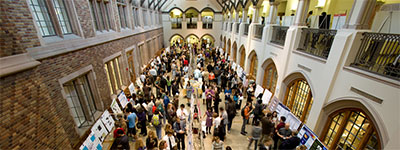
The PEERs CBI was held June 7, 2013 on the UW campus. Its overall purpose was to discuss the PEERs project's impact on diversity in engineering and identify collaborations, action items, and best practices to further support diversity in engineering. Participants included student services leaders, administrators, faculty, and students from the College of Engineering as well as other organizations on campus.
Participants included members of groups who are underrepresented in engineering—women, minorities, and people with disabilities—as well as practitioners with direct experience in serving underrepresented students. Broad issues that were discussed included:
- activities of the PEERs program
- experiences of PEERs leaders
- changes at the UW over the last four years, with respect to diversity
- future steps toward creating a more welcoming and equitable campus
In this CBI:
- all participants contributed to its success.
- experts in many topic areas were in the audience.
- although some predetermined material was presented, new content was delivered as the meeting unfolded and participant interests were expressed and expertise was made known.
The CBI included a presentation about PEERs, a panel discussion with PEERs Leaders, and small working group discussions. The presentation covered PEERs' goals, activities, climate survey, and evaluation data. The PEERs Leaders discussed their backgrounds and experiences with the project. In small working groups, participants responded to the following questions:
- What has changed over the past four years related to diversity at UW?
- What is the evidence of these changes?
- What contributions/legacy has PEERs made to the diversity conversation and climate at the UW and within the UW College of Engineering?
- What are the next steps to keep moving forward in creating a welcoming and equitable campus?
Agenda
11:00 a.m.
PEERs Project: Overview, Accomplishments, and Data
Eve Riskin, Associate Dean of Academic Affairs, College of Engineering
Joyce Yen, Program/Research Manager, UW ADVANCE
Priti Mody-Pan, Deputy Director, Center for Workforce Development
Laura Collins, President, Center for Research and Learning
11:15 a.m.
PI Remarks
Ana Mari Cauce, Provost, Executive Vice President, and PEERs PI
11:30 a.m. PEERs Leaders Presentation and Panel Discussion
Cezanne Camacho, Electrical Engineering
Nuvala Fomban, Bioengineering
Kimberlee Sing, Chemical Engineering
Megan Torkildson, Human-Centered Design and Engineering
Rafael Vertido, Computer Science
Quoc-Anh Vu, Electrical Engineering
12:00 p.m.
Working Lunch
Small Groups Discussion #1: What has changed over the past four years related to diversity at UW? What is the evidence of these changes? What contributions/legacy has PEERs made to the diversity conversation and climate at the UW and within the UW College of Engineering?
12:45 p.m.
Report Out from Discussion #1
1:00 p.m.
Small Groups Discussion #2: What are the next steps to keep moving forward in creating a welcome and equitable campus?
Facilitator: Sheryl Burgstahler, Director, DO-IT and AccessSTEM
1:30 p.m.
Report Out from Discussion #2
1:50 p.m.
Conclusion and Evaluation
Complete PEERs CBI Feedback form
2:00 p.m.
Adjourn
Participants
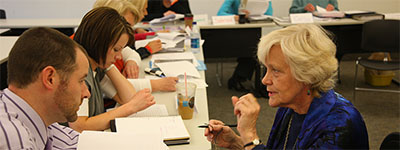
Stakeholder groups represented in the CBI included:
- student services leaders and administrators
- science and engineering faculty
- engineering students
The following individuals participated in the CBI:
Raven Alexander
Academic Advisor, Computer Science + Engineering
Linda Ando
OMAD Educational Opportunity Program (EOP) Academic Adviser
Scott Bellman
Program Manager, DO-IT
Brianna Blaser
Program Coordinator, DO-IT
Jim Borgford-Parnell
Associate Director, CELT
Kathleen Brown
Visiting Scholar, Office of Educational Assessment (OEA)
Sheryl Burgstahler
Director, Accessible Technology Services, including DO-IT and AccessSTEM
Cezanne Camacho
PEERs Leader, Electrical Engineering
Coleen Carrigan
Research Associate, ADVANCE Program
Ana Mari Cauce
University of Washington (UW) Provost
Kesia Ceniceros
TRiO Student Support Services
Sapna Cheryan
Department of Psychology
Laurie Collins
Center for Research and Learning
Angela Del Cid
Program Manager
Santosh Devasia
Associate Dean, College of Engineering, UW
Elise Dorough
CSE Undergraduate Advising
Sheila Edwards Lange
Vice Provost Diversity, OMAD
Nuvala Fomban
PEERs Leader, Bioengineering
Luis Fraga
Associate Vice Provost
Karen Freisem
Center for Teaching and Learning
Stephanie Gardner
Assoc. Director, LSAMP
Geneva Gay
Curriculum and Instruction
Erika Harnett
Associate Director, Washington NASA Space Grant
Jennifer Harris
Associate Director, Undergraduate Research Program
Cathryne Jordan
Counseling Services Coordinator
Cheryl Kaiser
Associate Professor, Psychology
Beth Kalikoff
Center for Teaching and Learning
Richard Ladner
Computer Science and Engineering
Priti Mody-Pan
Deputy Director, Center for Workforce Development
Alexis Nelson
Operations Specialist, ADVANCE
Kelli Jayn Nichols
Academic Services Director, Bioengineering
Jon Peterson
Office of Educational Assessment
Judy Ramey
Interim Dean of Engineering
Eve Riskin
Assoc Dean Academic Affairs, CoE
Laura Roy
Operations Coordinator, DO-IT
John Sahr
Associate Dean, Undergrad Academic Affairs
Betty Schmitz
Director, Curriculum Transformation
Noah Seidel
Program Assistant, DO-IT
Kimberlee Sing
PEERs Leader, Chemical Engineering
Lynne Spencer
Engineering Academic Center (EAC) Study Skills Instructor
Sehee Thomas
UW School of Law
Megan Torklidson
PEERs Leader, Human-Centered Design and Engineering
Amen Tsegai
Project Director, Center for Cultural Proficiency in Medical Education (CC-PriME)
Rafael Vertido
PEERs Leader, Computer Science
Quoc-Anh Vu
PEERs Leader, Electrical Engineering
Dawn Wiggin Esselstrom
Engineering Student Academic Services
Kristian Wiles
Director, TRIO SSS, OMAD
Joyce Yen
Program Manager, ADVANCE
PI Remarks
Presenter: Ana Mari Cauce, Provost and PEERs PI
PEERs is a great example of collaboration on our campus. We have fabulous things going on at the UW and we need to find more ways to weave them together. PEERs is also a great example of social scientists collaborating with engineers to examine and change engineering culture. As a project, PEERs is unique in that it explores a broad definition of diversity that aligns with students' own broad definitions of diversity. Introducing engineering students to diversity helps them understand the importance of diversity as it relates to working in their fields of study and being professionals within those fields.
Presentation Summaries
PEERs Project: Overview, Accomplishments, and Data
Presenters:
Eve Riskin, Associate Dean of Academic Affairs, College of Engineering
Joyce Yen, Program/Research Manager, UW ADVANCE
Priti Mody-Pan, Deputy Director, Center for Workforce Development
Laura Collins, President, Center for Research and Learning
PEERs aims to improve the experiences of underrepresented students in the UW College of Engineering, resulting in the increased participation of women, minorities, and people with disabilities. PEERs is also interested in increasing the participation of individuals with low-income backgrounds or who are LGBTQ (lesbian, gay, bisexual, transgender, questioning). The project is led by partners in UW's ADVANCE Center for Institutional Change, DO-IT, the Center for Engineering Learning and Teaching, and AccessSTEM.
PEERs project objectives include:
- raising awareness of unconscious and implicit biases toward underrepresented students
- promoting actions that both majority and underrepresented students and faculty can take to counteract these biases to cultivate a more welcoming and supportive climate
- cultivating change agents among both student and faculty bodies
- building a foundation and collaboration mechanisms for future efforts to make STEM and other campus programs welcoming and accessible to underrepresented students within the College of Engineering
Over the course of the project, PEERs has promoted student-level interventions, including an annual fall quarter seminar (ENG 498C) on diversity in engineering. The PEERs seminar covers topics that include demographics within engineering, the importance of diversity, personal stories of individuals, how to be an ally, implicit bias, and privilege. At the end of the course, students present to an audience from across campus. A small group of students in this class form a group of PEERs Leaders, who are a peer-to-peer workforce of students who lead presentations and panel discussions on these topics on campus and beyond. PEERs Leaders are students who have taken the seminar class and are interested in continuing to engage with the project. Eighteen students have participated as PEERs Leaders through in-person and virtual outreach activities. They have given over thirty presentations, reaching over 600 people in classes, at conferences, and meetings for staff and faculty.
PEERs has also led campus-level interventions, including the development and implementation of a campus-climate survey that allows departments to be compared with respect to climate for specific under-represented groups. PEERs also conducted two capacity building institutes and continues to engage online through a community of practice to help diversity initiatives connect with one another, and cross-pollination of other NSF-funded efforts. Through these activities, PEERs served to create better relationships among diversity-related groups on campus who often knew about each other but weren't actively engaged with one anothers work.
In the spring of 2013, PEERs administered a climate survey that closely mirrored one that was administered earlier in the project in order to measure change. The survey was sent to students in thirty-three majors (n=10,880 students). 1141 students responded, for a response rate of 10%. The data will be used to compare changes in the attitudes of students who are engineering majors to changes in students in other academic areas over time. Preliminary findings indicate that 9% of all respondents had heard of PEERs. 48 students responded to "Please describe in what ways PEERs has changed your personal awareness of diversity issues..." Responses include:
- Not really (n=26; 54%): "I have only heard the name before - I don't actually know what PEERs is."
- Deepen understanding (n=7; 15%): PEERs has caused me to be more aware of how my experiences in engineering may be shaped by my gender and has provided me with tools to overcome setbacks related to this."
- Awareness-raising (n=7; 15%); "More aware of disparities in education and opportunity."
- Take action/change agents (n=6; 13%): "Each person within the community has a responsibility to understand and get to know other cultures. If this is done, then we will have a stronger community within the UW. Not to say that we do not already, but it can only help to improve."
- Other (n=2; 4%); "I feel very welcomed at UW, which contrasts previous academic experience. I don't feel like an outlier. I love UW."
A complete report on the findings is forthcoming. Each department included in the survey will also receive a report with findings specifically relevant to their students.
Evaluation findings indicate that PEERs has had many positive effects at the UW.
| PEERs Program Component | Raise Awareness | Cultivate Change Agents | Promote Action | Build Foundation |
| PEERs Seminar |
|
| Increasing numbers of PEERs Leaders selected from seminar each year. |
|
| PEERs Leaders |
|
|
|
|
| Capacity Building Institutes |
|
|
|
|
| Climate Survey (2010) |
|
|
|
|
Report from Panel Discussion
Panelists included PEERs Leaders:
Cezanne Camacho, Electrical Engineering
Nuvala Fomban, Bioengineering
Kimberlee Sing, Chemical Engineering
Megan Torkildson, Human-Centered Design and Engineering
Rafael Vertido, Computer Science
Quoc-Anh Vu, Electrical Engineering
Panel members discussed their experiences as engineering students and as PEERs Leaders. They shared a variety of reasons they signed up for the PEERs seminar, including:
- They were motivated to participate because of a PEERs presentation that they had seen.
- They identified diversity as a topic that they were interested in or wanted to learn more about.
- It was an efficient use of their time because it fulfilled a requirement.
- They received encouragement from a faculty member or advisor.
Students reported learning a variety of things through the PEERs program, such as:
- ways to talk with friends and family members about diversity in order to encourage and support them in engineering or to raise awareness about diversity in engineering fields
- ways to ensure that technology and products they design are accessible to diverse populations
- strategies for addressing bias in classes or in group work settings
- specific topics that are addressed in the diversity literature including statistics on representation, unconscious bias, stereotype threat, and covert forms of discrimination
The PEERs Leaders were able to point to ways that diversity has made a positive difference in their engineering education. They felt more open to diverse ideas in teamwork settings and more respectful of the fact that everyone brings a different perspective to a team. PEERs Leaders recognized that when a group is more diverse, varying viewpoints with respect to gender, race, disability, or native language can be useful in solving problems effectively.
Reports from Working Group Discussions

Facilitator: Sheryl Burgstahler, Director, DO-IT and AccessSTEM
CBI participants represented a wide range of stakeholder groups, including postsecondary faculty, staff members from across the university, and engineering students. They came together to share information about changes that have occurred at the UW as a result of PEERs and to plan future activities. Their discussions are summarized below.
Discussion Question 1
What has changed over the past four years related to diversity at the UW? What is the evidence of these changes? What contributions/legacy has PEERs made to the diversity conversation and climate at the UW and within the UW College of Engineering?
During this discussion, participants shared changes that they have observed or perceived at the UW over the past four years:
- Increased visibility of the importance of diversity in education and student leadership related to diversity, as evidenced by the new diversity requirement.
- More discussions about diversity across campus, as evidenced by the College of Environment "Conversations on Defining Diversity" and students' articulation about appreciating diverse perspectives when working in groups.
- An integration of diversity into the culture of the College of Engineering, as evidenced by programs like the new NSF-funded Red Shirt Program that addresses pipeline issues through a five-year bachelor's program for low-income Washington state high school graduates (See UW News for more information).
- Increased diversity in specific programs, including the professional master's program in computer science and engineering.
- New hires in faculty, resulting in a generational shift and an improved campus climate with increased diversity.
- Faculty helping students benefit from diversity on teams in project-based and capstone courses.
- Faculty and chairs are more likely to reach out for help to resolve issues, especially as students demand a greater education about diversity through the diversity requirement.
- New programs and classes related to diversity have been developed, including the Disability Studies minor, the American Indian Studies Department, the American Sign Language minor, the Queer Studies minor, the PEERs Seminar, a course for female pre-majors in Computer Science and Engineering (CSE), and the Disability 101 Seminar.
- Expanded and new networks on campus among organizations like PEERs; Office of Minority Affairs and Diversity (OMAD); DO-IT; the Diversity Council; Women Investigating Race, Ethnicity, and Difference (WIRED); the TRiO Student Support Services First Quarter Seminar; NSF Scholarships in Science, Technology, Engineering, and Mathematics (S-STEM) Grant; Upward Bound Math and Science; NSF Science, Technology, Engineering, and Mathematics Talent Expansion Program (STEP); Minority Science Engineering Achievement (MESA) Community College Programs; Diversity Steering Committee in the Department of Psychology; and affinity groups, which resulted in both collaborative grant funding and collaboration in planning the 2012 Society for the Advancement of Chicanos and Native Americans in Science (SACNAS) meeting.
- A systemic approach to diversity, as evidenced by the adoption of the Diversity Blueprint and the campus climate survey.
- An increased appreciation among faculty, as evidenced by changes to the Faculty Code to recognize the intellectual value of diversity and inclusion.
- New spaces for student support through the renovations to the Husky Union Building (HUB) and the Ethnic Cultural Center, the creation of the new D Center and the Louis Stokes Alliance for Minority Participation (LSAMP) center, the move of the Disability Resources for Students to a more centralized location in Mary Gates Hall, and a greater awareness of accessibility in design of new spaces.
- Increased access for students with disabilities and an increased interest in including disability among diversity issues as evidenced by increased requests for presentations from DO-IT, increased interest in accessible design of information technology (IT) through the Access Technology Lab, and a high-level task force and advisory group focused on accessible IT.
- Greater efforts to recruit underrepresented groups.
- Diversity efforts happening both from the top down, such as the Diversity Blueprint that creates a strategic plan, and from the bottom up, as students advocate for things like the new diversity requirement.
Discussion Question 2
What are the next steps to keep moving forward in creating a welcoming and equitable campus?
During this discussion, participants brainstormed possible actions for continuing to increase diversity at UW. Their suggestions included:
- Make classrooms more usable for group work. Include Classroom Support Services and students with disabilities in classroom design and renovation.
- Increase awareness among faculty and teaching assistants about diversity issues through workshops or learning communities. Ensure campus leaders encourage participation in these trainings so the message reaches a broader audience. Encourage deans to discuss diversity at department chairs' annual reviews.
- Explore how some departments have made great progress with respect to diversity while others have struggled to make change and promote successful practices.
- Increase students' awareness of diversity issues through freshman seminars on diversity and engage younger students through presentations to K-12 classrooms.
- Institutionalize successful diversity programs.
- Consider adopting the PEERs model or a similar class focused on diversity in other colleges across campus. Request state funding to ensure that classes taught as part of grants such as the PEERs seminar and Disability 101 continue to be taught and can satisfy the new diversity requirement.
- Develop a Freshman Interest Group about diversity to ensure that students are exposed early in the pipeline and to help create a community for students early on in their university education.
- Continue conversations between various diversity groups to ensure collaboration and cross-pollination. Better coordination between organizations may help students to achieve their goals.
- Ensure that the campus conversation about diversity deals with the multiple dimensions of diversity and brings visibility to less common aspects of diversity, such as disability and LGBTQ issues.
- Ensure that data related to diversity is available—including data about disability and about faculty and staff.
- Increase research opportunities available to students to expose them to mentors and to spark their interest in a field.
- Address issues related to the increased population of international students on campus. Determine how to support and serve these students. Increase the conversation with other underrepresented groups, such as students with disabilities and LGBTQ students.
- Expand the diversity requirement so that all students—including graduate and professional students in fields that serve the community such as law and education, not just undergraduates—are required to take a class related to diversity.
- Ensure that upper administration is encouraging faculty and staff to be involved with programs for undergraduates.
- Make sure programs that work with underrepresented groups work together to ensure that they are inclusive of students in their program who are also members of other underrepresented groups. For example, a group that works with female students should make efforts to be welcoming and accessible to female students with disabilities, perhaps with assistance from DO-IT.
- Create more visibility around diversity activities on campus to ensure awareness within the diversity community and beyond.
Communities of Practice
Campus stakeholders, including project staff and some of the participants in CBIs, engage in an online Community of Practice (CoP) to discuss barriers and solutions for increasing the recruitment, retention, and persistence of engineering students from underrepresented populations and foster synergy toward reaching the PEERs project goal and objectives. The CoP paradigm comes from the field of knowledge management, where CoP members are practitioners who share expertise and resources to help each other improve practices.
To join the PEERs CoP, email doit@uw.edu. Members post to the PEERs CoP by sending email messages to peerscop@uw.edu. To learn about other CoPs that might be of interest to you, consult Communities of Practice.
PEERs Website

Consult the PEERs website for:
- information about project goals
- descriptions of project activities, including the PEERs seminar
- a report on the campus climate survey
- CBI proceedings
- resources for students, faculty, and staff
Acknowledgements
PEERs Capacity Building activities are funded by the National Science Foundation (grant #HRD-0833338). They were coordinated by PEERs: Promoting Equity in Engineering Relationships, which is led by the ADVANCE Center for Institutional Change; Disabilities, Opportunities, Internetworking, and Technology (DO-IT); the Center for Workforce Development (CWD); the Center for Engineering Learning & Teaching (CELT); and the Alliance for Students with Disabilities in Science, Technology, Engineering, and Math (AccessSTEM) at the University of Washington. Any opinions, findings, and conclusions or recommendations expressed in this material are those of the CBI presenters and publication authors and do not necessarily reflect the views of the National Science Foundation.
© 2013 University of Washington. Permission is granted to copy this publication for educational, noncommercial purposes, provided the source is acknowledged.