DO-IT News August 2026
Volume 34, Number 3
Below are the articles of the DO-IT News August 2026 newsletter.
Welcome to DO-IT’s Summer Newsletter
For DO-IT staff, summer is one of the most exciting times of the year because we get to meet new students and families, reconnect with returning students, and build community together on the UW campus. Through camps and college-preparation activities, students explore academic life, strengthen self-advocacy skills, and imagine new futures for themselves in higher education and beyond. It’s also a time for us to connect with DO-IT students from across the country as we celebrate recent milestones such as graduations and participation in summer internships.
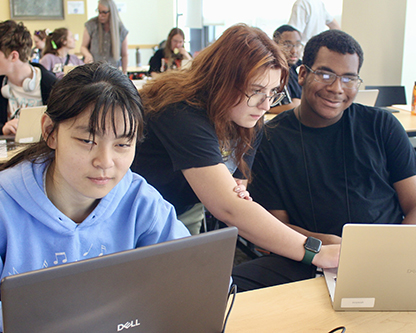
At DO-IT, we believe that access is critical to a well-functioning society. Disabled students deserve not only to be included, but to thrive in classrooms, workplaces, and communities designed with their full participation in mind. That’s why our work centers equity, belonging, and opportunity. We are committed to empowering people with disabilities through technology and education while promoting awareness and accessibility in both learning and employment.
Summer reminds us that joyful learning and social justice can go hand in hand. As students prepare for college, build friendships, and grow in confidence, they also help shape a more vibrant and inclusive world. We hope you enjoy this newsletter and celebrate summer with us. We’d love to hear from you!
DO-IT Staff Highlight: Kayla Brown, Ed.D.
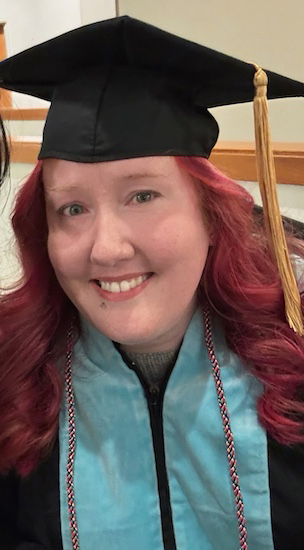
Kayla’s DO-IT story spans across two decades. In high school, she joined the program as a DO-IT Scholar, an intern upon graduation, and staff soon after. More than twenty years later, she’s deeply connected to the program and its mission, helping the next generation understand their rights, find their voice, and achieve their goals.
Kayla earned a bachelor’s degree in community psychology from University of Washington (UW) Bothell and a master’s degree in social work from UW Seattle. She went on to complete a doctor of education through Seattle University’s Educational and Organizational Learning and Leadership program, bringing together practice, research, and leadership in a way that shows up in everything she does.
Kayla’s passion sits at the intersection of accessible education and disability activism, and she brings that energy directly to students. She loves working one-on-one to support goal setting, academic planning, and building the kind of support system that makes success sustainable. Students leave Kayla’s events and mentoring with a clearer sense of what’s possible and how to get there.
She’s known for her in-depth knowledge and lively presentations on disability culture and history, along with interactive sessions that get people thinking critically about disability representation in the media. Kayla doesn’t just share information; she sparks memorable conversation and connection.
Within DO-IT Scholars, Kayla leads the “Phase 3” program of Summer Study, helping students take meaningful steps forward at a pivotal point during their transition into college. She also coordinates “Staying Connected,” impactful UW campus gatherings that bring DO-IT students and allies together to build community and keep relationships strong.
Her reach doesn’t stop there. Kayla contributes across multiple DO-IT projects, including DO-IT Scholars, AccessComputing, AccessUR2PhD, AiiCE, and Neuroscience for Neurodiverse Learners. Wherever she shows up, she brings the same combination of expertise, warmth, and contagious enthusiasm—helping people connect, grow, and lead.
Please join the DO-IT community in celebrating this amazing staff member!
2026 Trailblazers Honored by DO-IT
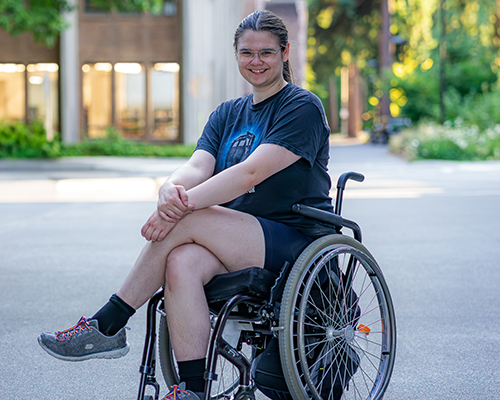
Each year in the summer, DO-IT recognizes community members who forge new pathways that will benefit others in the form of the DO-IT Trailblazer Award program. Through their work and accomplishments, Trailblazers have changed the way the world views people with disabilities and have increased the potential of people with disabilities to succeed in college, careers, and community life. Please join us in celebrating this year’s winners, Piper and Ritesh!
Piper Hawley, a 2020 Neuroscience for Neurodiverse Learners (NNL) Scholar, received the award for their work increasing awareness and access to secondary and higher education for teens with disabilities. After completing NNL, Piper attended Western Washington University, where they served as a peer advisor for the Institute for Critical Disability Studies. They created and led faculty workshops on topics related to disability, such as neurodiversity and inclusion in the classroom. Piper also served as the vice president of Western’s adaptive sports club. In the summers of 2024 and 2025, Piper worked as a program assistant for both DO-IT Summer Study and NNL. In this role and beyond, Piper helped teens with disabilities navigate the transition from high school to college. In June 2025, Piper graduated with a BS in behavioral neuroscience, with minors in critical disability studies and honors interdisciplinary studies. Piper now works as a teaching assistant at the Overlake Specialty School, assisting high school students with behavioral challenges. They will be attending Seattle University’s Master’s in Counseling program starting this fall. Piper plans on becoming a clinical neuropsychologist, with the goal of supporting individuals who have not been able to access a diagnosis due to inequitable systems.
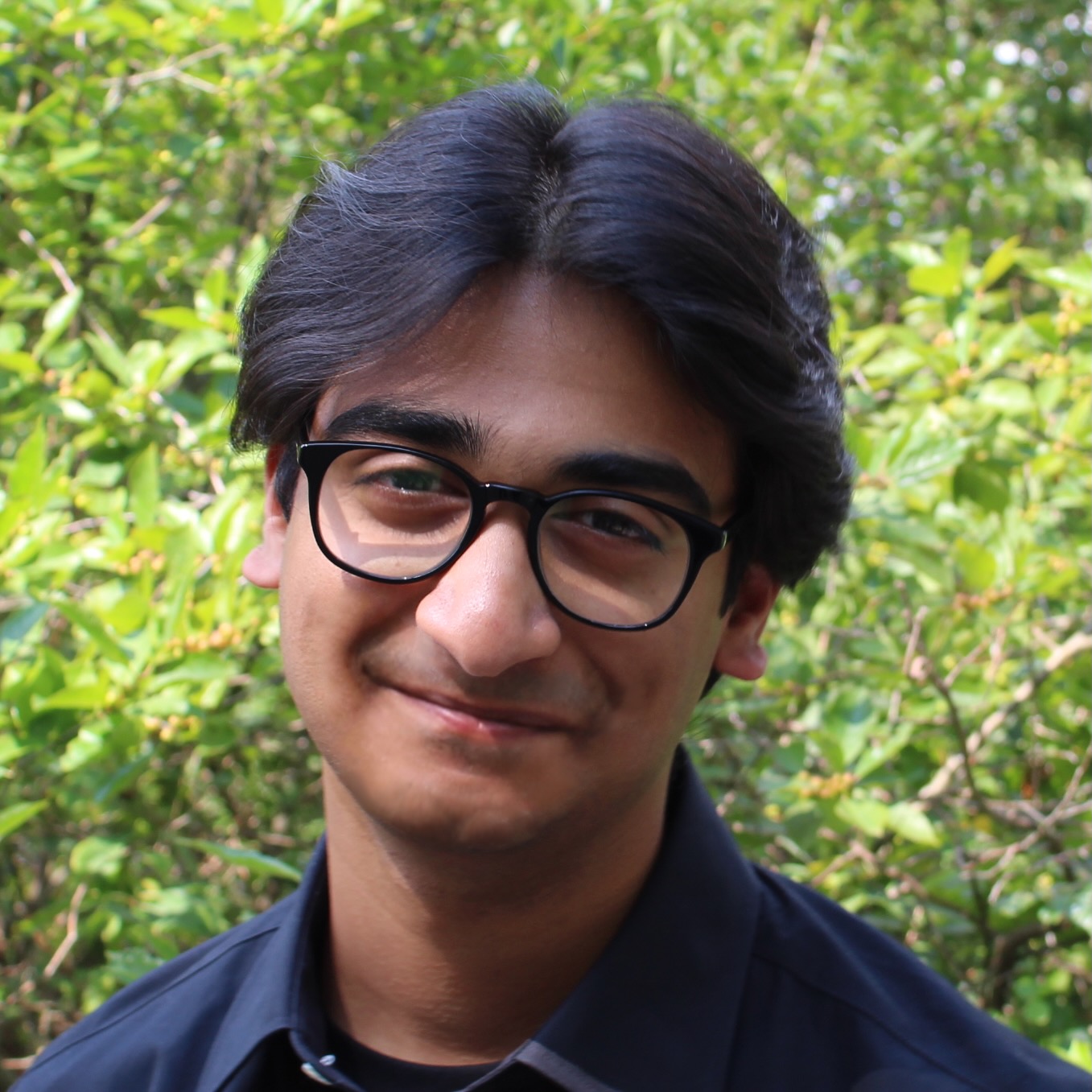
Ritesh Kanchi, an AccessComputing Team Member, received the award for his work in improving and promoting accessibility practice in computing education. As an undergraduate at the University of Washington, Ritesh worked to improve accessibility at scale in introductory computing courses. Funded by AccessComputing, he worked with Allen School Teaching Faculty Miya Natsuhara and Matt Wang. Since introductory computing is a prominent gateway into the field, these courses are critical spaces to build proactive accessibility capacity for students. Having served as a teaching assistant (TA) in these courses himself, Ritesh understood accessibility not as an abstract or legal mandate but as part of the everyday labor of teaching—supporting fellow TAs in that work by giving them the practices and tools to make their courses accessible. At its core, accessibility is inseparable from good design, and Ritesh believes the most durable accessibility comes from designing intentional systems from the outset. As a computer science PhD student at Harvard, he carries this principle forward: developing intelligent, adaptive user interfaces that respond to a person's abilities and context, so that computing augments ability rather than replacing it. Alongside this research, he works with stakeholders across Harvard to help build an inclusive-pedagogy community of practice and teach accessibility as a design discipline, in and out of the classroom.
Congratulations to Piper and Ritesh!
New AccessComputing and AccessUR2PhD Resources
Across AccessComputing, we’ve continued developing resources of interest to our community. We hope you will check out some of them and share them with your colleagues who may be interested in learning more about accessibility in the classroom.
- Tips for Disabled Computing Students: Navigating Graduate School on the Path to a PhD
Read our new info brief in support of our continued work on engaging students with disabilities in research, funded by the Computing Research Association’s UR2PhD program. - Three new chapters are available in Teaching Accessible Computing
Edited by Alannah Oleson, Amy Ko, and Richard Ladner (University of Washington - UW).- Operating Systems + Accessibility, by Parthasarathy PD (BITS Pilani – Goa)
- Sustainable Computing + Accessibility, by Bedour Alshaigy (Uppsala University)
- Capstone and Thesis Projects + Accessibility, by Bedour Alshaigy (Uppsala University)
- Advice for Disabled Computing Students: Engaging in Research and Planning for Grad School
- Tips for Disabled Computing Students: Navigating Graduate School on the Path to a PhD
- Mentoring Students with Disabilities Pursuing Computing Research Opportunities
- New webinar recordings
- Impostor Phenomenon in an Academic Environment with Mary Huff (Dragonfly Mental Health)
- Supporting Students with Disabilities in Research with Kayla Brown and Scott Bellman (UW)
- Including Students with Disabilities in CS Education, Part 1 and Part 2 with Richard Ladner (UW)
- Where Will I Find the Time? A Flexible Ecosystem Approach to Digital Accessibility Training with Mary-Colleen Jenkins (UW)
- Book Chat with author Rua Williams: Disabling Intelligences: Legacies of Eugenics and How We are Wrong about AI with Rua Williams (Purdue)
- Disability, Pop Culture, and Technology with Kayla Brown (UW)
- Graduate Student Panel on pathways to a PhD in Computing with Jennifer Chien (University of California, San Diego), Stephanie Masotti (The University of Pittsburgh), Diego Guzman (University of California, Irvine), Tania Moharrery (Morgan State University), Olarinde Farayola (Towson University).
DO-IT Staff Highlight: Lyla Crawford
Since joining DO-IT in 1997, Lyla has helped shape the organization’s work in far-reaching ways. Her contributions span programs, partnerships, research, mentoring, evaluation, and regional outreach. Her work most strongly reflects two ideas that continue to shape disability-centered higher education practices: universal design and disability justice.
Universal design asks institutions to build environments, tools, and experiences that work for the widest possible range of people from the start, rather than adding access later. Disability justice goes further by insisting that disabled people are not an afterthought in education, research, and opportunity. It centers dignity, participation, community, and the leadership of those most affected by exclusion. Lyla’s work at DO-IT embodies both principles.
Lyla has been involved in all of DO-IT’s federally funded projects, including early nationwide accessibility alliances and broadening participation efforts. Her work has helped connect local services to national efforts that expand access to education, technology, and careers for disabled people.
Lyla conducts the DO-IT Center’s internal evaluation activities and collaborates closely with an external evaluator to ensure that program results are measurable and impactful. Evaluation helps ensure quality programming, and through the lens of disability justice, evaluation becomes a way of asking whether programs are actually serving people well, whether outcomes are equitable, and whether participants are experiencing real access and belonging.
Lyla oversees the DO-IT Mentors program and various online mentoring communities, work that reflects another important disability justice principle: community is a source of power. Mentoring is not just about advice. It is about connection, recognition, and the chance to imagine a future that feels possible. For many disabled students, especially those navigating inaccessible systems or social isolation, mentoring can make a world of difference.
Through 28 years of work with DO-IT Scholars, Lyla has helped disabled high school students prepare for their transition to college. She has helped shape our Summer Study program, where students live in a campus dorm and learn about college life, academics, independence, and community. The program gives students the opportunity to build confidence, practice self-advocacy, and see themselves as college-bound scholars.
Lyla has contributed to the field as an author of many peer-reviewed articles on promising practices that help disabled youth pursue college and careers. Her scholarship shares effective strategies and provides others with models they can adapt. In this way, her writing extends DO-IT’s impact far beyond direct participants.
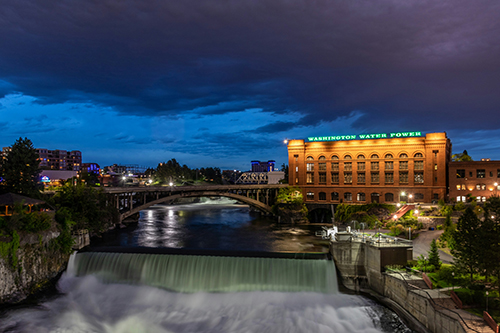
Lyla runs the DO-IT Center office in Spokane, Washington, helping ensure that families in eastern Washington can access DO-IT services. This matters because access is shaped not only by disability, but also by geography, transportation, infrastructure, and regional opportunity.
While DO-IT’s impact over the past several decades has been shaped by many people, we invite you to pause and celebrate this amazing staff member. Lyla’s work towards building transformative systems reminds us that durable change is built through care, consistency, and a long-term commitment to making access real.
Recent Awards to the AccessComputing Community
In the first part of 2026, we have been lucky to see many awards go to AccessComputing leadership, partners, and student team members. Congratulations to all our friends and colleagues!
- AccessComputing Founding PI Richard Ladner was awarded the Association for Computing Machinery’s Special Interest Group on Computer Science Education (SIGCSE) Award for Outstanding Contribution to Computer Science Education. The award honors the decades of work he has done to increase accessibility in CS education research and practice.
- AccessComputing co-PI Elaine Short (Tufts) was awarded the Computing Research Association’s Skip Ellis Early Career Award. The award recognizes “an early-career individual who demonstrates the potential for impactful contributions and leadership in their field of research, as well as has had a positive and significant impact on widening participation and improving access, opportunities, and positive experiences for all people in computing research and education.”
- Six AccessComputing Team Members were awarded National Science Foundation Graduate Research Fellowships including: Janet Jiang (UW), Ritesh Kanchi (Harvard), Gene Kim (MIT), Veronica Pimenova (University of Michigan), Ellie Seehorn (University of Michigan), and Tanisha Shende (Oberlin College). The NSF GRFP recognizes and supports outstanding graduate students in STEM fields.
- Former AccessComputing Team Member Ramin Ayanzadeh (UC Boulder) recently received a National Science Foundation (NSF) CAREER Award for his proposal on "Trustworthy Quantum Optimization."
- AccessComputing Partner Alisha Pradhan (New Jersey Institute of Technology) was a co-author with Ramprabu Thangaraj, Jed R Brubaker, Emma Dixon on Crafting Remembrance Beyond the Self: Older Adults’ Digital and Material Legacies, which received a best paper award at CHI 2026.
- AccessComputing PI Maya Cakmak's paper "Designing Accessible Robot Communication for Blind People" with Mina Huh, Amy Pavel, and others received the Best Paper award at the 3rd Workshop on Interactive AI for Human-Centered Robotics at CHI 2026.
- AccessComputing Partner Foad Hamidi and coauthors, Krystal Zhang, Marie Sakowicz, and Emily Wingeart, received an Honorable Mention Award at CHI 2026 for the paper "Belonging in the Making: Investigating Inclusive Makerspace Design for Youth with Autism."
- AccessComputing Partner Stephanie Ludi was an author of the paper named Most Influential Paper Award from the past 10 years "Eliciting programming challenges faced by developers with visual impairments: exploratory study,” at the 2026 Cooperative and Human Aspects of Software Engineering conference.
- AccessComputing partner Thijs Jan Roumen’s (Cornell) student Tobias Weinberg was awarded a prestigious Apple AI/ML fellowship.
- AccessComputing partner Nicki Washington (Duke) is the recipient of the 2025 ACM Frances E. Allen Award for Outstanding Mentoring. She is “recognized for exceptional commitment to diversifying the computing community at all education levels, demonstrating creativity and breadth in her approaches.”
- AccessComputing Partner Maitraye Das received an NSF CAREER award, for a project titled “AI-Augmented Creativity Support Tools in the Nonvisual Paradigm.”
- AccessComputing Partner Jeff Bigham (Carnegie Mellon, Apple) was named to the SIGCHI Academy for his contributions to the field of human-computer interaction.
AccessComputing Student Team is Recruiting!
AccessComputing Workforce is recruiting students interested in learning about accessible technology and education. Our program provides mentoring, professional development, and more for students in computing-related fields.
The National Science Foundation Alliance AccessComputing Workforce works with students nationwide to engage them in accessibility. Designing technology with accessibility in mind benefits everyone. We can break down barriers with technology that’s accessible to people with disabilities, and employers are eager to hire professionals with these skills!
Benefits of joining the AccessComputing Workforce Team:
Accessibility Exploration
Learn about accessibility through webinars, resources, and discussions on topics such as accessible technology, inclusive design, assistive technology, and accessibility in education. Participants can explore how accessibility is shaping the future of computing and discover areas of interest for further study.Building Your Accessibility Network
Connect with peers, mentors, educators, researchers, and professionals who are passionate about accessibility. Through community discussions, networking opportunities, and introductions to leaders in the field, participants can build relationships and become part of a growing accessibility community.Professional Learning & Career Development
Students can build professional skills through workshops and individualized support from AccessComputing Workforce staff. We can provide feedback on resumes and cover letters, discuss career and graduate school pathways, help students identify research opportunities, and share information about conferences, workshops, and other opportunities to deepen their engagement with accessibility and computing.
Eligibility
- Participants must be 18+ and studying at a U.S. institution in a computing-related field (Associates, Bachelors, Masters, or PhD).
- International students on F-1 visas are welcome.
AccessComputing accepts applications year-round. Apply online now!
2026 Phase 1 Scholar Articles
My Experiences with autism and ADHD
By Alex, Phase I Scholar
Having autism and ADHD has presented me with various challenges, particularly related to retaining information, putting my thoughts into words, and concentrating for an extended period of time. Physically, I also have low muscle tone. As a result, I have found it difficult to work smoothly in class, finish assignments on time, and present my perspective clearly.
I was diagnosed at age eight. Upon knowing the road ahead, I sought help both in and out of school, including speech therapy every other day, having a scribe, taking breaks, and extra time on tests and homework assignments to help me focus better. Initially, it felt extremely weird to think about these diagnoses—they were labels I did not ask for. But then I realized disabilities are not a bad thing; they are just opportunities to work on yourself. After about 1.5 years of receiving help from school and therapy, I started noticing significant improvements in my writing, speech, and social skills.
A message I have for my fellow peers with autism and ADHD is that labels are not meant to strike you down. What I have done to learn and formulate this message is that having ADHD and autism is not a bad thing, and you can have all the accommodations you need if you just advocate for yourself to get those accommodations for college. I have advocated for myself when I needed to take a break. Don't let others bring you down when you are having a hard time.
How animals have helped me through my injury
By Jessi, Phase I Scholar
My name is Jessi, and I have a traumatic brain injury. I have a hard time controlling my movements, and animals have really helped me with that. I have always had a special connection with animals; they help relax me when my body's not cooperating.
Each of my animals help me in multiple ways. I have two horses, and when my body feels like it can't stop moving, I go out and hug one of my horses, pet them, or go for a ride, and I can then relax. When I go for a walk, I need my dog because if I get unbalanced, she is there to help me get balanced again, and she provides emotional support.
My pets also help me with strength training. It’s hard work to ride, clean stalls, and go on long walks. Grooming can take a lot of focus and fine, repetitive movements that help me focus and grow stronger. My dog has also helped me build strength by pulling me and making me walk faster—while these aren’t necessarily the actions of her being “good,” I do have to thank her for how she has tested my balance as well as stabilized me. I have gotten mad when I’ve fallen over, but I always get back up. And I love all my pets completely, and I know they love me too.
My Favorites During Summer Study
By Jeremiah, Phase I Scholar
My first favorite thing about Summer Study is getting to have the snacks and chocolate candy that I like to eat. I like to eat snacks in the lounge with friends or get snacks from the vending machines. It provides a comforting element and helps bring joy to any activity.
My second favorite thing is when we take a break, I can decompress in the ways that feel good to me. I can use my phone to watch videos or listen to music, and I like to draw if there is paper. I like to use pencils, and I usually draw monsters and sometimes stories to go with them. I also like to listen to anime openings, fan made songs, and some music that catches my attention with the right rhythm.
My third favorite thing is that during lunch, I could get a chicken sandwich, fries, and a chocolate milkshake. I like the California chicken burger the most, but I also really enjoyed the Hellfire burger, because it tastes delicious.
The Listening of Music
By Patrick, Phase 1 Scholar
Music has been around for as long as anyone can remember. It is the expression of art through tone and sound that can bring life to people’s thoughts. But, of course, not everything is perfect; people love to look into concepts like music and see what makes it tick. But is that a good thing? Sometimes investigation can lead to critique and judgment on what makes something “better.”
I think it’s better to listen to music just for enjoyment. Each person’s experience and idea of music is different. For example, during the rise of the phonographs in the 1890’s, people began listening to music at home rather than out at a live concert. This brought joy to many, allowing people to dance and sing at home. However, others were annoyed with this, thinking that the only true way to experience music was through live performance. People claimed that only through live performance could music make you think of different places, different worlds, and travel into a world of creativity. But aren’t those listening to music at home still having fun? Is their way not valid? This idea that it has to be a specific way isn’t what art and music were made for in the first place. Close minded, elitist ideals like this are the reason people can’t share in compassion and empathy. Music is a prime example of something that can bring people together, but sadly, it can also tear people apart.
Remembering My Taste
By Wayne, Phase 1 Scholar
I will admit, when asked to share something I learned during Summer Study, it was hard for me to zero in on one specific topic. It was in the dining hall that I came to “re-realize” something that was common from my childhood. For some reason, when I was little, I would always give comments about the food I just ate. When I bit the food, my comments were already out because of the emotions shown on my face. I re-realized my abilities as a food critic when I was tasting the drinks that came out of the soda dispenser. If you have semi-apt taste buds, you can tell that the ratio of carbonated water to the super-concentrated soda liquid was less than it was in a can or bottle. In other words, it was more watered down.
Rediscovering this part of myself reminded me that our childhood interests often stay with us, even if we don't notice them. My attention to taste and food quality has always been there, and now I see that it is something I genuinely enjoy. Whether it's a fancy meal or a simple fountain drink, I'll probably always have an opinion to share.
Learning to Be Independent During Summer Study
By Xavier, Phase 1 Scholar
When I started Summer Study, I was excited to try doing stuff on my own. I wasn’t really sure about the classes, but I was excited to prove that I could live on my own and try out my systems without other people getting involved.
For example, I have a laundry system where I put all my dirty clothes in a bag so I know where they are when it’s time to do laundry. I follow specific hygiene routines where I shower twice a day, and I brush and floss my teeth. I also have other practices for staying active and taking care of myself.
Most of these routines are pretty easy for me. The hardest ones are balancing other needs with finding time to work out and getting enough sleep. I learned that you can control what you do, but you can’t completely control your body. You can decide that you are going to go to sleep at a certain time, but you can’t just think, “I’ll go to sleep at this time,” and expect it to happen. You have to get ready and actually give yourself time to go to bed.
Summer Study taught me to plan ahead, actively clean up, and take care of myself. It also helped me get better at following my own routines. For me, Summer Study was a chance to become more independent and see how well I could handle things on my own.
Kindness Grows Confidence
By Jake, Phase I Scholar
I have always had certain mental illnesses and disabilities that have affected my behavior and interactions. People have judged me for what they have called weird or different.
This has really hurt me and affected my learning, adding to my insecurity and feeling unequal to others. It greatly took a toll on my mental state, amplifying anxiety and depression, as it seemed like a never-ending loop of confusion and embarrassment. I found it hard to navigate and advocate whenever I felt offended or needed something.
I want to clarify that being outcast is not directly a disability and not a result of doing something wrong. It’s people’s ignorant opinion on how we are seen as less or needing more help. These opinions aren’t always shown directly; sometimes ableism is shown through implication. People with disabilities are often viewed through an unfair lens.
When others treated me differently because of my disability, I treated them poorly back. However, I eventually found I had to be a bigger person. That does not mean pretending I didn’t have and/or ignoring my disability. It actually meant using it as a strength.
As I got older, from late middle school to my now senior year, I have found a sympathetic side and a relatable trait to others. As I matured, I began shifting my perspective and thinking about how I play a role in my relationships. I found that the more I used kindness and compassion toward others, traits I initially struggled with, people treated me similarly and seemed more grateful to be around me. I noticed others acknowledging me more, taking my side, and listening to my perspectives. But it wasn’t me who entirely had to change. I now advocate for all people to change and work towards kindness.
It’s required by many educational standards to teach communication skills, but my disabilities created barriers to the methods most teachers seemed to be using. I had to teach myself the skills to communicate well, make connections, and build relationships. I am proud of the accomplishments I have made and the skills I now have.
I have become an advocate for differences and disabilities at my current school, and I try to apply this wherever I go. I show others kindness, compassion, and empathy. At school I have stood up for others. Multiple times this has come up against a teacher—I’ve seen him bully students. In one instance I stood up and told the teacher that some people might process their words as insensitive, confronting, uncomfortable, or even triggering; for instance, it was triggering me as it reminded me of all the times others had treated me that same way. I also stood up for a student in the hall who was told off for reacting strongly to a loud sound. I kindly told the teacher how some people can be really sensitive to noises, and it can be hard to control that type of response. Both times, the teacher responded with thoughtfulness, and I haven’t seen it be an issue again. This is a great example of how talking calmly to people and advocating for kindness and understanding can make a huge difference for everyone.
An issue I’ve had concerning personal advocacy was my insecurity. Being teased about my disability has led others to imply that I’m not very smart or worthy to speak out. I overcame this by gradually practicing with counselors and coaches, who have effectively helped. I had trauma from being called out or dismissed because my needs were considered less.
But now, when I help others, I’ve learned to advocate for myself as well. I’ve grown more confident as I’ve learned to make myself and others' needs valid, and I spread the fact that we matter too. Being able to advocate for others doesn’t just make the world a better place; it helps build my confidence and plays a big role in my life.
Disability does not mean you cannot create or do things others can. We can create and learn just as effectively as someone without a disability. It can be challenging to not be believed in, to be torn down. But I’m a prime example of someone who has experienced condescending behaviors from peers and teachers, and who has continued to grow, create, and succeed.
Sometimes it takes consistent hard work to build ourselves up and become capable. This can be exhausting. Some people think they can’t fight anymore, but realistically, the battle has just started. The best advice I have is to be kind, polite, and supportive of others. You are stronger when you treat others well and advocate for others and yourself. Constantly showing we care and supporting our community gives us moral strength; this isn’t about winning others over; it is about showing our best selves.
When we set an example, we show and assert power and influence. This can be essential in our social life, with our family, and in our education and careers. I believe everyone can find a way to happiness and compassion; sometimes people with a lot of struggles end up being the best ones because they understand how hard life can be.
As a community, we build each other up. Believe in ourselves, and we can do anything. You don’t need to change; advocate for who you are and for the rest of our community, and we can all achieve a better world.
Local Teens Keep Track of Praise and Coddling (Disability Edition)
By Ry, Andre, Natali, and Nishchay, Phase I Scholars
In recent news, four social scientists are looking to start a study on biases and disabilities, interviewing local teens who were willing to give first person accounts on their experiences. Teens will give direct quotes on their discoveries and observations on biases, both unconscious and deliberate. The study founders will then summarize and analyze the findings.
We are lucky enough to have each founder send me a short biography and description for why they want to start this work.
Nishchay
I want to start this study to look at the benefits I get from my disabilities, like noticing details, and combatting issues other people would not care about or notice, particularly in program code. For example, the switch to VS Code from the built-in system I used was a difficult accessibility issue at first since everything was different. People were impressed when it came to how I found solutions, like auditory success and fail noise of running snippets of the code. Despite this, people still sometimes assume I can’t spot dangerous links when installing software or similar tasks, and they want to do the work for me. People will try to eliminate the “Hard Work” by doing it for me, but oftentimes this makes it harder or causes me to fall behind on my other obligations, because I have to wait longer for the other person to do the install or run a program that I could manage just fine for myself.
Andre
When it comes to some of my disabilities, I have gained the ability to be good at sketching and designing, while also having a more creative mind within group projects and story making. However, exact wording, writing, and making can sometimes be challenging in the moment. I am interested in this study because of my history of work with teachers, who weren’t willing to provide guides or time to process and facilitate thinking. I often fell behind in my workload, and teachers would blame it on a lack of a work ethic. We need to look at what supports and accommodations can help students to succeed!
Ry
Sometimes people overlook my abilities because of other skills I have. Historically, when it came to group projects with writing, I have been left out and told I wasn’t needed. My team only wanted me for my graphic design skills, and I often felt overlooked otherwise. I think it was because they thought I couldn’t write because of my neurodivergent thinking. They just always said my graphic designs were really good. I want to start this study to help others who have experienced being valued for only one skill instead of the wealth of ability they bring.
Natali
I love to learn things, but one of my best skills is explaining things that people don’t necessarily understand. People noticed that I was good at this (because of my autism empathy) and have often taken advantage of my desire to help. Teachers put me in groups with challenging students so that I will do the teaching and they wouldn’t have to deal with it. The most annoying part about this is not the actual explaining or even trying to corral a difficult group—I actually can enjoy supporting and teaching my peers and classmates. The biggest issue came after. After a project or lesson, I would talk to the teacher and get told that I wasn’t qualified to help the other students. This was even though most of the students I helped had tried to ask the teacher for help first and came to ask me when they were ignored. It became one of my least favorite things, being expected to help, and then being told I wasn’t smart enough to help. I want to start this study to engage in the ongoing valuing and devaluing of what students with disabilities bring to the table.
Conclusion
When you review each founder’s motivation, it all boils down to one thing: People want the benefits from disabilities give (compassion, math skills, artistic ability, observation, empathy, etc), but don’t want to value other qualities as well, even when the preferred skillsets also come with different needs. People with disabilities can often get treated like small children, even as they age, learn, and grow.
We are hoping to share more in a future newsletter!
DO-IT Interns Welcome Scholars to Summer Study
Student Intern Contributors: Elliot, Eric, Miles, Rena, Salem, Victoria, and Vi
At the 2026 DO-IT Scholars Summer Study Welcome meeting, 16 Phase 3 Interns introduced themselves to Phase 1 and Phase 2 Scholars and their families. Interns were asked where they are headed next in school or work, their disabilities if they chose to share, and accommodations they have used in high school and college.
When asked about their favorite parts of Summer Study, many Interns talked about activities such as karaoke, bowling, the makerspace, and visiting the Burke Museum. Most commonly, they talked about the community. One Intern described DO-IT as “a place where nobody judges each other,” while another said, “This is a place where you can truly be yourself.”
Interns also shared how Summer Study introduced them to accessibility tools and accommodations. One Intern described using an adaptive bowling ramp for the first time and realizing, “It’s very possible. And we just need to do it in a different way than others.”
The panel ended with a question from a parent asking how families can best support their Scholars. Interns encouraged parents to listen, communicate, provide support when it is needed, and give Scholars opportunities to become more independent. As one Intern advised, “Believe in your kid. Believe that they are able to do it.” Another Intern shared "You cannot pour someone else's glass if your own pitcher is empty. It's important to take care of yourself as well."
The Intern panel gave new Scholars and their families a chance to hear directly from students who have already participated in Summer Study and who will be guiding and mentoring them throughout the week.
Summer Study
Social talk and solve
Close your eyes and hope the bell tolls
Pins clatter as they strike and bowl
Sticks push when played the pool
Unexpected winning role
The fun meter goes up to full
Walk a mile, together walked
To find a cane, rest and stop
Talking deep into the night
The cyan glow turns into light
Laughing 'till our lungs get sore
Get more food, go back for more
Now you've found the place to DO-IT,
You can be sure you're in it!