
DO-IT News May 2026
Volume 34, Number 2
Below are the articles of the DO-IT News May 2026 newsletter.
DO-IT Director Reflects on 25 Years with the Center
For this issue, we asked DO-IT Director Scott Bellman to share reflections on his recent milestone of 25 years working at DO-IT. This is what he had to say.
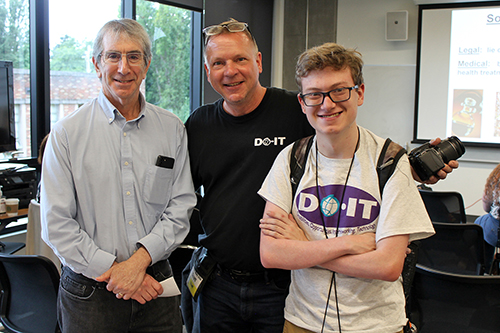
“On my first day at DO-IT, my supervisor Sara Lopez walked with me across the University of Washington campus. It was April. Colorful flowers and vibrant shades of green were everywhere. Undergraduate students were walking between classes and seniors were rushing along with their minds on the future, pondering graduation, summer plans, and the understanding that life was about to change forever.
The campus was different back then. It was filled with long-gone buildings and free of cell phones. One solitary skyscraper in the University District, Safeco Tower (today’s UW Tower), dominated the skyline.
But many things were remarkably similar to the way they are today. Drumheller Fountain shot water high enough to catch rainbows. Red Square was packed with people soaking up the sun and hungry for a conversation or a bite to eat. Cherry blossom season was winding down, and UW’s annual ‘Engineering Discovery Days’ event was in full swing.
Eventually Sara pointed to the Materials Science and Engineering building and said, ‘Go in there and find Cliff. He’s running one of our DO-IT Center Discovery Days accessible technology exhibits.’ Off I went.
Cliff’s exhibit was hard to miss. His table was surrounded by local K-12 students peppering him with questions about his computer and computer gaming. When they moved on, I introduced myself and noticed that Cliff was blind, and that his setup—CPU, keyboard, and speakers—had no monitor.
‘Good thing, right?’ he laughed. ‘Those things are heavy!’
As the next student group arrived, I watched him explain how he used state-of-the-art technology to do what college students do—check email, read the news, follow sports, and play games—without ever needing a screen.
I don’t know what to say about the person I am now versus the person I was that day 25 years ago. Since then, my respect for accessible technology and universal design has grown in ways I never could have imagined, as has my admiration for people who keep fighting for their rights even when the fight is exhausting. Over the years, I’ve seen the disability rights movement make progress, but not enough. Access to education, community, healthcare, and a livable wage isn’t just abstract policy. Access is often a matter of life and death for a group that includes more than 60 million Americans. That truth is sobering, and it stays with me.
Fortunately, this work has brought me great joy. I’m deeply grateful for the DO-IT team, our mentors, collaborators, student participants, allies, and funders—and for DO-IT's founder, Sheryl Burgstahler.
Over 25 years I’ve had unforgettable experiences, such as meeting Stevie Wonder at an accessible technology conference, working alongside the governor of Washington State, and meeting some of the legendary icons from the disability rights movement.
But it’s everyday people like Cliff–people who are willing to share themselves with you if you are willing to listen carefully–who most ignite my curiosity and interest. A passionate fight for access is our shared responsibility toward healthy and thriving communities, and I thank all of you who have been on this journey with or without me. I offer my deepest respect to all of you.
DO-IT Center At-A-Glance
- 2,000 students have participated in programs and engaged with mentors.
- 95% of DO-IT Scholars have attended college.
- Over 1,000 DO-IT college and high school students completed internships.
- Developed 100+ advocacy videos and 40 national capacity-building institutes.
- Delivery of 70 college-preparation summer camps for youth with disabilities.
- DO-IT's 35th anniversary is coming up in 2027!
Staying Connected at UW: March Meetup & Museum Outing
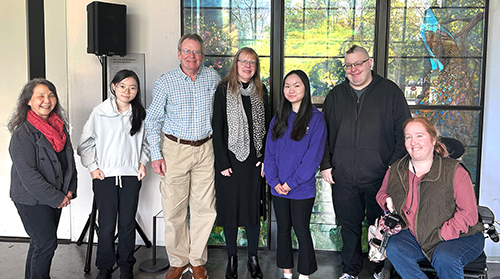
In March, fifteen University of Washington (UW) students came together for our latest disability community meetup called “Staying Connected,” continuing a growing tradition of conversation, support, and shared experiences. This month, we also took a group outing to the Seattle Burke Museum on the UW campus.
The museum visit was organized in response to student interest, as several students had expressed a desire to go but did not have anyone to accompany them or just couldn’t find the time. It was a wonderful opportunity for students to explore together, and we hope to continue offering more activities like this in the future.
While at the Burke Museum, students noted the many accessibility features integrated throughout the space. From lower display cases and large, easy-to-read text to layouts that allow wheelchair users to comfortably approach exhibits, and so many more, the museum made it a special experience.
After the museum, we continued our usual tradition of gathering for boba, which is always fun. The students make these meetups special, and it’s great to see new friendships spark and established ones grow. Often it is difficult to feel a sense of belonging on campus, especially one as large as UW.
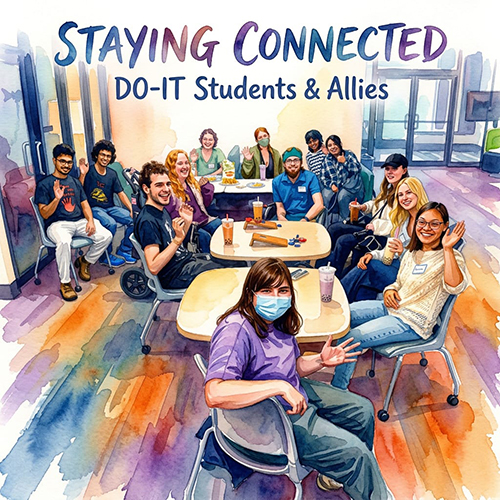
We’re excited to keep building on this momentum and look forward to more opportunities for students to connect in the months ahead. The image accompanying this article is from our most recent event in April. All UW students are welcome whether you have a disability or identify as an ally. For more information, send an email to doit@uw.edu.
Mentor Spotlight: Everybody’s Favorite Neuroscientist
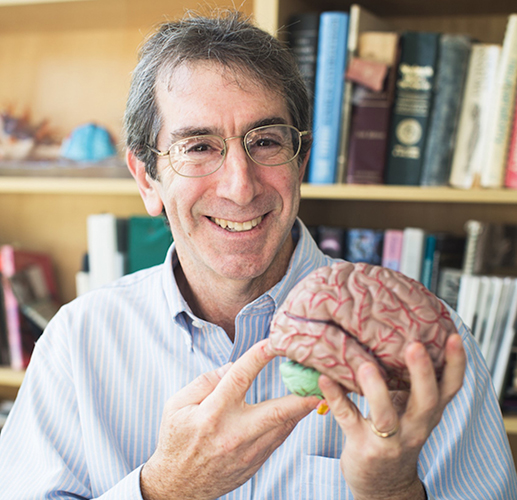
For nearly 35 years, DO-IT has connected hundreds of high school and college students with mentors who open doors to new possibilities. Every so often, one mentor stands out—not just for expertise, but for the rare ability to spark curiosity, build confidence, and make students feel they belong in challenging academic programs. In this issue of DO-IT News, we’re proud to celebrate “everybody’s favorite neuroscientist,” Dr. Eric H. Chudler of the Department of Bioengineering at the University of Washington.
For many years, Dr. Chudler has been a beloved community member in the DO-IT Summer Study, introducing more than 100 DO-IT Scholars to the field of neuroscience. Through hands-on learning and engaging conversations, he encourages students to explore how the brain works—and to imagine themselves as future scientists, researchers, and innovators.
Dr. Chudler also serves as the Education Director for Neuroscience for Neurodiverse Learners (NNL), a collaborative project between DO-IT and the UW Center for Neurotechnology, where he serves as Executive Director. The NNL program has supported over 100 neurodivergent students interested in pursuing science-related fields through summer camps and mentoring.
On the topic of mentoring DO-IT students, Dr. Chudler shares “I likely learn as much from DO-IT students as they learn from me. The students’ many questions make me think about my research and teaching in new and different ways.”
Beyond mentoring, Dr. Chudler is known for award-winning science communication. He’s widely recognized for making brain science accessible and memorable. He has received multiple Northwest Emmy Awards for his television programs about brain science and is the author of several educational books, including Neuropedia: A Brief Compendium of Brain Phenomena, Brain Bytes, and The Little Book of Neuroscience Haiku.
His educational leadership has also earned honors such as the 2006 Career Achievement Award from the Faculty for Undergraduate Neuroscience.
The DO-IT community is deeply grateful for Dr. Chudler’s generosity, creativity, and lasting impact. His mentoring has helped students view science—and their own potential—in a whole new light.
Welcoming Our Newest DO-IT Scholar Cohort
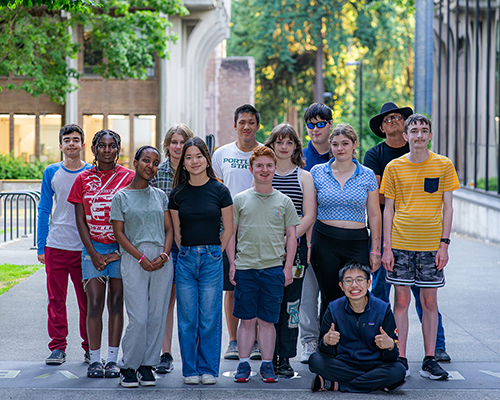
Each year, the DO-IT Center brings together college-bound high school students from across Washington state to build a community of support around college success. Our 2026 DO-IT Scholars come from across Washington state and have a broad range of interests. They are supported by DO-IT offices in Seattle at the University of Washington and in Spokane.
The Scholars program starts well before summer. By February, each Scholar has submitted a student application and worked with their parent or guardian and teacher, counselor, or coach for their recommendations. Students also submit a copy of their transcript. Then, our Advisory Board reviews application materials and recommends a cohort. It’s always challenging for the Board because every application submitted represents a wonderful college-bound student. We wish we could accommodate every student who applies.
Scholars then work with staff to request accommodations for online learning, residence hall living, travel to Seattle, classroom sessions, getting around campus, campus dining and more. This is a great way for students to experience what the accommodation request process is like for many colleges. Over the next year, Scholars are encouraged to make sure their official disability documentation supports the accommodations they used during Summer Study.
Zoom and Canvas are amazing tools that allow us to connect from across the state during the first week of camp. Scholars get to know one another and the DO-IT staff via online sessions. We explore topics like disability history and college transition.
We welcome Phase 1 (first year students), Phase 2 (returning second year students), and 3rd year interns for the on-campus week. Scholars get to experience life on a large college campus, live in a dorm, participate in experiential learning, and continue building their networking community. DO-IT strives to build a fun, safe, and inclusive experience.
During Phase 1, Scholars explore campus and visit learning environments such as Suzzalo Library, the Greenhouse, the Seismology Lab, and the Assistive Technology Center. Meanwhile, Phase 2 strengthens their cohort through their work with a workshop partner. In recent years, our main workshop collaborator has been the Burke Museum of Natural History and Culture. Students develop and present a “Phase 2 project” to the whole group. Together, all Summer Study students enjoy creating something new at a Makerspace, sharing their talents during karaoke night, enjoying UWs excellent food and meals, and bowling at the Husky Union Building.
Students are encouraged to stay involved throughout their lifetime as mentors. Primary funding for the Scholars program is provided by Washington State. To learn more, visit the DO-IT Scholars website, or review the DO-IT 30th Anniversary Retrospective magazine. If you would like to contribute to help fund additional Scholars, please visit the DO-IT donations web page.
DO-IT Scholar Spotlight: Naomi Advocates with Kirkland Mayor
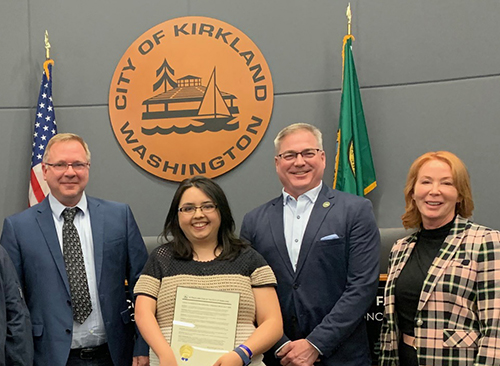
On April 7, DO-IT Ambassador Naomi Marteeny delivered a presentation at the City of Kirkland Council meeting to help celebrate the unique talents, skills, and contributions of neurodivergent people.
Kirkland’s mayor, Kelli Curtis, began the meeting by reading a proclamation that designated April as “Autism and Other Neurodivergence Acceptance and Appreciation Month.” The proclamation encouraged community members to promote acceptance and appreciation of those who identify as autistic or neurodivergent, because they’re making valuable contributions to the community as family members, friends, classmates, co-workers, and neighbors.
Mayor Curits then handed the proclamation to Naomi, who delivered a powerful speech on inclusion. Within the speech, she shared “We can embrace neurodivergence by understanding how people are protected by laws such as the Americans with Disabilities Act and the Individuals with Disabilities Education Act. We can listen carefully to the concerns of those who identify as neurodivergent and help elevate their voices.”
We’re proud of Naomi, 2016 DO-IT Scholar, for her advocacy work and we hold unwavering belief that, as the proclamation states, “neurodivergent people need to be treated with love, dignity, respect, and provided accommodations that lead to equal opportunities to thrive.”
Six UW Students Received the Carl James Dunlap Memorial Student Award
The DO-IT Center is proud to announce that six UW students were selected to receive the Carl James Dunlap Memorial Student Award, a scholarship established by Tracey and Jim Dunlap and their family to honor the life and legacy of their son, UW student and 2014 DO-IT Scholar Carl Dunlap. Carl made a lasting impact on the UW community through his vibrant personality and strong advocacy for students, and the Dunlap family created the awards program to help ensure that other students have access to meaningful support as they pursue their education. Here are three of the six students who received awards in the most recent round of funding.
Winners
Sarayah
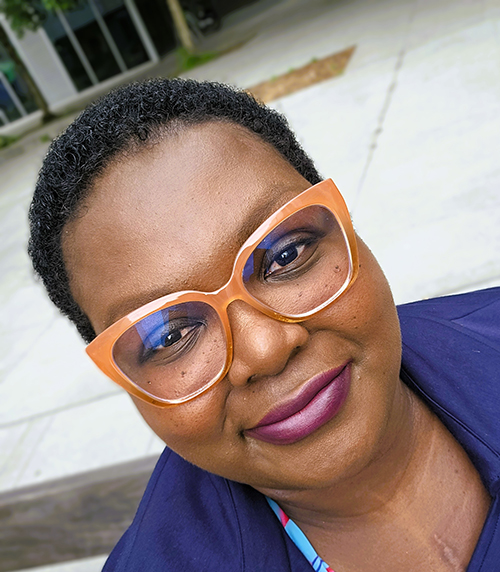
Sarayah is a graduate student in Information Management at the University of Washington, with a passion for ethical technology, accessibility, and storytelling. Her work is shaped by lived experience and a commitment to creating systems that center equity, resilience, and human dignity.
Yena
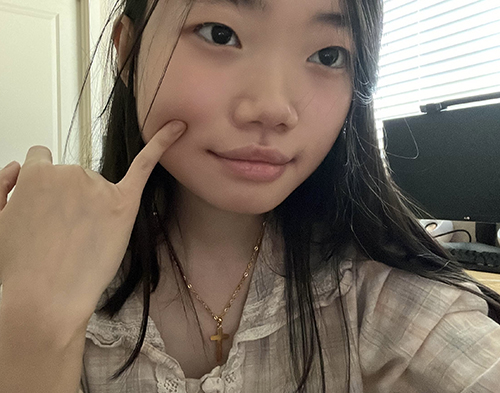
Yena is a freshman at UW continuing her life lesson of learning to preserve the delicate balance between her two goals: education and health. Her complicated medical history became a stepping stone in unlocking her passion for school at a young age. Having been born with RAG deficiency and unable to undergo curative treatment, she hopes to one day be able to contribute to the development of revolutionary medicine for patients with genetic diseases.
Joban
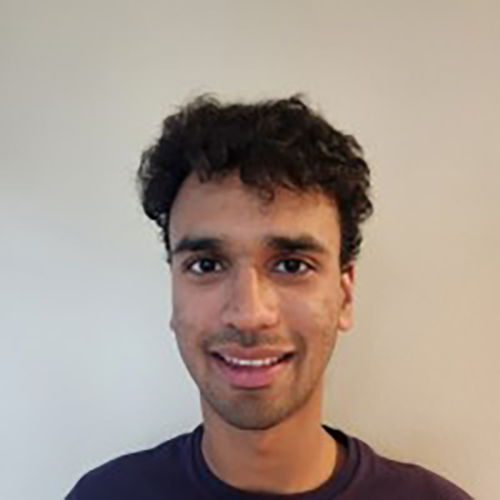
Joban is a Computer Science student at the University of Washington interested in using computing to support communities, address historical injustices, and analyze global data. He is actively involved as the Vice-Chair of a group called “Ability,” a lab researcher at the Information and Communication Technology for Development Lab, a Peer Advisor, and an advocate with WASHPIRG and the Washington Community Action Network. Outside of academics, he enjoys reading and writing (including working on a novel), discussing politics and history, and staying active through running, swimming, and hiking.
The DO-IT Center is honored to run the program in partnership with the Dunlap family and generous donors. Through this award, Carl’s legacy lives on by supporting students and fostering a more inclusive UW community.
AccessComputing Leaders Honored at SIGSCE 2026
In February, AccessComputing staff attended the 2026 SIGSCE Technical Symposium, the largest conference of the ACM Special Interest Group on Computer Science Education in St Louis, MO. We were lucky to have two members of our leadership team honored during the conference.
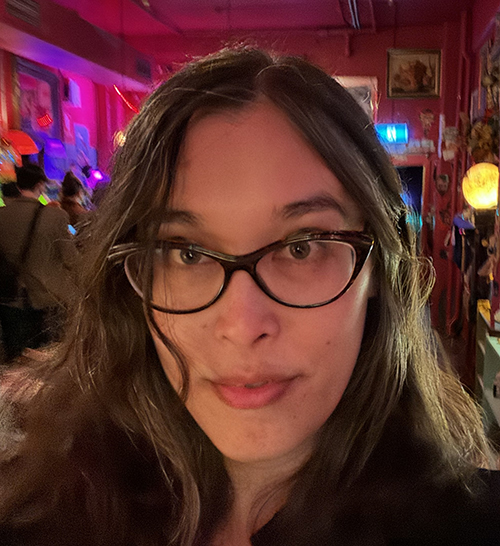
Dr. Amy Ko’s Opening Keynote: “Love, Learning, and Computer Education”
AccessComputing senior personnel Dr. Amy Ko presented the Opening Keynote “Love, Learning, and Computing Education.” Amy Ko synthesizes her presentation in this summary:
"We live in a world that is increasingly full of hate, cruelty, and violence. These cultural forces are destabilizing schools, colleges, universities, libraries, and other places of informal learning, and every learner, teacher, and leader in them, threatening education and democracy in the U.S. and worldwide. What is our role, as computing educators and scholars, in resisting this hate? In this talk, I argue for love. A kind of love that shows up not as an abstraction in our values, but in the concrete ways that we teach computing, in the questions we ask about learning computing, in the technologies we create to support computing education, and in what we choose to teach about computing. To make this case, I examine my own experiences with love in computing education and then offer a conception of love in computing education, drawing upon a rich history of scholarship on love and learning. I then deconstruct some of the fundamental tensions between love, computing, and computing education culture. I end with several examples of loving computing education from scholars in our community, each showing us how we might reimagine our teaching, research, and institutions around love. Through this transformation, I hope we might inspire a generation of youth to help create both loving uses of computing, a loving society more broadly, and perhaps a more loving scholarly community for ourselves."
Amy shares her experiences and takeaways from SIGSCE in her Bits and Behavior Medium blog post, SIGSCE 2026: Love and Learning.
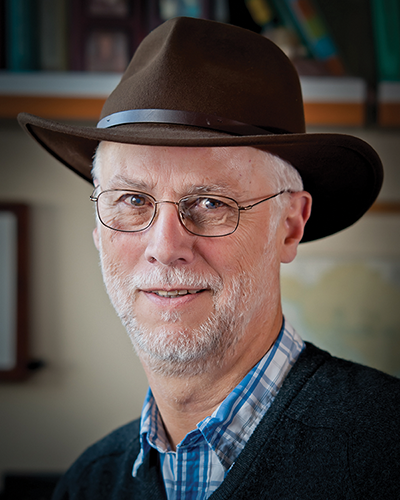
Dr. Richard Ladner Awarded Outstanding Contribution to Computer Science Education, Shares on the State of Computer Education
The ACM SIGCSE Award for Outstanding Contribution to Computer Science Education honors an individual in recognition of a significant contribution to computer science education; AccessComputing founding PI and professor emeritus Dr. Richard Ladner exemplifies this through his long career in CS teaching topics in accessibility and disability, mentoring students in these topics, and his work in AccessComputing and beyond.
Richard was honored at the conference and shared in a panel with other award winners, The Future of CS Education. Key points in the panel share that the future of education is human-centered, flexible, and technology-enhanced, with learning often becoming more personalized and focused on how we can make a greater difference. This panel was livestreamed and can be viewed online.
Though Richard has retired as PI, he continues to support AccessComputing and promote accessibility in CS. His extensive knowledge in the field helps continue our success, and we are exceptionally proud of this honor.
New Resources from DO-IT's Computing Related Projects
DO-IT continues involvement in several projects focused on making computing education and careers more welcoming. This includes the AccessComputing Alliance, our AccessUR2PhD (Undergraduate Research to PhD) project, and our participation in the Alliance for Innovative Interdisciplinary Computing Education (AiiCE). Check out and share these new resources:
- Brief: Tips for Disabled Computing Students: Navigating Graduate School on the Path to a PhD (AccessUR2PhD)
- Research Article: Toward Accessible Parsons Problems on Mobile Platforms (Data Science for All)
- Recordings from the 2026 SIGCSE Technical Symposium
- Amy Ko’s Opening Keynote: “Love, Learning, and Computer Education”
- Panel The Future of CS Education with Richard Ladner
- Webinars
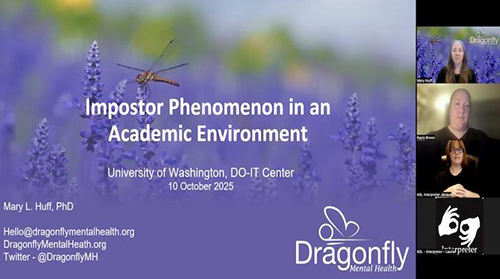
- Impostor Phenomenon in an Academic Environment with Mary Huff, Dragonfly Mental Health (AccessComputing)
- Supporting Students with Disabilities in Research with Kayla Brown and Scott Bellman (AccessUR2PhD)
- Including Students with Disabilities in CS Education, Part 1 and Part 2 with Richard Lander (AccessComputing)
- Where Will I Find the Time? A Flexible Ecosystem Approach to Digital Accessibility Training with Mary-Colleen Jenkins, UW (AccessComputing)
- Book Chat with author Rua Williams: Disabling Intelligences: Legacies of Eugenics and How We are Wrong about AI with Rua Williams, Purdue University (AiiCE)
- Disability, Pop Culture, and Technology with Kayla Brown (AccessComputing)
Celebrate Global Accessibility Awareness Day (GAAD) Wherever You Are
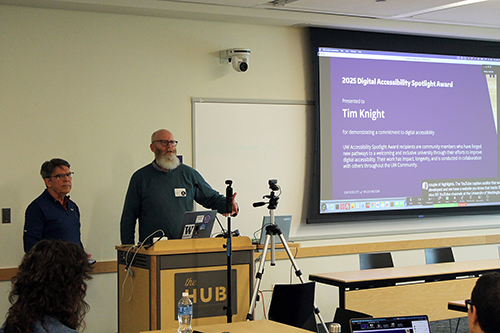
Global Accessibility Awareness Day (GAAD) is an annual worldwide event held on the third Thursday in May to promote digital accessibility. According to the GAAD Foundation, “digital accessibility refers to the ability of people with disabilities/impairments to independently consume and/or interact with digital (e.g., web, mobile) applications and content.”
Around the world, universities, corporations, nonprofit organizations, and others host lectures, workshops, hackathons, and more—all designed to raise awareness, build skills, and encourage both the remediation of existing products and the creation of new, accessible ones. While there is no single comprehensive list of global events, you can search online to find activities that interest you.
The University of Washington (UW) is celebrating GAAD 2026 on May 21 with a full day of presentations and panels featuring speakers from across a wide range of UW units and disciplines. This year’s hybrid event will highlight and advance digital accessibility efforts at the UW. The event is open to UW faculty, staff, and students.
For more information about the UW event—including the agenda and registration details (for members of the UW community)—visit UW GAAD 2026.
DO-IT, R&O, and ACE Collaborate to Support the UW's Digital Accessibility Initiative
DO-IT is housed within a UWIT unit called Accessible Technology Services, and has two closely related teams called Remediation and Operations (R&O) and Accessibility Consulting & Engagement (ACE). Together, we collaborate to increase opportunities for those with disabilities and support the UW's Digital Accessibility Initiative.
The ACE team has been hosting monthly online "Accessibility Lunch & Learn" webinars on a variety of topics, such as accessible resources at UW Libraries and how to support faculty in creating accessible courses.
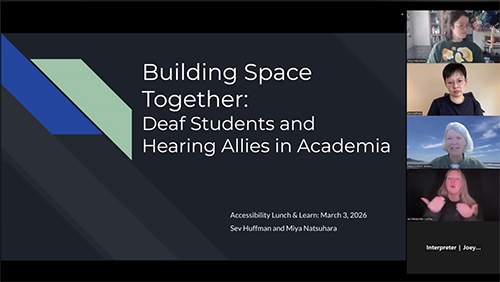
For example, a recent webinar called "Building Space Together: Deaf Students and Hearing Allies in Academia" highlighted the lived experiences of allyship at the UW's Paul Allen School of Computer Science and Engineering. The webinar presenters, Sev Huffman and Miya Natsuhara, highlighted that Deaf students bring value, knowledge and ways of learning that matter. They described specific obstacles and promoted support and shared responsibility as ways to help create more inclusive learning spaces. You can view the recording of the webinar on our shared UWIT Accessible Technology Services YouTube channel as part of the Accessibility Lunch & Learn series: Building Space Together: Deaf Students and Hearing Allies in Academia.
During many ACE webinars, DO-IT provides technical and accessibility support, records the sessions, and helps ensure follow-up videos are accessible. The team also partners with ACE to advance UW’s ADA Digital Accessibility Initiative and provides logistics for UW-wide hybrid digital accessibility events, including the Digital Liaisons quarterly meetings and UW’s Global Accessibility Awareness Day (GAAD). Beyond events, DO-IT assists with captioning UWIT meetings and processes videos for the UW community through UW’s captioning and audio description services. DO-IT staff are also building their skills in document remediation and are helping support UWIT strategic communications.