Increasing the Participation of Women with Disabilities in Academic STEM Careers (2021)
Proceedings of an AccessADVANCE Capacity Building Institute
The AccessADVANCE project held its inaugural capacity building institute (CBI) on May 25th and 27th, 2021. At the event, AccessADVANCE staff and participants shared challenges and solutions regarding the recruitment and participation of women with disabilities in ADVANCE activities and academic science, technology, engineering, and mathematics (STEM) careers. In addition, they identified specific ways that stakeholders can work together to increase the participation and advancement of women with disabilities in academic STEM careers, with a focus on systemic change.
AccessADVANCE works to increase the participation and advancement of women with disabilities in academic STEM careers. AccessADVANCE is increasing knowledge and understanding of the issues related to this often marginalized group, in order to identify effective interventions with the potential to systematically address issues impacting the career advancement and success of women faculty with disabilities.
Agenda
Location: Husky Union Building (HUB) 145, UW Seattle Campus
Hosted by Accessible Technology Services (ATS), UW-IT
Moderator: Sheryl Burgstahler, Director ATS
8:30 – 9:00 am
Pastries, Fruit, Coffee, Tea, Informal Networking
9:00 – 10:00 am
Welcome, Introductions, Goals, Objectives, Overview, Sheryl Burgstahler
Meeting Goal: Improve the accessibility of IT developed, procured, & used by public postsecondary institutions in Washington State
Objectives: Increase understanding of requirements of Policy #188, share & develop plans for implementing Policy, and build relationships between those implementing Policy state-wide.
10:00 – 11:00 am
Evolving WCAG Guidelines, Terrill Thompson, UW ATS Accessible Technology Specialist
11:00 – 11:15 am
Break
11:15 – 11:45 am
Update on Policy #188, Ryan Leisinger, WATech
11:45 – 12:45 pm
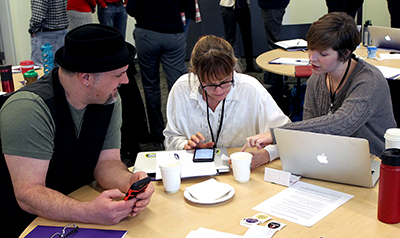
Small Group Discussion & Lunch: What is (1) helping and (2) holding back your progress on implementing Policy #188?
Write responses on post-its & place on poster sheet under two columns.
12:45 – 1:15 pm
Report Out From Small Group Discussions
1:15 – 2:45 pm
Panel of Participants Sharing Promising Practices for Implementing Policy #188
Each will speak up to 15 minutes about overall progress or a specific successful practice. Q&A for all will be at the very end.
- Carly Gerard, Western Washington University
- Bridget Irish, The Evergreen State College
- Ana Thompson, University of Washington, Bothell
- Joetta Sieglock, Eastern Washington University
2:45 – 3:00 pm
Break
3:00 – 3:30 pm
Small Group Discussions: What are key steps you are planning to take to implement Policy #188, short term and long term?
Write responses on post-its & organize on poster sheet in categories.
3:30 – 4:00 pm
Report Out From Small Group Discussions
4:00 – 4:30 pm
Conclusion, Comments, Future Plans & Evaluation
Presentation Summaries
What is meant by Neurodiversity and what do Neurodiverse students want?
Ronda Jenson, Northern Arizona University and Scott Bellman, NNL Project Director
Video Link (Length: 1:03:05)
As shared by Scott Bellman, DO-IT’s Neuroscience for Neurodiverse Learners (NNL) project provides hands-on experiences in neuroscience disciplines, networking opportunities, and resources to high school and early post secondary students. The project also provides resources for educators and stakeholders such as a website and online knowledge base, workshops, video productions, and publications.
Neurodiverse learners we work with in the NNL project face academic challenges related to specific learning disabilities (e.g., dyspraxia, dyslexia, dyscalculia), attention deficit disorders (ADD, ADHD), autism spectrum disorder (ASD), Tourette syndrome, and other conditions impacting cognitive processing.
Within the NNL project, high school and early postsecondary students learn about and engage in scientific communication, social skills and teamwork, college preparation, leadership building, self-advocacy, neuroscience and neural engineering, and ethics related to emerging technologies.
NNL uses principles of universal design (UD) by proactively designing materials and activities that are accessible and inclusive for individuals with a broad range of characteristics, including disabilities. Below are examples of how we implement these principles:
- Offerings are available both on-site and online.
- All activities provide dedicated spaces for reflection and quiet.
- Materials are provided in a variety of formats, and captions are provided for videos and video conferencing activities.
- Students are offered multiple ways to engage in learning.
- Project staff prepare “social narratives” to describe what students can expect before an activity occurs, or before coming to campus. For example, prior to NNL's annual summer camp, students are sent images of the campus, buildings, and classrooms where they will be conducting work. The images are supplemented with descriptions of each space.
The project offers hands-on learning and student-guided learning. For example, during summer camp activities, students are asked about topics they would like to explore, and then the topics are added to the camp curriculum. Such student-driven topics have included the effect of meditation on the brain, the impact of music on the brain, and neuroscience in movies.
The project promotes near-peer leaders, defined as neurodiverse STEM students who are slightly older than our main project participants. Near-peer leaders are very effective at helping students navigate the learning content, participate in discussions, and engage in activities.
Another project that focuses on neurodiverse students is the Discover Your Unique Advantage in STEM (DYNA STEM) project. DYNA STEM has gathered information to elevate the voices of 21 neurodiverse undergraduate students in STEM across three states: Arizona, Missouri, and Ohio. The project encourages developing an understanding of universal design, adult learning principles, trauma-informed approaches, and embracing intersectionality. It offers the following suggestions for STEM educators:
- Acknowledge undergraduate students as adult learners who bring diverse learning histories to the classroom.
- Acknowledge that learning histories may be positive, negative, or indifferent.
- Acknowledge the intersectionality of cultural backgrounds, identities, and personal histories.
- Acknowledge differences in the ways undergraduate students perceive, approach, and interact with new information and skills.
The students who engaged with DYNA STEM shared what they want in education settings:
- Specific, clear instructions
- Flexibility for self-guided learning
- Balance of peer learning, hands-on, and direct instructions (aka-not just lecture or not just group project)
- Choice: Options to choose and not choose activities or steps
- Visuals and graphics, not just text-based
- Opportunities to be creative
- Clear, logical applications to real-world STEM work
- Sensory stimuli focused on specific tasks
- Physical space options for standing and sitting, with options for orientation in the space
- Clear social expectations
Through interactions with neurodiverse students, educators are encouraged to explore the following questions:
- What does intersectionality mean to undergraduate neurodiverse students?
- In what ways do we acknowledge neurodiverse undergraduate students as adult learners?
- What can we do to show respect for the trauma-histories neurodiverse undergraduate students may have?
How Can Universal Design Impact Neurodiverse Learners?
Sheryl Burgstahler, NNL PI
Video Link (Length: 1:00:52)
An inclusive environment embraces all potential participants who meet requirements with or without accommodations and makes sure everyone feels respected and engaged. Ability exists on a continuum, where all individuals are more or less able to see, hear, walk, read printed material, communicate verbally, tune out distractions, learn, or manage their health. This is also true of abilities related to neurodivergence, such as learning differences and differences in cognitive processing–such differences exist on a continuum.
Most disabilities of neurodiverse learners have invisible disabilities—meaning they aren't obvious to most people—and many students don’t report their disabilities to postsecondary disability service offices. Regardless, we want to ensure that students have access to the classes and labs we teach, as well as the learning resources we share.
Students’ identities are also multi-faceted, which means we must take an intersectional approach that acknowledges that some students are from more than one underrepresented group. Students who are neurodiverse may also identify as black or African American, a woman, or other minority identities. It is important to listen to students and to be sensitive to their identities and ways they have been discriminated against.
How society views disability has changed throughout the years. People with disabilities historically have been eliminated or excluded from society, segregated from the general population, aimed to be cured, rehabilitated, accommodated, and finally, accepted and included as they are. The modern approach has its roots in social justice and aims to allow all people to feel included, including those with disabilities.
There are two approaches for making college and university campuses accessible: accommodations and universal design (UD). Accommodations are reactive and address the inaccessible features of a product or environment to make it more accessible to a particular individual (e.g., captioning a video when a student with a hearing impairment requests it). Universal design is a proactive approach for creating a product or environment accessible to the most diverse group possible (e.g., captioning all videos by default). A building with stairs at the entrance and a separate ramp for people with wheelchairs is technically accessible, while a building with a single entrance that everyone can use is universally designed.
Universal design doesn’t just help people with disabilities—sloped entrances help people moving carts, and captions help those learning English or in noisy environments, as just a few examples. Universally designed technology should have built-in accessibility features and ensure compatibility with assistive technology.
UD is an attitude that values diversity, equity, and inclusion. It can be implemented incrementally, focuses on benefits to all students, promotes good teaching practice, does not lower academic standards, and minimizes the need for accommodations. UD can be applied to all aspects of learning, including class culture and climate, physical environments, delivery methods, products, and information resources, delivery of feedback, and assessments.
To review an easy to use checklist, visit Equal Access: Universal Design of Instruction. For more tips, you can follow the 20 Tips for Teaching an Accessible Online Course.
Disability Representation in the Media
Kayla Brown, DO-IT Project Coordinator
Video Link (Length: 0:30:32)
Media representation is the way in which the media portrays particular groups, communities, and experiences. This includes the accuracy of portrayals, the diversity of perspectives, and whether those portrayals perpetuate negative stereotypes. It's not just about quantity—it's about quality. This session explored common tropes in the media about disability and examined examples of neurodivergent characters.
Examining the media is important because television and movies influence the way people think. If portrayals exhibit negative stereotypes, this will affect how we see groups of people as a whole. One unique aspect of many neurodiverse characters is that they are coded as having a disability. Coding characters means that they are written in a way to imply something about them, such as having a disability. A character may have the behavior of someone with autism, but it is not confirmed explicitly through dialogue or from the writers.
If we can increase the number and quality of media representation of people with disabilities, we can begin to introduce the world to more accurate depictions of people with disabilities. We can start a real conversation about disabilities and establish points of reference for it. In this way, fictional characters in television and movies have the power to alter prevailing ideologies and attitudes in society.
Accessible Technology for Neurodiverse Learners
Gaby de Jongh, University of Washington
Video Link (Length: 0:52:09)
Accessible electronic and information technology can be used by people with a wide variety of abilities and disabilities and incorporate the principles of universal design. Assistive technology can maintain or improve functionality and provide numerous benefits to neurodiverse learners by addressing specific learning needs, supporting strengths, and promoting independence. Assistive technology helps remove barriers to learning by providing accessible alternatives to traditional methods. It can accommodate various learning styles, sensory sensitivities, and physical challenges, ensuring equal access to educational materials and opportunities.
Assistive technology should be selected based on individual needs and preferences, and it should be accompanied by appropriate guidance and support from professionals and educators to ensure effective training and implementation. There are many examples of assistive technology that may benefit neurodiverse learners:
- Social communication aids, such as social skill training apps, video modeling tools, or augmentative and alternative communication (AAC) devices
- Social engagement opportunities and classes or discussions on communication skills
- Text-to-speech software that reads text aloud, making it easier to comprehend and process information--text-to-speech software can adapt to the specific needs, preferences, and pace of neurodiverse learners, which allows for individualized instruction, customization of learning experiences, and easier engagement
- Visual schedules, reminders, task managers, and digital planners that help learners stay organized, manage time effectively, and improve executive functioning abilities
- Noise-canceling headphones, ambient sound generators, or apps that block distractions, enhance concentration, and create a more conducive learning environment
- Sensory-friendly interfaces, adjustable lighting, and/or noise reduction options create a more comfortable and inclusive learning environment
Panel Discussion of Women Faculty with Disabilities
The panel discussion featured two women faculty with disabilities, Cecilia Aragon from the University of Washington and Cinzia Cervato from Iowa State University. Both women shared their experiences and engaged in a rich conversation with participants.
What has been your experience as a faculty member with a disability?
- One of the hardest parts starting out as faculty was that you never get to see how other faculty members have struggled in their careers. I acquired my disability after becoming a faculty member. I hid my disability for a long time, spending a lot of time accommodating myself without asking for external support. I finally spoke out so that I can help others and share my story.
- I also acquired my disabilities after I had become a faculty member. I had a brain hemorrhage seven years ago that affected my vision, movement, hearing, speech, and eating. I essentially had to relearn everything and learn how to ask for help.
How can academia be more welcoming to faculty with disabilities?
- Both of us already had tenure when our disabilities occurred. What can we do to make academia more welcoming? Gaining my disability did make me more empathetic and added even more to my diversity, equity, and inclusion (DEI) work. I had never realized how many different types of disabilities there are and how many accessibility barriers there are within academia.
- Since my disability is visible, many students see me as more accommodating and accepting and are comfortable bringing up their needs. I did have other plans for my career and had to change those, but I now realize I have so many ways to make a difference. I already was the first woman to get tenure in my department--now I can help fight for women from a variety of minorities to find their space in our department.
Do you use official accommodations and what was the process for getting those?
- I don’t have official accommodations, but my department chair is very supportive. When I moved to a new university, I found that it worked differently than my old university. I thought I would be able to get accommodations through a centralized place, but was told I had to pay from my own grants and departmental budget. Departments then have to balance accommodating their faculty and staff with other needs.
- I was lucky to have a departmental chair who was supportive of paying for my accommodations I needed, which mainly included regular cleaning of my office and providing me space that I needed to eat.
- Men and others can often blow off my accommodations or requests. But I feel like if I’m not advocating for it, then others will also feel like they can’t advocate for their needs.
- How many times can you ask for what you need? A faculty member, or anyone, only has so much social capital to ask for help. Every time a person with a disability has to ask for help, they feel like a burden.
- Things are often just focused on risk management and budget control--this can make people with disabilities feel like a burden. We want an institution that is inclusive and welcoming.
- Draft people of good will among your colleagues. People think they shouldn’t speak up because they don’t want to patronize others; however, people who speak up can also be taking some of the burden off of people with disabilities to advocate for their own rights.
- We often talk about women, people of color and different races, but disability is often sidelined in conversations about DEI. We need to increase awareness.
How can departments and campuses learn to be more inclusive?
- There should be more critical disabilities studies and disability cultural centers on campus that help promote messages of inclusion across campus.
- Seeing and hearing more stories from students with disabilities and from other backgrounds help create empathy and understanding among faculty and staff, as well as highlight why we need more diversity and inclusion.
Group Discussion Summary
The following questions were answered in small groups. Answers were recorded and are shared below. Responses are individual opinions and may not necessarily reflect those of the entire community or other attendees.
What factors promote or inhibit museums and ISL programs’ efforts for making access and equity a high priority? What can be done to address these factors?
- Some museums and programs can be extra stimulating or overwhelming; offer quiet rooms and safe spaces for students to rest or reset for the experience.
- As we come out of the pandemic, we should spend time rebuilding our programs back with accessibility and equity in mind–we should set realistic goals and invite people with disabilities and accessibility experts to weigh in.
- Teachers and professionals often need support, but don’t know where to turn. Organizations should consider creating a portal or online network to build community and share resources.
- Regarding access, staff may have no idea where to even start or how to make change. We need to find ways to encourage knowledge, understanding, and compassion.
- Host intentional conversations on these topics, including bringing together diverse groups of people to discuss and explore how to address needs.
- Apply for grants to develop new collaborations that will expand knowledge and build upon each others’ work.
- One barrier to creating access is the lack of disabled and other underrepresented representation in leadership. Also, people from one group or one disability are often thought to speak for their entire community, forgetting that each person with a disability has unique experiences, perceptions, and preferences.
- Funders don’t always require project leaders to record and report disability data, which hinders tracking how different options help or erect barriers to people with disabilities. funders often do not require that efforts to ensure access and equity be built into budgets and deliverables.
- Programs can sometimes forget to look at intersectionality to include all people, including those with a variety of backgrounds and abilities.
- There has been research done on disability and learning—we should utilize the knowledge we have and bring it together instead of try to reinvent the wheel.
- Budgeting and funding can sometimes be messy when it comes to accommodations or accessibility, and many programs or centers don’t allocate any funds for this purpose. Programs that do have accommodation budgets can still often be limited in resources.
- It’s often assumed that change needs to be made incrementally over time, which leaves out people with disabilities in the present time.
- Development offices may not have the networks or knowledge for access related grants. There needs to be education around organizational and institutional buy-in and commitment. We need to include these efforts in the fabric of what we do, rather than address these issues piecemeal..
- Accessibility and inclusion aren’t an individual task. Promoting champions of accessibility at all levels can help bring about change faster. Informal leaders at the top, middle, and bottom can help stop the “this is how we’ve always done it” mentality.
What new (undeveloped) or existing resources might help ISL programs that are interested in increasing accessibility features of on-site programming? What can be done to further develop and promote these resources?
- Potential new online technology in the future may change or improve navigation and also extend the wayfinding experience. Some examples may include phone usage near field communication tags or QR codes with audible/verbal descriptions. A question to consider: How can we network and share what cutting edge organizations are doing in this field?
- Only some people with vision loss use braille; therefore, additional modes are needed such as audio interfaces or electronic versions of print materials.
- How do we find and vet interpreters to ensure that their interpreting is correct and accurate, especially when they are new to the field and not already having existing and trusted vendors? Resources in this area would be helpful for programs that are just getting started.
- The community should encourage the National Informal STEM Education Network (NISE) to help develop and share tools that can make programs more inclusive and accessible.
- Organizations should consider building community through disability consumer groups, such as the National Association of the Deaf, American Council of the Blind, and the deaf-blind community, to help develop accessibility resources.
- From a technology and STEM perspective, it would be interesting to be able to share a broader understanding with youth about how many different types of pathways and career opportunities exist in the tech field, not just limited to coding. There are many undiscovered opportunities for students who don’t believe code is for them.
- We can train researchers to interact and engage with the public. The NSF Portal to the Public training could be more accessible. The content, activities, and how they’re disseminated is predicated on ability. The content is excellent but it needs improvement by addressing accessibility and other disability issues.
- In volunteer programs, there is a lack of awareness of accessibility; an improved training experience that embeds access issues would help.
- Encourage more peer mentoring between participants from different sized institutions because there is much that participants from different size institutions can offer each other.
- It would be desirable to develop some sort of clearinghouse of resources and financial resources for organizations that want to improve accessibility.
- Further develop language expectations around disability to help organizations create guides and use preferred terms—disability is not a bad word.
- Programs should explore the use of haptic technology to create more engaging STEM experiences for blind individuals.
- Programs may benefit from the development and dissemination of templates for accessible websites.
- Planetariums should explore the use of 3D printing technology and tactile models.
- It is important to teach both “hard science” and “soft science,” which includes socio-emotional learning, team building, personal connections, and self-advocacy.
- Establish more frameworks for collaborating with peers, such as the AccessISL Community of Practice, and additional workshops and conferences dedicated to increasing access.
- Further identify and promote tools that help specific populations, such as options for visual schedules, digital social narratives, etc.
- Create space and allowing for community voices to “be in the room” as we develop ISL, as well as creating a framework for how to create community advisory committees that can share strategies and lessons learned.
- Programs can create sensory kits to pass out to guests—with fidgets, headphones, and other options as needed.
What are other ways that disability communities are engaged in ensuring access to informal science education? What do museums, science centers, summer camps, and other informal STEM learning programs need to do and what resources would be helpful?
- Informal STEM learning programs need to offer multiple program options in diverse settings. These programs should also serve a wide variety of needs. A lot of STEM learning programs only cater to a few communities and don’t consider that different people need different accommodations to truly experience a program’s full potential.
- Develop the ability to seamlessly transition from virtual programming back to in-person. However, accessible online programs should still be kept open and operable. These online programs could be used as a complementary or primary method of engagement for different individuals.
- Include targeted marketing to specific communities. Certain communities may never know an opportunity to access certain informal science education exists because marketing did not include their community.
- Add more assistive technology vendors that offer a wide variety of products and services.
- Further enhance opportunities to connect to disabled mentors and other individuals who have a similar disability. This fosters a sense of inclusion and confidence. Meet with respective colleagues in different fields and learn what others are doing. Observe different programs and opportunities to network.
- Implement interactive models that provide people with a way to engage in order toy promote learning and excitement. Some examples would be sensory tables, 3D printed objects, hands-on materials, etc. A key aspect would be customizable programming or features to attract people with disabilities, adapt to their requests, etc. The key is being flexible.
- Remember to include black, indigenous, and people of color (BIPOC) in intended marketing and program implementation.
- Find ways to infuse disability justice into their work. This would shed a light on the injustices that occur in the disabled communities and help raise a lot of awareness about the people working on helping solve these problems.
- Set aside some days and events for specific disability-related organizations and schools, as this would help ensure that the disabled communities have equal access and promotions. The addition of autism awareness days would be a great start.
- Presume competence and integrate that presumption into a part of your culture.
- Promote consistent engagement with disability communities. Many people with disabilities are not involved for a long time due to many organizations not reaching out. This begins by starting a two-way relationship where the disable community shows up for an organization’s event. Likewise, organizations put an effort to market and create an event that caters to the respective communities. The ability to secure funding. This would be conducted by having relationships ahead of time, building into every grant, and piloting things through demonstration.
- A good resource is the National Federation of the Blind (NFB), which is underutilized in helping get access to folks who can advise.
- When developing programs, keep in mind how disabled people view themselves. Stress the importance of being proactive rather than being reactive. Answer the question of how we develop our programming to take into consideration all our different users and their respective needs: POC, type of disability, type of interactions. The key is to ensure that the disability community knows you thought of them in the planning and design process of program development.
Community of Practice
AccessADVANCE staff and participants engage in an online Community of Practice (CoP) that includes key stakeholder groups that impact the success of women with disabilities in academic STEM careers to share ideas and assist in the creation and dissemination of resources to encourage others to support women with disabilities.
CoP members
- plan, attend, and recruit others to attend project training and capacity-building opportunities;
- ensure women with disabilities are invited to events that promote their pursuit of and support in academic STEM career positions;
- share strategies for making departments more welcoming and accessible to women with disabilities;
- discuss ways to build productive relationships with disability service offices that serve faculty;
- recruit women faculty and senior graduate students with disabilities to the e-mentoring community; and
- share resources.
You and your colleagues can join AccessADVANCE CoP by sending the following information to doit@uw.edu:
- Name
- Position/ Job Title
- Institution
- Postal Address
- Email Address
Minigrants
AccessADVANCE has funds available to support activities to expand, replicate, and disseminate practices related to our project goals nationwide. The ultimate goal is to increase the number of women with disabilities successfully pursuing STEM faculty careers.
An institution or other organization can seek funding to support
- meetings or trainings focused on policies and practices that can increase the participation of women with disabilities in faculty careers.
- an existing event for faculty or potential faculty in order to attract and involve women with disabilities.
- a stand-alone new event to mentor and support women with disabilities in STEM faculty careers.
- a training event for faculty, administrators, or staff to build their capacity to support faculty with disabilities.
- registration, materials, and travel expenses to deliver presentations, host exhibits or special interest groups, or otherwise share project resources at conferences.
We expect most requests to be for $4,000-5,000. Proposals can be submitted any time, but limited funding is available. To apply, complete the AccessADVANCE Minigrant Application Form.
Recipients of AccessADVANCE minigrants are required to submit an activity summary and a draft of an article for the AccessADVANCE Knowledge Base. This summary must include a completed evaluation form. Recipients are also encouraged to collect feedback from participants during or immediately following the event. For project evaluation forms, see Minigrant Evaluation Forms.
Resources
You can find the full text for Policy #188, information about waivers, and the minimum accessibility standard by visiting the following:
- Policy #188
- Standard #188.10 – Minimum Accessibility Standard
- Policy #103 – Technology Policy & Standards Waiver Request
The UW’s Accessible Technology website includes a variety of resources:
- the IT accessibility policy and guidelines for the UW
- legal issues and civil rights complaints and resolutions nationwide
- instructions and tips for making IT accessible
- more resources for creating and procuring accessible IT products
The DO-IT (Disabilities, Opportunities, Internetworking, and Technology) website contains the following:
- information about DO-IT projects
- evidence-based practices that support project goals and objectives
- resources for students with disabilities
- educational materials for teachers and administration
DO-IT maintains a searchable database of frequently asked questions, case studies, and promising practices related to how educators and employers can fully include students with disabilities. The Knowledge Base is an excellent resource for ideas that can be implemented in programs in order to better serve students with disabilities. In particular, the promising practices articles serve to spread the word about practices that show evidence of improving the participation of people with disabilities in postsecondary education.
Examples of Knowledge Base questions include the following:
- Are electronic whiteboards accessible to people with disabilities?
- Are peer review tools accessible?
- Are there computer keyboards designed to be used with only one hand?
- Are touch screens accessible?
- Do postsecondary institutions have to provide assistive technology (for example, screen enlargement or voice recognition software) to students with disabilities who enroll in distance learning courses?
- Does a postsecondary institution have to provide specific hardware or software (known as assistive technology) that an individual with a disability requests so that they can access information technology used on campus?
- Does making our school web content accessible mean I cannot use multimedia on my site?
- How can educational entities determine if their websites are accessible?
Individuals and organizations are encouraged to propose questions and answers, case studies, and promising practices for the Knowledge Base. Contributions and suggestions can be sent to doit@uw.edu.
For more information on making your campus technology accessible and to learn more about accessible learning or universal design, review the following websites and brochures:
- The University of Washington’s hub for information on accessible technology, featuring how to create and develop accessible documents, videos, and websites, can be found at Accessible Technology.
- WCAG 2.0 are the expected guidelines to be followed for all websites.
- The Access Technology Center’s website.
- A list of thirty different web accessibility tips, and how to implement those tips.
- Accessibility training and certification.
- More information about accessibility standards and procurement.
- Cheat sheets for making accessible documents and content, as well as a plethora of other resources for accessible websites, can be found at the NCDAE.
- The AccessDL website shares resources for making distance learning and online courses accessible.
- Accessible University’s website featuring common web accessibility principles and solutions.
- A brochure on universally designing distance-learning programs.
- A brochure on what accessible distance learning is and how it helps students.
- A brochure on the top tips for creating an accessible distance-learning course can be found at the 20 Tips website.
- A brochure on why accessible web design matters, and some resources to make your website accessible, can be found at Accessible Web Design.
- Blindmath is a listserv for those who want to learn more about all issues around accessible mathematics.
- More information on universal design in education can be found at the Center for Universal Design in Education.
Conferences can be a great way to share resources, collaborate, and come up with new ideas. Consider attending the following:
- ATHEN (Accessing Higher Ground)
- CSUN
- ATIA
- Closing the Gap
- Smaller, local IT conferences, like TechConnect
- NW E-Learn
- EDUCAUSE
- Building Bridges
- Faculty Accessibility Retreat for 2-year colleges
Acknowledgements
The AccessADVANCE Capacity Building Institute was funded by the National Science Foundation (NSF Award HRD-2017017, HRD-2017054) . Any opinions, findings, and conclusions or recommendations expressed in this material are those of the CBI presenters, attendees, and publication authors and do not necessarily reflect the views of the National Science Foundation or the University of Washington.
AccessADVANCE
University of Washington
Box 354842
Seattle, WA 98195-4842
AccessADVANCE
https://doit.uw.edu/
206-685-3648 (voice/TTY)
888-972-3648 (toll free voice/TTY)
© 2021 University of Washington. Permission is granted to copy this publication for educational, noncommercial purposes, provided the source is acknowledged.