2024 Institute for Neurodivergent Students in Science and Technology (2024 INSIST)
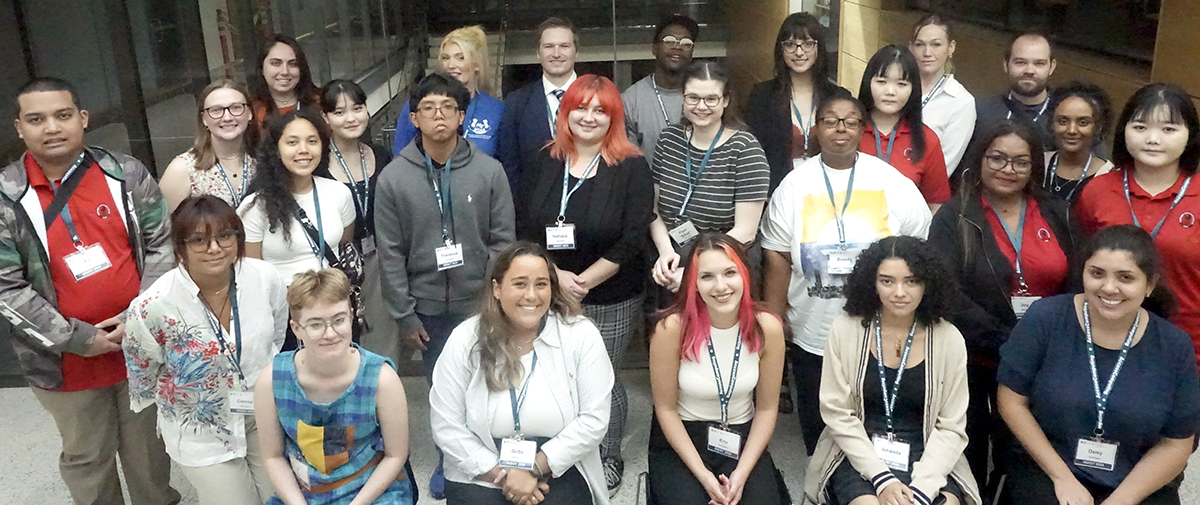
The purpose of the 2024 Institute for Neurodivergent Students in Science and Technology (2024 INSIST) was to gather a diverse array of postsecondary neurodivergent STEM students from across the United States and its territories to work on two objectives:
- To elevate the voices of neurodivergent students pursuing science, technology, engineering, and math (STEM). The institute focused on students to sharing information about how postsecondary faculty, staff, and administrators can help provide effective and equitable learning environments.
- To improve student knowledge and skills for self-advocacy, tapping into their unique strengths, leading activities on their campus, and preparing for employment.
About Our Programs
INSIST 2024 was funded by Neuroscience for Neurodiverse Learners (NNL), an Innovative NSF-funded Technology Experiences for Students and Teachers (ITEST) project. NNL provides hands-on experiences in neuroscience disciplines, networking opportunities, and resources to high school and early postsecondary students identified as “neurodivergent” learners—those with academic challenges related to conditions such as dyspraxia, dyslexia, attention deficit hyperactivity disorder, dyscalculia, autism spectrum disorder, and Tourette syndrome—and disseminates findings to teachers of courses that are related to neuroscience and, more broadly, science, technology, engineering, and mathematics (STEM). The goal of NNL is to enhance student interest in and skills to successfully pursue STEM fields, as well as empower educators to serve these students more effectively.
The Eddie Bernice Johnson INCLUDES Alliance of Students with Disabilities for Inclusion, Networking, and Transition Opportunities in Science, Technology, Engineering and Mathematics (TAPDINTO-STEM) collaborated with NNL to help provide mentors, select topics, and recruit from a nation-wide pool of neurodivergent STEM students with disabilities. TAPDINTO-STEM employs a collective impact approach with dozens of partnering institutions across the U.S. to increase the number of students with disabilities who complete associate, baccalaureate and graduate STEM degrees and enter the STEM workforce.
Agenda
Day 1: Wednesday, August 14th
University of Washington Campus
Husky Union Building
8:00am – 9:00am: Networking Breakfast
Open networking breakfast with fellow participants.
9:00am – 9:45am: Welcome, Introductions, and Day 1 & 2 Agenda
Eric Trekell, NNL Program Operations Specialist
Scott Bellman, NNL Project Principal Investigator
Overtoun Jenda, TAPDINTO-STEM Principal Investigator
This session will include introductions, an overview of the Institute agenda, and a welcome message from organizers. Participants have an opportunity to get to know each other, ask questions, and introduce themselves to the group if they would like.
9:45am – 10:00am: Break
10:00am – 10:45am: Unique Strengths of Neurodivergent Learners
Toby Gallant, Program Assistant, Office of the ADA Coordinator
Christine Lew, Access Coordinator, UW Disability Resources for Students Office
During this interactive session, we will talk about the unique strengths among students attending the conference and review the literature about the strengths of Neurodiverse Learners. We will draft a “tips” sheet for faculty to help them better understand how to provide learning environments that tap into student strengths.
10:45am – 11:00am: Break
11:00pm – 11:45am: Leadership & Advocacy: Providing Input to Educators
Dr. Brianna Blaser, Director & Co-PI, AccessComputing, DO-IT Center
During this session, students will collaborate to further develop NNL publications for high school and postsecondary educators. The publications, informed by the voices of neurodivergent STEM students, describe strategies to better support neurodivergent students on campus.
11:45am – 12:00pm Group Photo
12:00pm - 1:00pm: Networking Lunch and Discussion
Over lunch, participants will enjoy networking opportunities as they further discuss how they can bring accessibility back to their departments and campus centers.
Lunch Discussion Question: What would you want a college-bound neurodivergent high school student to know as they get ready for college? If you could contact your younger self as a high school student, what would you tell them about navigating the experiences they might have as neurodivergent learner?
1:00pm – 2:00pm: Unlocking Potential: Leadership and Advocacy for Neuro-Inclusive Employment
Dr. Laurie Ackles, Executive Director of the Washington Neurodiversity Project
Neurodivergent leadership and advocacy are essential in fostering workplaces and educational environments that are not only more inclusive but also more innovative and equitable. By bringing diverse perspectives to the forefront, neurodivergent voices play a pivotal role in shaping the frameworks that promote inclusivity and redefine the very essence of effective leadership. This presentation will explore the unique strengths neurodivergent leaders bring to the table, and how these strengths can transform the future of education and employment for everyone.
2:00pm – 2:15pm: Break
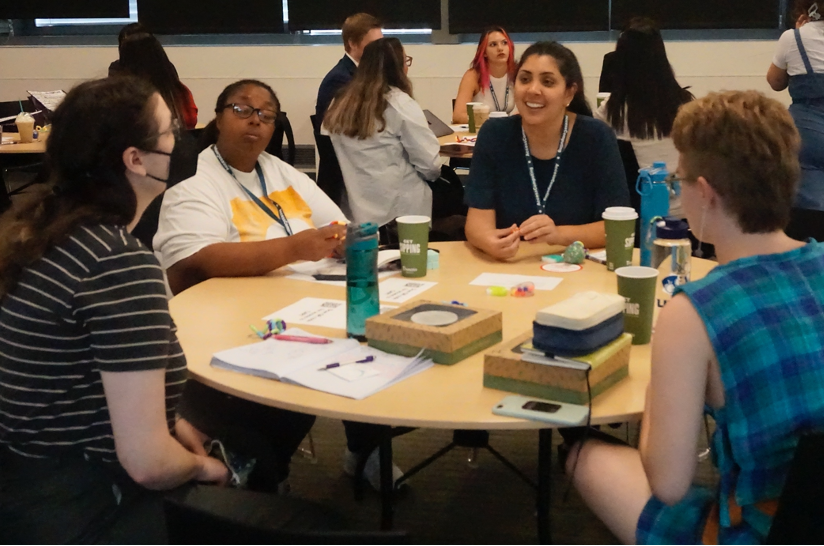
2:15pm – 3:30pm: Tabletop Discussions with Neurodivergent Professionals
Rochelle Bowyer, DO-IT Center Staff
In table groups, participants will meet with neurodivergent professionals from academia, startup companies, and industry. There will be prepared questions; students are encouraged to ask questions of their own.
3:30pm – 3:45pm: Wrap up and Announcements
Eric Trekell, NNL Project Coordinator
A short wrap-up of the day’s activities and announcements before heading off for dinner.
4:00pm – 7:00pm: Dinner Break
Keep your receipts from dinner! You will need them for reimbursement.
7:00pm – 9:00pm: Networking at the HUB Bowling Alley and Game Room
Eric Trekell, NNL Project Coordinator
Join us at the Husky Union Building for a private party at the bowling alley and game room. Attend this event to have some fun and connect with fellow participants.
Day 2: Thursday, August 15th
University of Washington Campus
Husky Union Building
8:00am – 8:30 am: Networking Breakfast
8:30am – 10:00am: Advocacy and Empowerment through Student Groups
Nathalie Moriarty
University of California Davis Aggie Neurodiversity Community
A PhD student in Psychology and a leader of the UC Davis Aggie Neurodiversity Community group, Nathalie will present about organizing student groups and communities on campus. We will hear from conference attendees about clubs and student groups on their campus, and discuss plans for the creation of new groups.
10:00am – 10:15am: Break
10:30am – 11:30am: Understanding Impostor Syndrome
Drew King, Ability Student Group, Paul G. Allen School of Computer Science & Engineering
This workshop is presented by Ability, a student group at the Allen School at UW dedicated to disability community and accessibility awareness. This session will delve into “imposter syndrome,” exploring issues such as questioning if you're "disabled enough" for accommodations, or feeling that the disability community isn’t your space, even if you face challenges related to a disability. As we talk, students are encouraged to make a creative design on your table out of various types of dry pasta.
11:30am – 11:45am: Evaluation of the Institute (Brief Survey)
11:45am – 12:45pm: Networking Lunch and Wrap Up
Over lunch, participants will enjoy networking opportunities as they further discuss how they can bring accessibility back to their departments and campus centers.
Lunch Discussion Question:
What are examples of new activities that neurodivergent students can implement on their campuses to help build skills and knowledge about teaching neurodivergent learners?
1:00pm: Adjourn
INSIST 2024 Welcome Session
Eric Trekell, NNL Program Operations Specialist
Scott Bellman, NNL Project Principal Investigator
Overtoun Jenda, TAPDINTO-STEM Principal Investigator
Welcome Session
Presenters:
- Eric Trekell, NNL Program Operations Specialist
- Scott Bellman, NNL Project Principal Investigator
- Overtoun Jenda, TAPDINTO-STEM Principal Investigator
INSIST 2024 began with an introduction of students and welcome messages from facilitators, who provided attendees with logistical details such as access to interpreters, real-time captions, a resource table, and charging stations for laptops and phones.
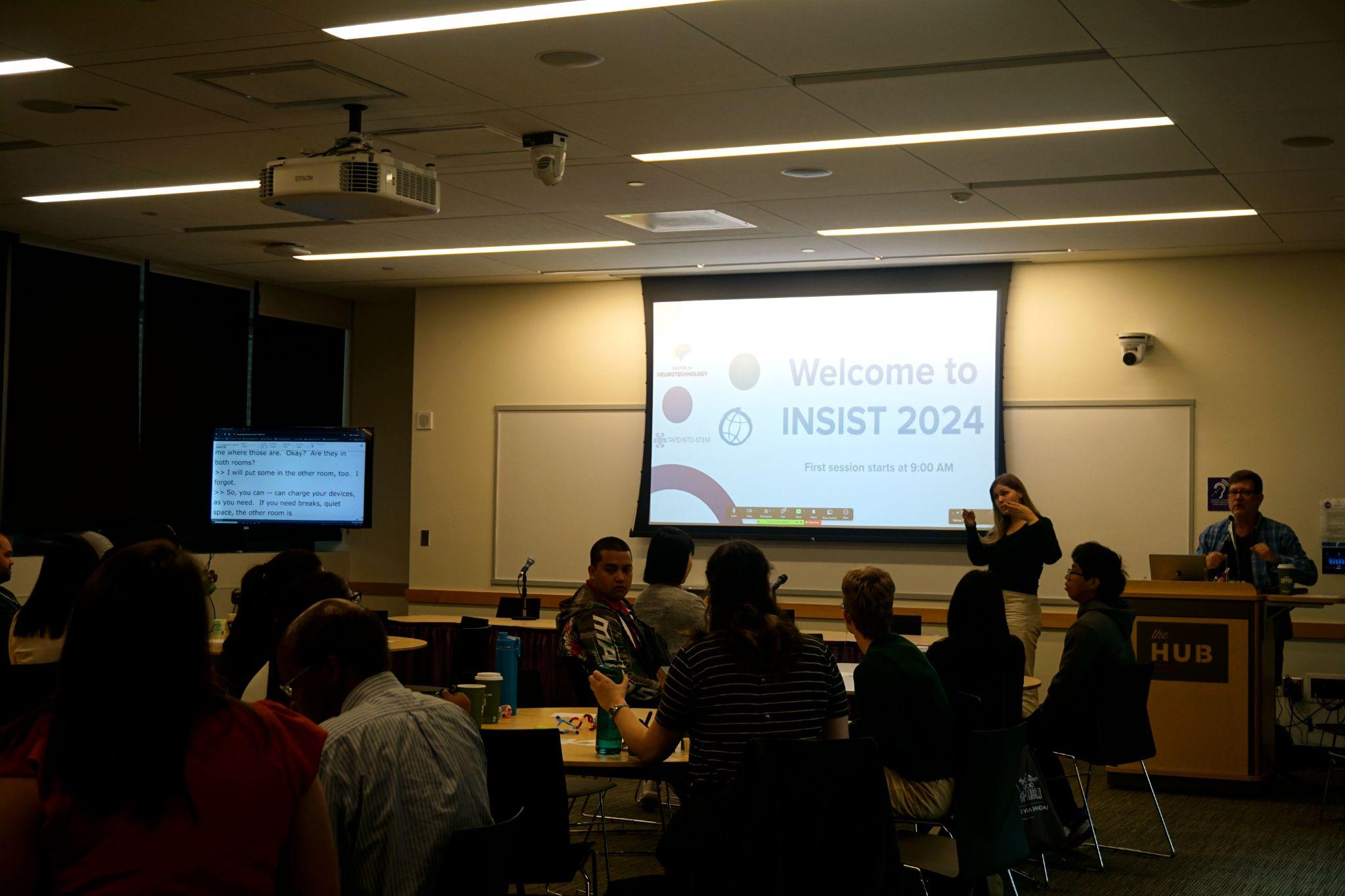
Eric Trekell, an NNL Program Operations Specialist and conference organizer, introduced the University of Washington’s Disabilities, Opportunities, Internetworking, and Technology (DO-IT) Center, a unique grant-funded program that supports college and university students with disabilities. DO-IT is dedicated to empowering people with disabilities through technology and education. It promotes awareness and accessibility to maximize the potential of individuals with disabilities and make communities more vibrant, diverse, and inclusive. He explained, “Our work with students in STEM programs is designed to encourage students, because the representation of people with disabilities in STEM employment is not proportional to our numbers in the population.” Eric acknowledged the event's sponsors, NNL and TAPDINTO-STEM, and highlighted goals of INSIST 2024, which were to provide meaningful learning opportunities, elevate the voices of neurodivergent STEM students, and build skills for advocacy and leadership.
Scott Bellman, Principal Investigator for the Neuroscience for Neurodiverse Learners program, shared a video message. He emphasized the importance of amplifying neurodivergent students' voices, saying, “We want to amplify the voices of students everywhere. We’re so happy that you are here with us now. We invite you to share yourself with us, share your ideas, share your thoughts.” Scott encouraged students to take advantage of the resources and learning opportunities presented by the mentors and speakers at the event.
Dr. Overtoun Jenda, a professor at Auburn University and Principal Investigator for the TAPDINTO-STEM Alliance, followed with a passionate call to action. He stressed the need for students to build strong communities to support one another during their academic journeys and beyond. He explained, “What we want is to have you graduate and end up in the STEM workforce.” Dr. Jenda urged the attendees to think long-term about their impact, advising them to continue advocating for people with disabilities in STEM fields throughout their lifetime.
Unique Strengths of Neurodivergent Learners
Presenters:
- Toby Gallant, Program Assistant, Office of the ADA Coordinator
- Christine Lew, Access Coordinator, UW Disability Resources for Students Office
This session began by asking a fundamental question: “What is disability?” Toby emphasized that understanding disability requires us to move beyond the traditional legal definitions and embrace a more fluid and encompassing perspective. Disability, he explained, is not a negative term; rather, it represents a vital part of a broad and diverse community. He went on to say that neurodivergent individuals have often been isolated from the wider disability community, which can lead to a disconnection from the solidarity and support that comes from the disabled civil rights movement and other shared experiences. Christine talked about the trend of distancing neurodivergent identities from the broader disability narrative. She underscored potential benefits of recognizing neurodivergent identities as part of a collective experience. Both speakers emphasized the need to advocate for access and understanding across all types of abilities, bodies, and minds.
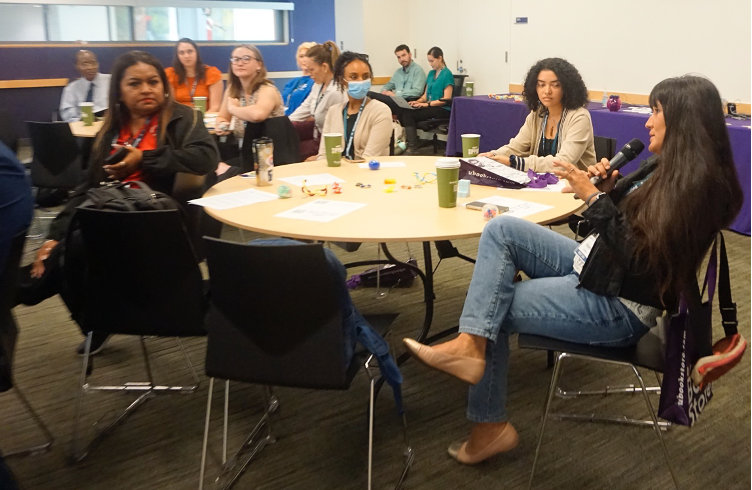
Participants were encouraged to explore (or further explore) the social model of disability, which asserts that disability is caused by societal barriers, rather than by a person's unique body, mind, or other difference. The model was developed by people with disabilities as a way to explain their experiences and to create more inclusive societies. Both presenters stressed that understanding this concept was crucial for recognizing barriers that neurodivergent individuals face.
As the discussion progressed, both speakers introduced models of disability, framing them within two distinct perspectives: the deficit perspective and the diversity perspective. Toby explained the deficit perspective, which historically dominated society’s understanding of disability. This view describes disability as a limitation, a fixed trait that individuals must overcome. Historically this perspective often led to solutions imposed by non-disabled individuals, pushing the narrative that disabled people are “less-than,” and need to be "fixed" to fit into societal norms.
In contrast, speakers presented the diversity perspective, a more contemporary understanding that emerged in the early 2000s. This approach, which includes the social model of disability, recognizes disability as a natural variation of the human experience, arguing that barriers disabled individuals face are socially constructed. From this perspective, society must look critically at the barriers imposed by things such as buildings, policies, and syllabi- rather than focus on fixing or changing individuals. Christine shared her research on the “affirmational model,” which further supported this perspective by celebrating the strengths and contributions of individuals with disabilities.
The conversation shifted to the concept of “disability gain,” which originated within Deaf culture. Disability gain promotes the idea that certain configurations of minds and bodies, which may otherwise be thought of as “disabled,” can have positive benefits and characteristics. Christine shared her personal story, growing up in a household with Deaf parents, where deafness was celebrated as a cultural identity rather than a deficit. This background inspired her to explore how disabilities could be reframed as sources of strength.
She recounted her research journey, where she conducted interviews with individuals across a spectrum of disabilities. The stories she shared were enlightening. One participant, who was blind, described how using a screen reader allowed her to navigate college more efficiently, while another power wheelchair user discovered that knowing certain accessible routes on campus enabled her to get to classes faster than her peers. Christine mentioned a participant who identified as autistic who found her unique way of analyzing communication allowed her to excel in cross-cultural interactions, a skill that many individuals struggle with.
As the discussion unfolded, participants reflected on their own experiences, contributing anecdotes of resilience and strength born from their challenges. These narratives created a tapestry of shared understanding, highlighting how adversity often led to personal growth and unique skills that could enhance academic and professional environments.
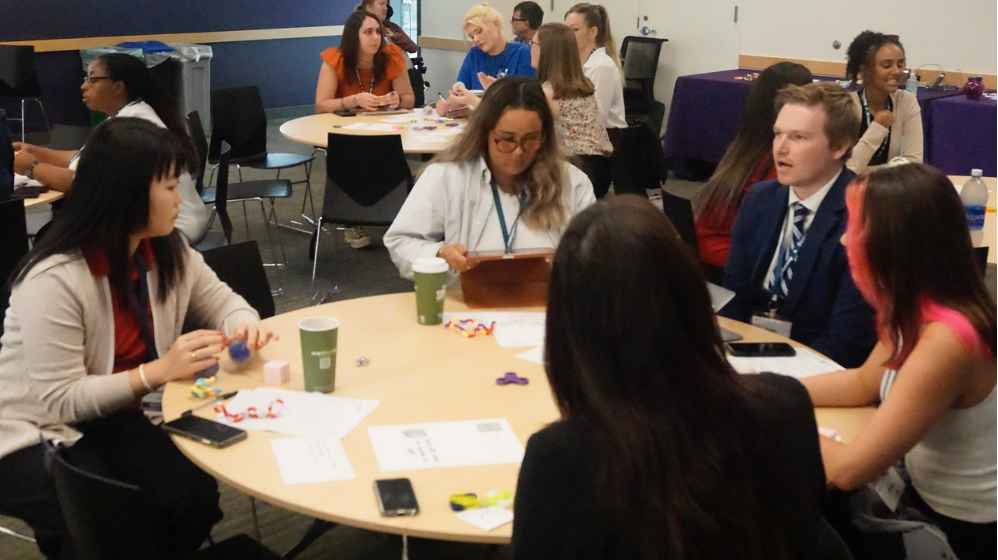
Finally, the conversation moved toward envisioning inclusive futures. What would an ideal university classroom look like for neurodiverse learners? Participants were invited to dream big, imagining spaces where every individual’s strengths were celebrated and where barriers were systematically dismantled. The dialogue was rich with ideas, showcasing a collective vision for a world that not only accepted but thrived on diversity. A summary follows.
Students noted that many neurodivergent individuals fit these descriptions:
- Think creatively, able to see beyond the conventional and appreciate intricate details. Enhanced perception allows them to experience the world in vivid ways.
- Dive into their passions with unwavering commitment, often perplexed by the more hesitant approaches of others. Their communication style is often characterized as a refreshing bluntness.
- Can possess a remarkable ability to connect seemingly unrelated topics, drawing on personal experiences to illustrate complex issues, such as the nuances of gender oppression. Their memory may be selective. For example, struggling to recall names yet effortlessly remembering vivid details from a long-ago social media post.
- Have learning styles that vary greatly, often necessitating questions and interactive engagement. They thrive in environments that allow flexibility and movement, finding traditional classroom settings a challenge. A dream university for them would prioritize these aspects, with deadlines that adapt to individual needs and hands-on learning experiences.
- Understand that there are real barriers that come with neurodivergence. Creating comfortable spaces where individuals can openly share their learning styles fosters connection and understanding among peers.
The discussions illuminated the strengths and perspectives of neurodiverse learners, reminding everyone that disability was not merely a challenge to be overcome but a tapestry of identities that contributed to the vibrant fabric of our communities. Many students left the session with a renewed commitment to fostering inclusivity and pride within the disability community, ready to advocate for a future where every voice was heard and valued.
Leadership & Advocacy: Providing Input to Educators
During this session participants formed small groups to provide formative feedback to help improve two publications in development by the NNL project, namely:
- Tips for Postsecondary Educators: Engaging Neurodivergent STEM Students, and[1]
- Tips for High School Teachers: Engaging Neurodivergent STEM Students
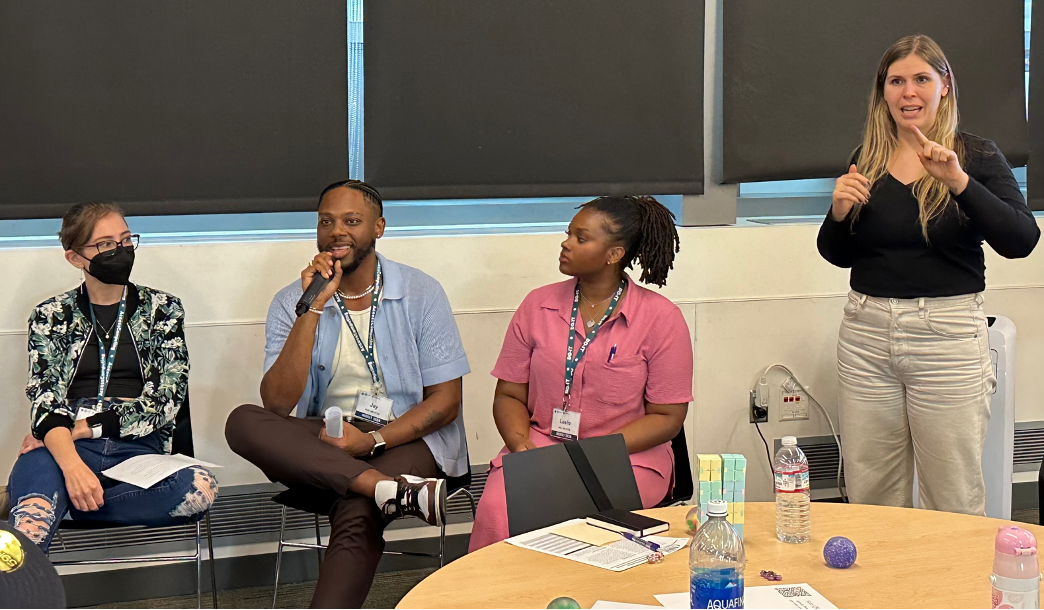
The publications were developed by NNL staff during the previous year of the project, utilizing information shared by students, best practices derived from the literature and the neurodivergent community, and interactions with parents and educators. The links above reflect final versions of the publications, including formative feedback collected from students.
Need links here
Wednesday Lunch Discussion
Presenters:
- Eric Trekell, NNL Program Operations Specialist
- Rochelle Bowyer, Program Assistant
All student participants were invited to respond to two questions during the networking lunch on Wednesday:
What would you want a college-bound neurodivergent high school student to know as they get ready for college?
- Making friends can be easier compared to high school.
- Getting involved with clubs, groups, and activities is important.
- College is different from high school. It’s better!
- You need to advocate for yourself relentlessly. (Mentioned 4 times)
- You can’t expect anyone to understand you or where you struggle or succeed unless you let people know.
- It’s not only okay to be different, it's a necessary part of humanity to survive. Don’t change yourself to fit in completely. Find a way to thrive in a healthy environment.
- Ask for help or advocate for yourself, just have fun, you’re not alone.
- Make meaningful connections with professors because they are there to help, not hurt. Use the office hours, even just for study or homework.
- Find the disability center and apply for services as soon as you can.
- Be proactive about your accommodations. (Mentioned 3 times)
- Your needs may be different than other students but that does not make it a weakness. Your strength is that you acknowledge you may learn differently, and that is okay.
- Try and find community sooner rather than later.
- Push yourself to grow because you’ll be in new and uncomfortable situations anyway-100%!
- Ask for help, talk to your teacher, know that there are resources.
If you could contact your younger self as a high school student, what would you tell them about navigating the experiences they might have as a neurodivergent learner?
- Ask for help so that you won’t fail or get stuck and explore the resources that can help you out.
- Don’t isolate yourself, always ask for help when you need it! Be honest about the things you need.
- You will have difficult moments, allow yourself to grow from them. Don’t be hard on yourself.
- Be aware of the possibility of additional conditions. Get tested for ADHD and anxiety (if that makes sense for you) so that you don’t feel so overwhelmed.
- Don’t conform to “standard” learning techniques, find what works for you and take breaks between studying.
- Distance education is awesome.
- You live past 21, so plan and look ahead.
- Trust your feelings, there is something going on with you, get checked out.
- Tell your teachers what specifically is difficult for you and don’t allow answers like “you just need to focus or try harder” to define how you relate to learning and being a member of society.
- Prepare for a lack of support.
- Use office hours once you get to college.
- Always work on skills to advocate for yourself and your needs.
Unlocking Potential: Leadership and Advocacy for Neuro-Inclusive Employment
Presenter:
- Dr. Laurie Ackles, Executive Director of the Washington Neurodiversity Project
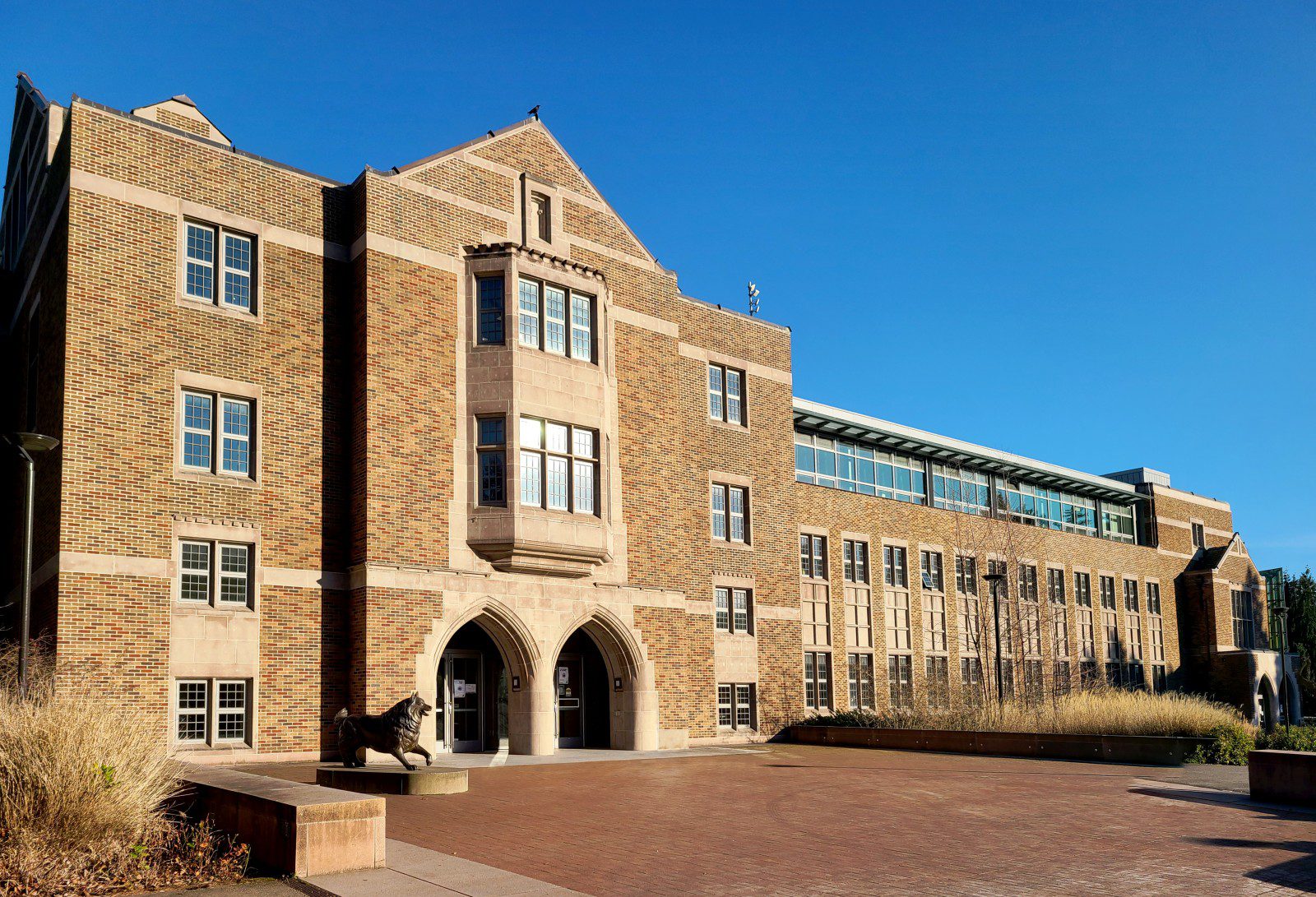
The session featured Dr. Laurie Ackles, the founding director of the Washington Neurodiversity Project, a foundation dedicated to enhancing the employment outcomes for neurodivergent individuals in Washington State, with aspirations for future national impact. Dr. Ackles, who previously supported the educational success of autistic students at Rochester Institute of Technology for 14 years, shared her expertise in neurodiversity and employment. During her presentation, she emphasized that the neurodiversity movement is relatively new, and the conversation about neurodivergent employment has gained momentum over the past decade. She noted the importance of amplifying neurodivergent voices, which have been pivotal in driving this movement forward.
The evolution of neurodiversity in the workplace was discussed, referencing early initiatives like Specialisterne, a Dutch company that began hiring autistic job seekers in technology roles. This model inspired larger corporations such as SAP, Microsoft, and Ernst & Young to explore neurodiversity-focused hiring practices. The United Nations further catalyzed awareness by convening a roundtable on autism and employment, acknowledging the unique challenges faced by neurodivergent individuals in the job market.
Many neurodivergent individuals still face barriers in traditional hiring processes, often having to enter through "side doors" designed for them rather than the main pathways available to all candidates. There is a need for a cultural shift in recruitment practices to ensure that all job seekers can access the same opportunities without stigma or exclusion. There is also a need for more inclusive hiring practices that focus on skill-based job descriptions and interviews, rather than outdated criteria that can inadvertently exclude neurodivergent candidates. She called for greater mentorship, coaching, and management training to cultivate an inclusive work environment that recognizes and supports the unique strengths of neurodivergent talent.
Cultural transformation is at the forefront: the need for broader training, more inclusive HR policies, and better communication practices. Managers are encouraged to provide clear, direct feedback rather than waiting until issues escalate. The rise of Employee Resource Groups (ERGs), particularly for neurodiversity and disability, is notable, as these groups foster support and advocate for change within organizations.
Additionally, there is a growing awareness of intersectionality, recognizing the diverse identities that individuals may embody, such as being neurodivergent and a member of the LGBTQ+ community or another historically marginalized group. This understanding is crucial in creating inclusive work environments. For those entering the job market, the importance of advocating for ERGs and inclusive practices is highlighted. Career preparation is often inadequate in educational institutions, leading to initiatives like the Career-Ready Boot Camp for neurodivergent students at RIT. This program aims to equip students with the necessary skills and insights into their career interests early on.
The job search process can be daunting, often riddled with poorly written job descriptions and a high level of disappointment. It's advised that applicants apply for many positions, and the value of a personalized cover letter is emphasized. Networking plays a critical role in job searching, with many opportunities arising through connections rather than direct applications. Thus, utilizing programs like NNL and TAPDINTO-STEM, and platforms like LinkedIn for networking is essential, as it can lead to unexpected job discoveries through shared connections.
Tabletop Discussions with Neurodivergent STEM Professionals
During this session, students interacted with various STEM professionals who identify as neurodivergent. The session began with introductions:
Meena introduced herself as a software engineer at Microsoft, holding a Master's degree in computer science. She spoke about techniques she has developed to navigate a speech impairment that has accompanied her since childhood, expressing her enthusiasm for sharing strategies that aid her at work.
Eli, another software engineer, echoed similar sentiments. She, too, held a degree in computer science and openly discussed her struggles with ADHD, eager to share her personal navigation strategies within the demanding realm of software engineering.
Lauren, a user designer and researcher at the University of Washington, was interested in sharing her journey through undiagnosed autism and the later discovery of her ADHD. Her experiences in academia contrasted with those of her peers. She reflected on the unique challenges of obtaining a diagnosis as an adult.
Ricky, a software engineer from a Michigan startup, spoke candidly about his recent obsessive-compulsive disorder (OCD) diagnosis. Though he had dealt with it for years, it was only in recent times that he had named his condition, emphasizing the coping mechanisms he developed.
Leslie, a fourth-year PhD candidate in engineering, introduced herself and shared her background in computer science and human-centered design. She talked about her challenges related to anxiety, depression, and PTSD, which she had grappled with long before her formal diagnoses, providing insight into the academic landscape.
Avery, a postdoctoral researcher, humorously mentioned their upcoming dissertation deadline and discussed their ADHD and chronic illness, eager to delve into their experiences in both research and software engineering.
Finally, Jay, also facing a dissertation deadline, shared their journey through neurodiversity and a history of eating disorders. With a focus on resilience, Jay spoke about managing ADHD throughout their life while navigating high-pressure environments, offering a perspective of perseverance and achievement.
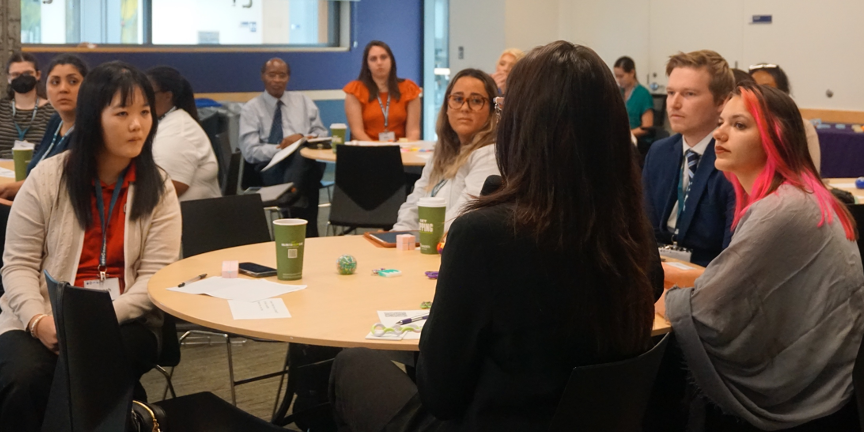
One panelist shared their experiences navigating career challenges, particularly focusing on their simultaneous journey through a PhD program and embracing an ADHD diagnosis. They emphasized the importance of "hacking" their brain—experimenting with different methods to enhance productivity and embracing their unique working style. Support from a compassionate supervisor played a crucial role in this self-exploration, allowing them to design a work schedule that accommodated their preference for switching between tasks.
Another participant reflected on the complexities of having a hidden disability, noting that many people are unaware of their neurodivergence unless disclosed. They found that being open about their working style and needs helped them manage expectations during internships and academic settings. They learned the importance of communicating their requirements, like adjusting deadlines, to create a more realistic workflow.
The conversation touched on mental health challenges such as anxiety and depression, with one individual sharing how they've learned to embrace their treatments, including therapy and medication. Recognizing and anticipating personal triggers, while maintaining open communication, have been vital in navigating their professional landscape.
One panelist offered practical advice for networking in academia, suggesting that individuals should find methods that align with their strengths. They shared their own experience of connecting with professors virtually instead of attending conferences, demonstrating that authentic engagement can lead to meaningful professional relationships.
Multiple participants discussed the importance of showing up as their true selves, especially in predominantly white or unfamiliar spaces. One individual highlighted the relief that comes from authenticity, while another, who thrives in social settings, noted the need to manage their energy levels during interactions. Overall, the conversation underscored the significance of self-awareness, open communication, and the courage to embrace one’s unique neurodiverse experiences, with the goal of ultimately fostering a more supportive and understanding work environment.
Advocacy and Empowerment through Student Groups
Presenter:
- Nathalie “Nyx” Moriarty, University of California Davis Aggie Neurodiversity Community
During this session, Nyx shared insights on the power of student group self-advocacy, using her experience with the Aggie Neurodiversity Community (ANC) at UC Davis as a foundation. Nyx, a fifth-year PhD student with multiple disabilities, emphasized the importance of creating a safe space for neurodivergent students, particularly those with autism and ADHD. The ANC focuses on empowering its members through social connection, advocacy, resource sharing, and community partnerships.
Nyx detailed the group's origins and achievements, highlighting their training sessions for over 2,000 UC administrators and collaborations with various organizations, including local schools. The ANC offers a mix of online and in-person gatherings, ensuring an inclusive environment where members can engage at their comfort level without pressure.
Advocacy is a crucial aspect of the ANC's work, with Nyx noting that student groups serve as powerful platforms for amplifying the voices of their members. She advised separating the social and advocacy components within student organizations to prevent overwhelming neurodivergent students, allowing them to participate in social activities without the burden of advocacy demands. This approach helped create a more sustainable model for engagement, where members can opt-in to advocacy efforts as they choose.
In addition to advocacy, Nyx highlighted the importance of resource sharing, mentioning her extensive repository of various support resources. She encouraged partnerships with other disability organizations to expand access to necessary resources and foster community connections.
Students received advice on initiating a new student group. Often, the first step is to consult the Student Organization Office on campus, which provides essential rules, guidelines, and a registration process. Although navigating this process can be challenging, the office typically has consultants available. Founding a group typically requires a basic constitution, a mission statement, and a team of initial officers and members. As groups develop, they must establish leadership structures, often requiring positions like president, vice president, and treasurer. Moreover, it’s vital to define membership criteria and levels, ensuring inclusivity and safety. The ANC was used as an example, allowing both student and associate members, with specific rights and responsibilities tailored to maintain a supportive environment.
Establishing clear community guidelines is essential for maintaining a safe and respectful environment. Guidelines should be accessible and communicated effectively to all members. Additionally, the group discussed the nuanced dynamics of including neurotypical members in advocacy groups, which can enhance the group's mission while ensuring that the focus remains on supporting the core community. It was noted that some neurotypical individuals, although well meaning, need training in being an effective ally to neurodivergent students.
In a world where systems of oppression persist, the role of disruptors and diplomats becomes crucial. Disruptors are the passionate activists who challenge the status quo, making their voices heard and demanding change. They are essential in shaking up complacent power structures, but they need the strategic finesse of diplomats—those who engage with authority figures through established channels. Together, these two forces can create a formidable alliance that ensures the needs of the community are recognized and addressed. Students, in particular, hold a unique position as both disruptors and diplomats. With the backing of their educational institutions, they can amplify their voices and organize collective action effectively. Historically, student movements have driven significant social change, and current student leaders are tasked with harnessing this potential by rallying their peers, organizing protests, and advocating for necessary reforms.
A critical area for advocacy is the accessibility and support for disabled students. At each campus, the office providing accommodations to disabled students plays a key role in ensuring that students' academic needs are met. However, it’s vital for student leaders to guide and hold this office accountable for continuous improvement. This partnership can help identify gaps in service and ensure that accommodations are effectively communicated and implemented.
Beyond academic settings, there are broader advocacy opportunities for neurodivergent individuals, particularly concerning campus safety and emergency response. As seen at UC Davis, innovative solutions like having social workers respond to crisis calls instead of police demonstrate that change is possible. Advocates can push for training and resources that consider the unique needs of neurodivergent students, ensuring that support systems are in place to help them navigate challenges effectively.
Overall, Nyx's insights underscored the potential of student groups to drive meaningful change while providing a supportive space for neurodivergent individuals; students were challenged to initiate groups on their own campus.
Understanding Impostor Syndrome
Presenter:
- Drew King, Ability Student Group, Paul G. Allen School of Computer Science & Engineering
A key part of the discussion revolved around the contrasting "Medical" and "Social" models of disability. The Medical Model views disability as an inherent defect requiring a cure, while the Social Model advocates for the removal of societal barriers to improve accessibility. The theme of the session was the notion of “imposter syndrome” within the disability community—feeling unworthy or invalid in one’s disability status. This sense of not belonging is prevalent, leading many to question the legitimacy of their experiences and the need for accommodations.
Personal anecdotes illustrated these feelings, revealing how even individuals with legitimate needs can struggle to seek help due to fears of being perceived as seeking special treatment or not being "disabled enough." The presenters discussed “stereotype threat,” where individuals fear confirming negative societal stereotypes about their group. Such fears can lead to a reluctance to ask for help, further exacerbating feelings of inadequacy. Through anonymous polls, the group aimed to foster a safe space for sharing these common feelings, reinforcing that many in the community experience similar struggles.
In a candid conversation about navigating university life with disabilities, the participants shared their struggles and triumphs. One speaker reflected on their journey, expressing uncertainty about what accommodations to request from their school, which offered a limited list. This uncertainty led them to take exams alongside their classmates, without academic accommodations, even when disability-related barriers were present.
Another participant described their experience of tackling academic challenges without adequate support. They recounted their fluctuating success in maintaining their GPA goals as they faced increasing difficulties. Over time, they learned the importance of self-awareness and communication, ultimately arriving at a university with a clear understanding of their needs and the accommodations that would help.
Another student shared their frustration about feeling belittled by a clinical psychologist who downplayed their struggles. They emphasized the challenge of articulating needs when one is still figuring out their own situation, leading to feelings of inadequacy and a lack of support from the disability services office on campus. The discussion highlighted a common thread of imposter syndrome, with many participants acknowledging their doubts about the validity of their disabilities in comparison to others.
As the conversation progressed, participants recognized the value of peer support and student organizations in sharing accommodation strategies. Notably, some students did not experience imposter syndrome and were vocal about embracing their various identities with confidence. Overall, the dialogue served as a poignant reminder of the complexities of disability in academic settings, the need for better resources, and the power of community in fostering understanding and support.
Thursday Lunch Discussion
Presenters:
- Kayla Brown, Program Coordinator
- Brianna Blaser, Program Operations Specialist
- Rochelle Bowyer, Program Assistant
All student participants were invited to respond to the following question during the networking lunch on Wednesday:
What are examples of new activities that neurodivergent students can implement on their campuses to help build skills and knowledge about teaching neurodivergent learners?
- Promote distance education in all classes.
- Organizing student clubs (e.g., social activism, networking, social).
- Share the idea that working together to create safe spaces can help everyone.
- Build up others and help them if they don’t know something.
- Participate in small study groups and class discussion.
- Promote professional development for faculty about neurodivergence.
- Promote the use of inclusive language in mission statements.
- Help highlight accommodation legal obligations for both the classroom and employment settings.
Evaluation
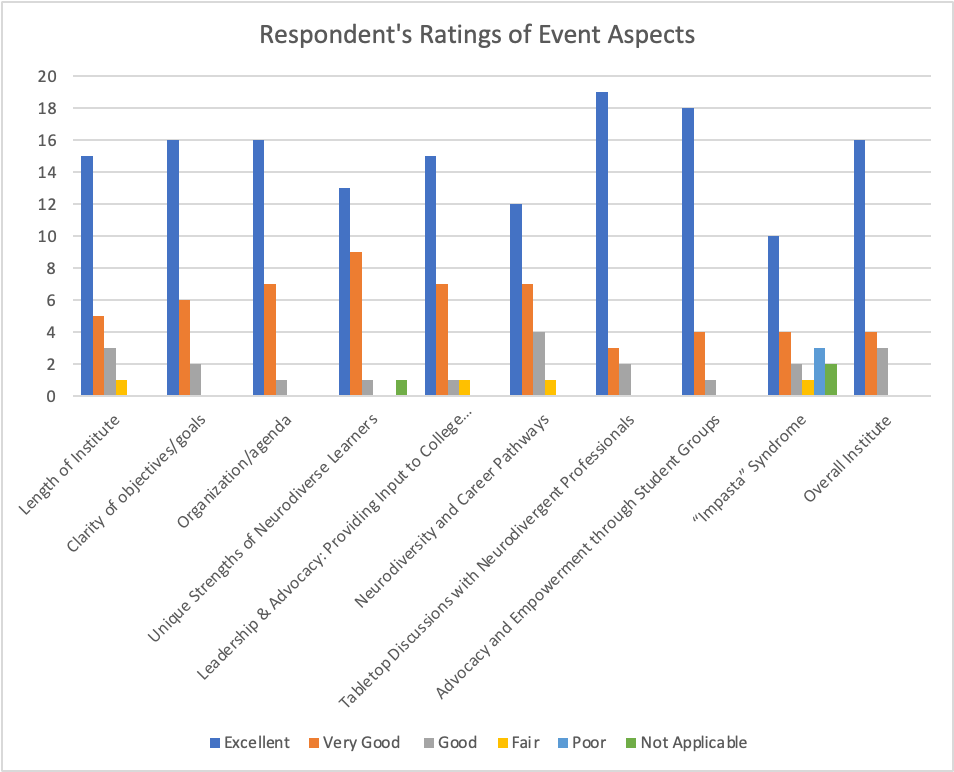
At the conclusion of the event attendees were asked to rate aspects of the event using a scale of Excellent, Very Good, Good, Fair, Poor, and Not Applicable. The chart below shows that the majority of respondents rated every aspect of the conference as Excellent with Very Good being the second highest rating for each aspect.
Respondents were also asked to answer a series of open ended questions about the event. When respondents were asked “As a result of attending this institute how has your knowledge and/or ability to elevate the voices of neurodivergent students pursuing STEM changed?” Examples of responses included:
- My perspective of neurodivergence was greatly impacted by getting to know so many other neurodivergent students in STEM. The institute made me feel like my voice was being heard and my input mattered. I want to be able to make neurodivergent students at my university feel the same way.
- I have learned so many new things about how to advocate for myself and others at my university. This institute has been so helpful to meet others who have similar experiences as myself. I feel a lot more confident about taking what I have learned and sharing it with my campus to help elevate their voices.
- I now understand a lot more about the inner-workings of advocacy and feel empowered to continue on my own journey to support our community.
- I am encouraged to reinvent the way I see myself and to lean into my natural characteristics that I normally tend to mask. Being able to see that there are different strengths neurodivergent people have places a value on them instead. Finding the setting to utilize those natural talents is something I want to focus on to help myself and others find their places and passions in STEM.
- I feel much more confident in pursuing stem and higher education as a neurodivergent student, and I feel like more and more resources are being made available to me.
Students were asked to share one specific action they plan to take as a result of something they learned at this event. Responses included plans to learn more about disability history and theory (1), increasing advocacy on campus (1), creating or joining a campus group for students with disabilities (5), promoting faculty training or asking for more help from faculty (3), developing a list of helpful resources for use personally or on campus (2), advocacy at the state level for more inclusive postsecondary environments (1), helping expand or enhance existing programs such as TAPDINTO-STEM (1), applying for additional graduate studies (1), building their network of supports and fellow advocates (2), and increased advocacy for the employment of neurodivergent individuals (1).
When asked which aspects of the event were the most useful to them, responses talked about the value of in-person networking, learning about advocacy, and the diversity of topics. One student shared “I really loved all the sessions! I loved finally finding my people, I’ve never felt so safe and accepted. I didn’t feel like I had to mask or dial myself up or down for the event. It was really an eye opener for me to realize. I appreciated that we were all at different stages of either our education or our career but all were neurodivergent.” Another student commented “All aspects of the institute were immensely useful to me. I have learned so much not only about myself as an academic, but as a human being, and I feel so much more confident navigating the world around me and being unapologetically myself. The panelists, speakers, physical media, and online resources were immensely helpful and these speakers have opened my eyes to my own personal strengths as a neurodivergent individual. I don't have to be insecure, I can work my personal identity to my advantage and it's okay to be different.”
Students were asked if they had suggestions for making a future event like this more useful. Responses included the following: including an in-depth presentation at the outset related to disability history and theory, adding more breaks and opportunities to move around to more locations, extending the institute (such as adding an extra day), including information about grant writing, and receiving the agenda earlier.
Participants
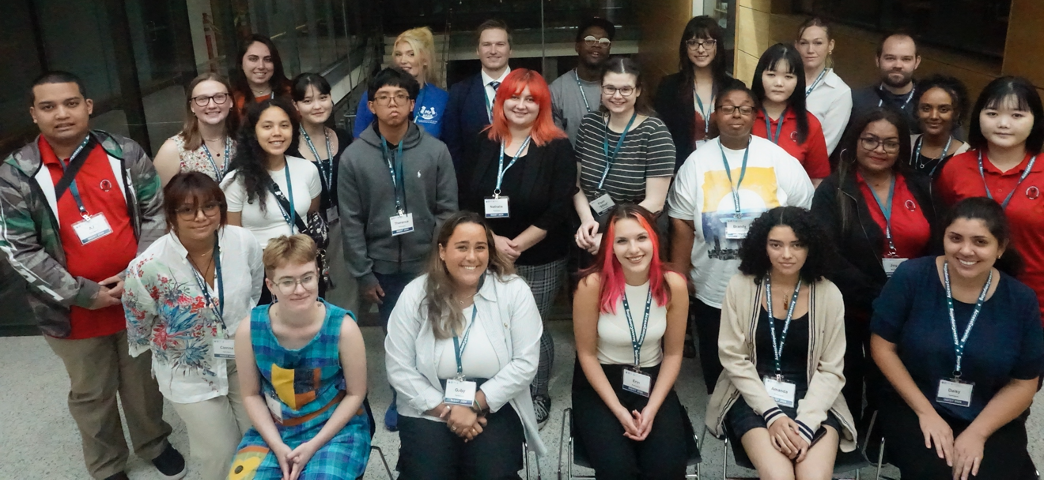
Student participants were from a variety of postsecondary institutions, including Kapiolani Community College, Landmark College, Middle Tennessee State University, University of Missouri Kansas City, Auburn University, University of Alaska Anchorage, University of Hawaii, Northern Marianas College, Kapiolani Community College, San Diego State University, Milwaukee Area Technical College, University of Nevada, Reno, University of Hawaii, Western Washington University, and University of California Davis. Students identified as having one or more neurodivergent characteristics.
Acknowledgments
About Neuroscience for Neurodiverse Learners (NNL)
The NNL project is led by the University of Washington’s Disabilities, Opportunities, Internetworking, and Technology (DO-IT) Center and Center for Neurotechnology (CNT). The Neuroscience for Neurodiverse Learners project is funded by the National Science Foundation (grant #DRL-1948591, PI Scott Bellman, Co-PI Rajesh PN Rao). Any questions, findings, and conclusions or recommendations expressed in this material are those of the author and do not necessarily reflect the views of the federal government.
About the Eddie Bernice Johnson NSF INCLUDES TAPDINTO-STEM Alliance (TAPDINTO-STEM)
The TAPDINTO-STEM Alliance (NSF grant# 2119902, PI Overtoun Jenda) collaborated with the NNL project to help provide mentors, select topics, and recruit from a nation-wide pool of STEM students with disabilities. TAPDINTO-STEM employs a collective impact approach with dozens of partnering institutions across the U.S. to increase the number of students with disabilities who complete associate, baccalaureate and graduate STEM degrees and enter the STEM workforce.