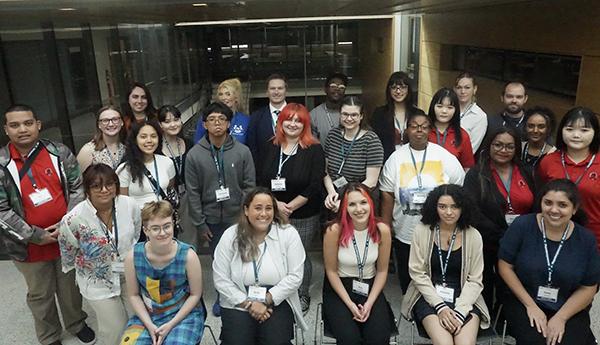
Unique Strengths of Neurodivergent Learners
Presenters:
- Toby Gallant, Program Assistant, Office of the ADA Coordinator
- Christine Lew, Access Coordinator, UW Disability Resources for Students Office
This session began by asking a fundamental question: “What is disability?” Toby emphasized that understanding disability requires us to move beyond the traditional legal definitions and embrace a more fluid and encompassing perspective. Disability, he explained, is not a negative term; rather, it represents a vital part of a broad and diverse community. He went on to say that neurodivergent individuals have often been isolated from the wider disability community, which can lead to a disconnection from the solidarity and support that comes from the disabled civil rights movement and other shared experiences. Christine talked about the trend of distancing neurodivergent identities from the broader disability narrative. She underscored potential benefits of recognizing neurodivergent identities as part of a collective experience. Both speakers emphasized the need to advocate for access and understanding across all types of abilities, bodies, and minds.
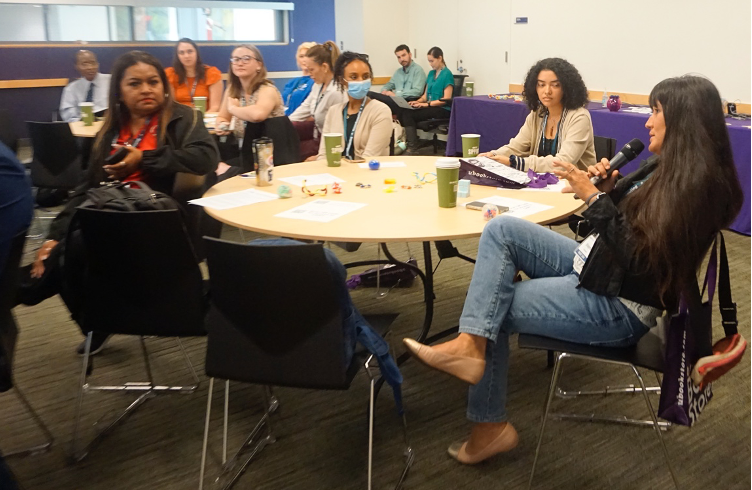
Participants were encouraged to explore (or further explore) the social model of disability, which asserts that disability is caused by societal barriers, rather than by a person's unique body, mind, or other difference. The model was developed by people with disabilities as a way to explain their experiences and to create more inclusive societies. Both presenters stressed that understanding this concept was crucial for recognizing barriers that neurodivergent individuals face.
As the discussion progressed, both speakers introduced models of disability, framing them within two distinct perspectives: the deficit perspective and the diversity perspective. Toby explained the deficit perspective, which historically dominated society’s understanding of disability. This view describes disability as a limitation, a fixed trait that individuals must overcome. Historically this perspective often led to solutions imposed by non-disabled individuals, pushing the narrative that disabled people are “less-than,” and need to be "fixed" to fit into societal norms.
In contrast, speakers presented the diversity perspective, a more contemporary understanding that emerged in the early 2000s. This approach, which includes the social model of disability, recognizes disability as a natural variation of the human experience, arguing that barriers disabled individuals face are socially constructed. From this perspective, society must look critically at the barriers imposed by things such as buildings, policies, and syllabi- rather than focus on fixing or changing individuals. Christine shared her research on the “affirmational model,” which further supported this perspective by celebrating the strengths and contributions of individuals with disabilities.
The conversation shifted to the concept of “disability gain,” which originated within Deaf culture. Disability gain promotes the idea that certain configurations of minds and bodies, which may otherwise be thought of as “disabled,” can have positive benefits and characteristics. Christine shared her personal story, growing up in a household with Deaf parents, where deafness was celebrated as a cultural identity rather than a deficit. This background inspired her to explore how disabilities could be reframed as sources of strength.
She recounted her research journey, where she conducted interviews with individuals across a spectrum of disabilities. The stories she shared were enlightening. One participant, who was blind, described how using a screen reader allowed her to navigate college more efficiently, while another power wheelchair user discovered that knowing certain accessible routes on campus enabled her to get to classes faster than her peers. Christine mentioned a participant who identified as autistic who found her unique way of analyzing communication allowed her to excel in cross-cultural interactions, a skill that many individuals struggle with.
As the discussion unfolded, participants reflected on their own experiences, contributing anecdotes of resilience and strength born from their challenges. These narratives created a tapestry of shared understanding, highlighting how adversity often led to personal growth and unique skills that could enhance academic and professional environments.
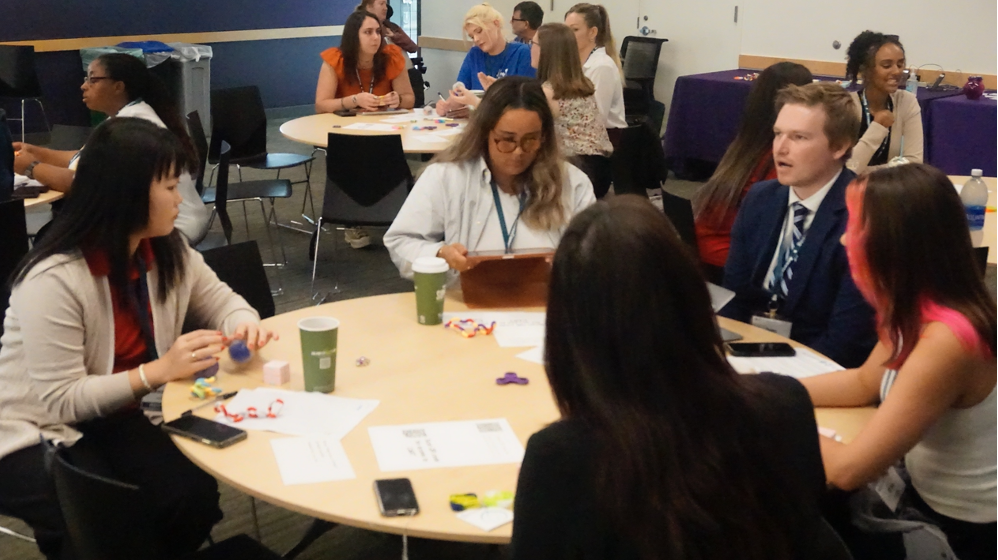
Finally, the conversation moved toward envisioning inclusive futures. What would an ideal university classroom look like for neurodiverse learners? Participants were invited to dream big, imagining spaces where every individual’s strengths were celebrated and where barriers were systematically dismantled. The dialogue was rich with ideas, showcasing a collective vision for a world that not only accepted but thrived on diversity. A summary follows.
Students noted that many neurodivergent individuals fit these descriptions:
- Think creatively, able to see beyond the conventional and appreciate intricate details. Enhanced perception allows them to experience the world in vivid ways.
- Dive into their passions with unwavering commitment, often perplexed by the more hesitant approaches of others. Their communication style is often characterized as a refreshing bluntness.
- Can possess a remarkable ability to connect seemingly unrelated topics, drawing on personal experiences to illustrate complex issues, such as the nuances of gender oppression. Their memory may be selective. For example, struggling to recall names yet effortlessly remembering vivid details from a long-ago social media post.
- Have learning styles that vary greatly, often necessitating questions and interactive engagement. They thrive in environments that allow flexibility and movement, finding traditional classroom settings a challenge. A dream university for them would prioritize these aspects, with deadlines that adapt to individual needs and hands-on learning experiences.
- Understand that there are real barriers that come with neurodivergence. Creating comfortable spaces where individuals can openly share their learning styles fosters connection and understanding among peers.
The discussions illuminated the strengths and perspectives of neurodiverse learners, reminding everyone that disability was not merely a challenge to be overcome but a tapestry of identities that contributed to the vibrant fabric of our communities. Many students left the session with a renewed commitment to fostering inclusivity and pride within the disability community, ready to advocate for a future where every voice was heard and valued.