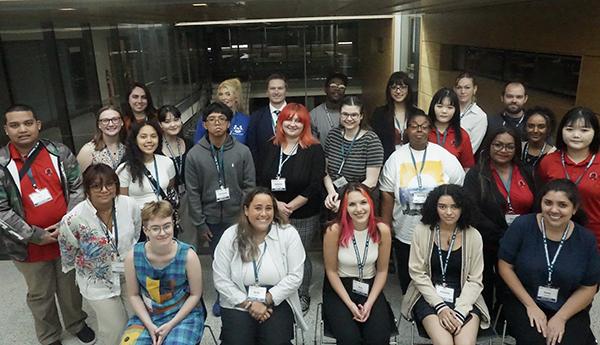
Understanding Impostor Syndrome
Presenter:
- Drew King, Ability Student Group, Paul G. Allen School of Computer Science & Engineering
A key part of the discussion revolved around the contrasting "Medical" and "Social" models of disability. The Medical Model views disability as an inherent defect requiring a cure, while the Social Model advocates for the removal of societal barriers to improve accessibility. The theme of the session was the notion of “imposter syndrome” within the disability community—feeling unworthy or invalid in one’s disability status. This sense of not belonging is prevalent, leading many to question the legitimacy of their experiences and the need for accommodations.
Personal anecdotes illustrated these feelings, revealing how even individuals with legitimate needs can struggle to seek help due to fears of being perceived as seeking special treatment or not being "disabled enough." The presenters discussed “stereotype threat,” where individuals fear confirming negative societal stereotypes about their group. Such fears can lead to a reluctance to ask for help, further exacerbating feelings of inadequacy. Through anonymous polls, the group aimed to foster a safe space for sharing these common feelings, reinforcing that many in the community experience similar struggles.
In a candid conversation about navigating university life with disabilities, the participants shared their struggles and triumphs. One speaker reflected on their journey, expressing uncertainty about what accommodations to request from their school, which offered a limited list. This uncertainty led them to take exams alongside their classmates, without academic accommodations, even when disability-related barriers were present.
Another participant described their experience of tackling academic challenges without adequate support. They recounted their fluctuating success in maintaining their GPA goals as they faced increasing difficulties. Over time, they learned the importance of self-awareness and communication, ultimately arriving at a university with a clear understanding of their needs and the accommodations that would help.
Another student shared their frustration about feeling belittled by a clinical psychologist who downplayed their struggles. They emphasized the challenge of articulating needs when one is still figuring out their own situation, leading to feelings of inadequacy and a lack of support from the disability services office on campus. The discussion highlighted a common thread of imposter syndrome, with many participants acknowledging their doubts about the validity of their disabilities in comparison to others.
As the conversation progressed, participants recognized the value of peer support and student organizations in sharing accommodation strategies. Notably, some students did not experience imposter syndrome and were vocal about embracing their various identities with confidence. Overall, the dialogue served as a poignant reminder of the complexities of disability in academic settings, the need for better resources, and the power of community in fostering understanding and support.