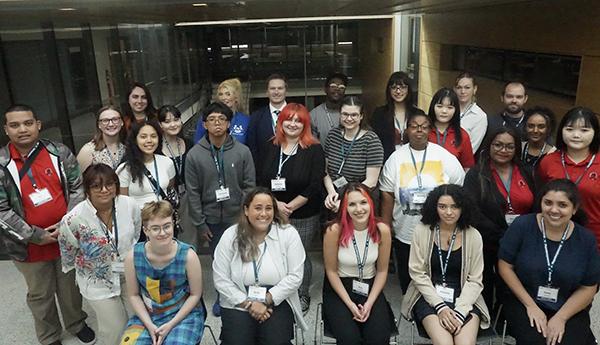
Unlocking Potential: Leadership and Advocacy for Neuro-Inclusive Employment
Presenter:
- Dr. Laurie Ackles, Executive Director of the Washington Neurodiversity Project
The session featured Dr. Laurie Ackles, the founding director of the Washington Neurodiversity Project, a foundation dedicated to enhancing the employment outcomes for neurodivergent individuals in Washington State, with aspirations for future national impact. Dr. Ackles, who previously supported the educational success of autistic students at Rochester Institute of Technology for 14 years, shared her expertise in neurodiversity and employment. During her presentation, she emphasized that the neurodiversity movement is relatively new, and the conversation about neurodivergent employment has gained momentum over the past decade. She noted the importance of amplifying neurodivergent voices, which have been pivotal in driving this movement forward.
The evolution of neurodiversity in the workplace was discussed, referencing early initiatives like Specialisterne, a Dutch company that began hiring autistic job seekers in technology roles. This model inspired larger corporations such as SAP, Microsoft, and Ernst & Young to explore neurodiversity-focused hiring practices. The United Nations further catalyzed awareness by convening a roundtable on autism and employment, acknowledging the unique challenges faced by neurodivergent individuals in the job market.
Many neurodivergent individuals still face barriers in traditional hiring processes, often having to enter through "side doors" designed for them rather than the main pathways available to all candidates. There is a need for a cultural shift in recruitment practices to ensure that all job seekers can access the same opportunities without stigma or exclusion. There is also a need for more inclusive hiring practices that focus on skill-based job descriptions and interviews, rather than outdated criteria that can inadvertently exclude neurodivergent candidates. She called for greater mentorship, coaching, and management training to cultivate an inclusive work environment that recognizes and supports the unique strengths of neurodivergent talent.
Cultural transformation is at the forefront: the need for broader training, more inclusive HR policies, and better communication practices. Managers are encouraged to provide clear, direct feedback rather than waiting until issues escalate. The rise of Employee Resource Groups (ERGs), particularly for neurodiversity and disability, is notable, as these groups foster support and advocate for change within organizations.
Additionally, there is a growing awareness of intersectionality, recognizing the diverse identities that individuals may embody, such as being neurodivergent and a member of the LGBTQ+ community or another historically marginalized group. This understanding is crucial in creating inclusive work environments. For those entering the job market, the importance of advocating for ERGs and inclusive practices is highlighted. Career preparation is often inadequate in educational institutions, leading to initiatives like the Career-Ready Boot Camp for neurodivergent students at RIT. This program aims to equip students with the necessary skills and insights into their career interests early on.
The job search process can be daunting, often riddled with poorly written job descriptions and a high level of disappointment. It's advised that applicants apply for many positions, and the value of a personalized cover letter is emphasized. Networking plays a critical role in job searching, with many opportunities arising through connections rather than direct applications. Thus, utilizing programs like NNL and TAPDINTO-STEM, and platforms like LinkedIn for networking is essential, as it can lead to unexpected job discoveries through shared connections.