Wednesday Lunch Discussion
Presenters:
- Eric Trekell, NNL Program Operations Specialist
- Rochelle Bowyer, Program Assistant
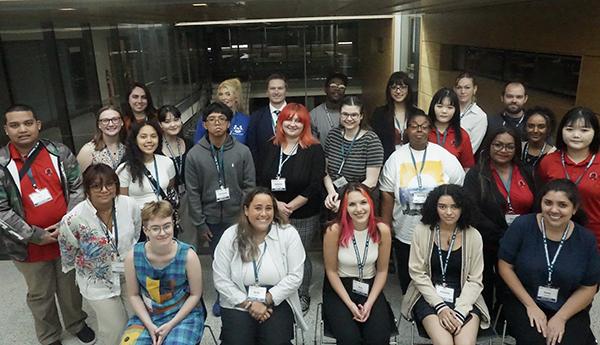
All student participants were invited to respond to two questions during the networking lunch on Wednesday:
What would you want a college-bound neurodivergent high school student to know as they get ready for college?
- Making friends can be easier compared to high school.
- Getting involved with clubs, groups, and activities is important.
- College is different from high school. It’s better!
- You need to advocate for yourself relentlessly. (Mentioned 4 times)
- You can’t expect anyone to understand you or where you struggle or succeed unless you let people know.
- It’s not only okay to be different, it's a necessary part of humanity to survive. Don’t change yourself to fit in completely. Find a way to thrive in a healthy environment.
- Ask for help or advocate for yourself, just have fun, you’re not alone.
- Make meaningful connections with professors because they are there to help, not hurt. Use the office hours, even just for study or homework.
- Find the disability center and apply for services as soon as you can.
- Be proactive about your accommodations. (Mentioned 3 times)
- Your needs may be different than other students but that does not make it a weakness. Your strength is that you acknowledge you may learn differently, and that is okay.
- Try and find community sooner rather than later.
- Push yourself to grow because you’ll be in new and uncomfortable situations anyway-100%!
- Ask for help, talk to your teacher, know that there are resources.
If you could contact your younger self as a high school student, what would you tell them about navigating the experiences they might have as a neurodivergent learner?
- Ask for help so that you won’t fail or get stuck and explore the resources that can help you out.
- Don’t isolate yourself, always ask for help when you need it! Be honest about the things you need.
- You will have difficult moments, allow yourself to grow from them. Don’t be hard on yourself.
- Be aware of the possibility of additional conditions. Get tested for ADHD and anxiety (if that makes sense for you) so that you don’t feel so overwhelmed.
- Don’t conform to “standard” learning techniques, find what works for you and take breaks between studying.
- Distance education is awesome.
- You live past 21, so plan and look ahead.
- Trust your feelings, there is something going on with you, get checked out.
- Tell your teachers what specifically is difficult for you and don’t allow answers like “you just need to focus or try harder” to define how you relate to learning and being a member of society.
- Prepare for a lack of support.
- Use office hours once you get to college.
- Always work on skills to advocate for yourself and your needs.